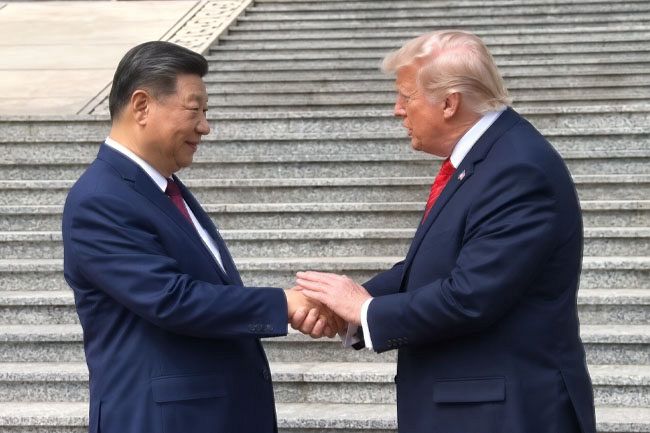
As Trump undermines America’s global standing, China gains influence, but Xi Jinping’s ambitions for Taiwan threaten to derail its rise, writes Dr Mark Beeson.
CHINA’S INTERNATIONAL reputation has been given a significant boost lately, largely thanks to its principal competitor for global influence.
The Trump Administration has profoundly undermined the international order the United States created and dominated in the aftermath of World War 2.
It is testimony to the idiocy of the current American President that he seems incapable of recognising the damage he is doing to his country’s international reputation or the very real benefits that flowed to the U.S. from its economic, political and strategic dominance.
In short, the United States is increasingly seen as untrustworthy, unreliable and, in the case of Trump and his coterie of advisors and cronies, unhinged.
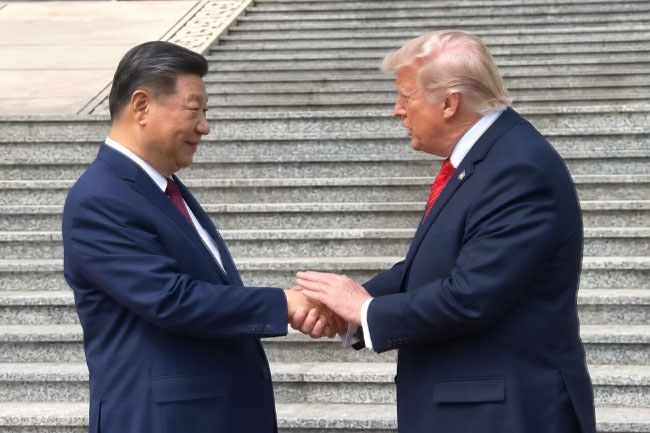
Chinese President Xi Jinping, by contrast, cultivates an image of technocratic competence and predictability. In Trump’s place, Xi has assumed the role of a champion of multilateralism and the underrepresented Global South, which never got much of a look-in under American-style hegemony. As authoritarians go, Xi projects an image of buttoned-down, studious calm — not someone who is likely to start World War 3.
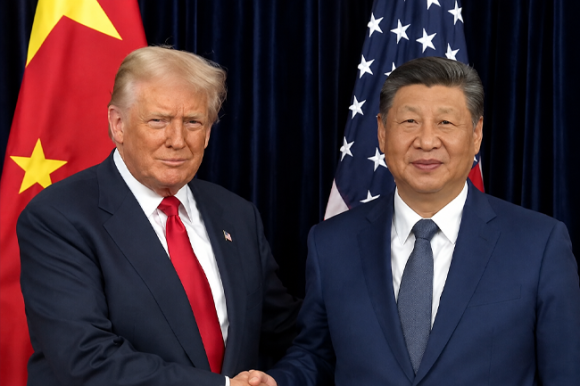
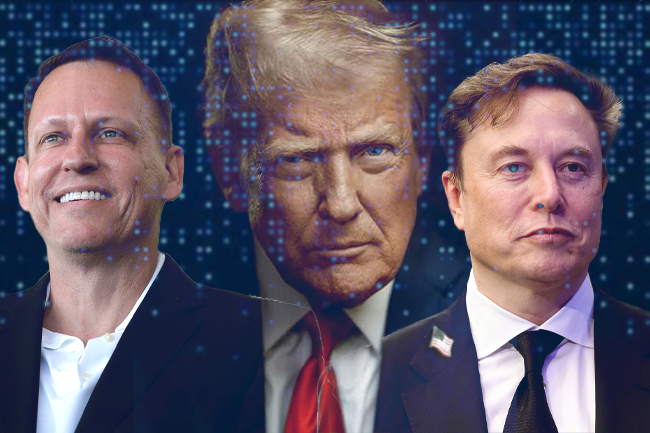
Unfortunately, there is one issue that might overturn this comparatively benign picture and even trigger the sort of apocalypse so many of the tech titans who surround Trump fear. The status of Taiwan, which the People’s Republic considers to be a renegade province, is a historical problem that must be resolved if China is to assume its rightful place at the forefront of nations.
Xi and the Chinese Communist Party are not the only ones who think this; the general population is overwhelmingly supportive, too, especially if it can be achieved through diplomacy.
I was reminded of how important this issue is in China when I recently received an invitation to speak at a conference on ‘Upholding the One-China Principle and Safeguarding Peace and Stability in the Taiwan Strait’, hosted by the Graduate Institute for Taiwan Studies, Xiamen University.
Delighted as I was to receive another invitation to visit China, I discovered a hitherto unsuspected streak of academic integrity.
The whole conference was dedicated to explaining, enhancing and legitimating Xi’s claim that:
Resolving the Taiwan question and realising China’s complete reunification is a historic mission and an unshakable commitment of the Communist Party of China.
We must take resolute action to utterly defeat any attempt toward “Taiwan independence”...
At least we know where he and the CCP stand. The problem is that the Taiwanese population are generally not keen on the idea, especially when they saw what happened to Hong Kong after its reunification with the motherland.
Given the lack of enthusiasm on the part of the locals, many observers, especially in the U.S., think that Xi would like to go down as the man who reunified China, even if that means a military invasion.
I suggested to my prospective hosts in Xiamen that I would like to talk about some of these issues, as I felt that the future of Taiwan ought to be decided by the Taiwanese, not by the mainland. You may not be surprised to learn that I haven’t heard back.
This is a pity and not just because I like visiting China. If I had been allowed to speak, I would have suggested that China might even take a leaf from the Trumpian playbook. You may remember that Trump offered a bribe of US$5,000 (AU$7,139) if the Republicans won the mid-term elections. Xi Jinping could offer a similar deal to all Taiwanese citizens of voting age if they support reunification with the mainland in a binding referendum.
If they are susceptible to being bribed, then the problem is solved once and for all. If, on the other hand, they value their independence so highly that it cannot be bought, then the “international community” would be duty-bound to stand behind them and do everything they could to persuade Xi and the entire population of China to accept the result. It might also be a salutary lesson about the nature of democracy, too.
I realise there’s no such thing as the international community these days – if there ever was – but supporting Taiwan’s democratic tradition might be something many countries could rally behind. Whether the U.S. would be one of them is another question, of course. Given Trump’s admiration for Xi and Russian President Vladimir Putin, he may not want to put one of his fellow authoritarians in an awkward spot, but that shouldn’t stop the rest of us.
Indeed, there are plenty of Americans who are not fond of Trump or his foreign policies and might want to reset the relationship with China as well. Yes, it’s doubtful that Xi would want to gamble on the result of a political process he couldn’t control, but being forced to explain why coercion is better than cooperation would make for a more interesting speech than usual.
No, I don’t expect any of this to happen, but no one – apart from President Xi, obviously – seems to have any idea quite what to do about Taiwan. Of course, if this idea is taken up, as an avid football fan I shall be actively lobbying for the FIFA Peace Prize and a seat on the Board of Peace. I hear the latter’s all expenses paid, too.
Dr Mark Beeson is an adjunct professor at the University of Technology Sydney and Griffith University. He was previously Professor of International Politics at the University of Western Australia.
 This work is licensed under a Creative Commons Attribution-NonCommercial-NoDerivs 3.0 Australia License
Support independent journalism Subscribe to IA.


Related Articles
- Australia’s China policy built on a strategic double standard
- Canberra bets against China while banking on its trade
- Silk Silver Opium: The trade with China that changed history
- Galloping through cultures: How horses connect humanity
- Albanese visit signals stability in China relations