New competitors entering the telecommunications industry demand a fundamentally different business model to realise the revenue revolution that operators have been waiting for, writes Paul Budde.
THE TELECOMMUNICATIONS INDUSTRY is preparing for 6G, promising faster speeds, intelligent networks, AI integration and new applications. But before embarking on another expensive upgrade cycle, we need to ask a fundamental question: who will pay for it, and who will capture the economic benefits?
As I argued in my earlier article, 'The telecoms industry doesn't need 6G — it needs a rethink', the industry's technological achievements have been extraordinary, but the financial rewards for network operators have been far less impressive.
The lessons from previous mobile generations
Successive upgrades from 2G through 5G have dramatically increased network capacity, performance and efficiency. Operators can carry vastly more traffic at a fraction of the previous cost per gigabyte.
Consumers have benefited enormously, particularly from the introduction of mobile internet and smartphones. However, these advances have not translated into comparable revenue growth for operators.
Instead, much of the economic value has flowed to digital platforms, application providers and cloud companies.
The 5G experience illustrates this problem. Despite promises of revolutionary consumer applications and new enterprise opportunities, the main benefits have been increased capacity, improved efficiency and better performance in congested areas.
As discussed in 'Rethinking 5G: Why faster isn't always better, especially in regional Australia', most everyday consumer applications already work perfectly well on 4G.
The question is whether 6G will deliver genuinely new revenue opportunities or simply become another costly infrastructure upgrade.

Will AI change the equation?
One of 6G's major promises is the integration of artificial intelligence directly into network operations.
AI could optimise spectrum utilisation, manage traffic, reduce energy consumption and improve network reliability.
These are valuable developments, but they primarily improve operating efficiency rather than create new consumer revenues.
Meanwhile, the companies investing most heavily in AI are the global hyperscalers. They are capturing much of the economic value generated by applications running over telecommunications networks.
Unless operators develop new business models, 6G could reinforce this imbalance.
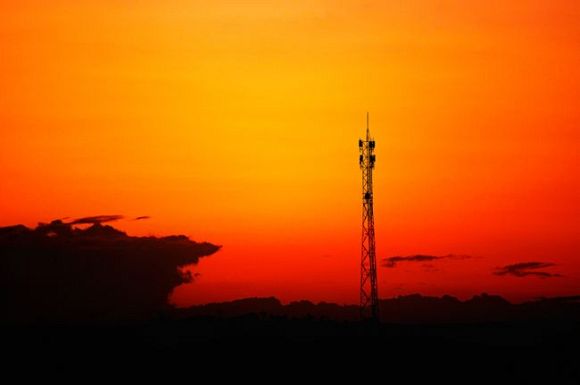
Starlink: A new competitor in the mobile market
A potentially more disruptive development is Starlink's move into direct-to-mobile services.
Until recently, satellite communications largely complemented terrestrial mobile networks, particularly in remote areas. However, Starlink's ambition extends beyond providing connectivity where mobile towers are unavailable.
Its direct-to-mobile technology could eventually allow ordinary smartphones to access messaging, voice and data services through satellites.
This creates the prospect of direct competition between Starlink and Australia's mobile network operators — Telstra, Optus and TPG Telecom.
Although Starlink currently relies on partnerships with mobile operators for access to suitable spectrum and customers in many markets, its expanding capabilities could give it greater influence over how mobile services are delivered and who controls the customer relationship.
For regional Australia, the implications are particularly significant.
Building and maintaining mobile towers across sparsely populated areas is expensive. As satellite-to-mobile services improve, Starlink could increasingly compete for customers and services that previously depended on terrestrial infrastructure.
This would further weaken the commercial justification for extending expensive 6G networks into marginal regional markets.
As I previously discussed in 'Satellite is no silver bullet: Our mobile networks still depend on fibre', satellite technology cannot replace high-capacity terrestrial networks, particularly in populated areas.
Nevertheless, Starlink's entry means Australian operators could face a new competitor while simultaneously being expected to fund another generation of infrastructure.
Government policy needs to adapt
These developments require a rethink of spectrum policy.
Governments have traditionally treated mobile spectrum as a valuable source of revenue through auctions and licence fees. However, extracting substantial payments from operators reduces the capital available for network investment.
With 6G approaching and satellite competition emerging, spectrum policy should prioritise efficient utilisation, affordable access, competition and regional coverage.
Regulators must also ensure that satellite providers operate within a fair competitive framework without discouraging necessary terrestrial investment.
For regional Australia, the objective should be reliable and affordable connectivity, regardless of the technology used.

A different approach to 6G
None of this is an argument against technological progress.
6G could deliver valuable improvements in efficiency, resilience, network intelligence and satellite integration.
But technological capability alone does not establish an economic business case.
Rather than automatically embarking on another nationwide upgrade, operators should concentrate investment where demand and measurable benefits justify it.
Elsewhere, optimised 4G and 5G networks combined with satellite connectivity may provide better economic outcomes.
The industry must also recognise that Starlink and potentially other satellite operators are changing the competitive landscape, particularly in regional Australia.
6G may deliver another technological revolution. But without a fundamentally different business model, and with new competitors entering the market, it is unlikely to deliver the revenue revolution that telecommunications operators have been waiting for.
Paul Budde is an IA columnist and managing director of independent telecommunications research and consultancy, Paul Budde Consulting. You can follow Paul on Twitter @PaulBudde.
 This work is licensed under a Creative Commons Attribution-NonCommercial-NoDerivs 3.0 Australia License
Support independent journalism Subscribe to IA.


Related Articles
- The telecoms industry doesn’t need 6G — it needs a rethink
- Progress moving fast toward 6G revolution
- 6G: We could be looking at techno tyranny