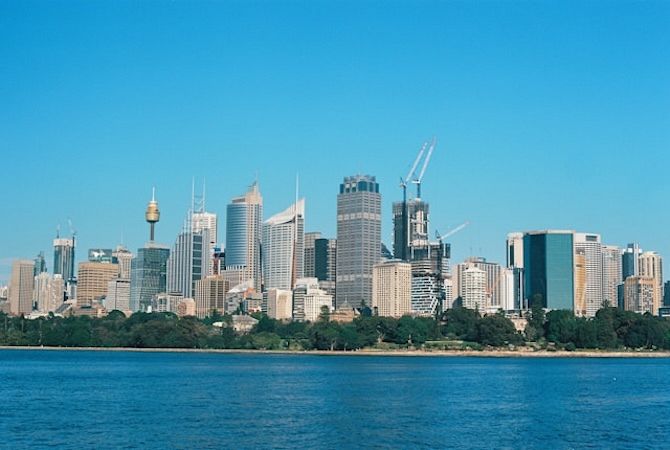
We know Australia is growing in more ways than one. But at a time when infrastructure upgrades are taking many years to complete, and construction costs are skyrocketing, paired with housing shortages and climate pressures, our urban environment needs a serious rethinking.
For decades, urban development in Australia was heavily influenced by the idea that a successful city was one that could keep expanding. New suburbs pushed further outwards, roads connected growing communities and detached homes were a primary measure of success. But that model is becoming harder to sustain.
Australia’s next generation of urban development is likely to be more strategic: denser where it makes sense, greener where possible, better connected and designed around the changing needs of the people who live there.
From urban expansion to smarter growth
Anyone pursuing a Master of Urban Planning today is entering a field that looks very different from the one that shaped many of Australia’s existing suburbs. Urban planners increasingly need to consider housing affordability, transport, climate resilience, biodiversity, digital infrastructure and community wellbeing as interconnected challenges rather than separate issues.
Australia’s population continues to grow, putting pressure on established cities such as Sydney, Melbourne, Brisbane, Perth and Adelaide. Alongside this, governments are under increasing pressure to provide more housing without simply consuming additional agricultural or environmentally valuable land.
Established suburbs are being reconsidered as places where more homes can be accommodated. Medium-density housing, apartments, townhouses and mixed-use developments can allow populations to grow without pushing the urban boundary indefinitely. The challenge is making this growth feel like an improvement rather than a loss of neighbourhood character.
That means density needs to come with infrastructure. More residents require better public transport, schools, healthcare, parks, shops and community facilities. Simply adding apartment buildings without investing in the surrounding urban environment risks creating overcrowded areas rather than genuinely liveable communities. The future of Australian cities, therefore, is unlikely to be defined by density alone. It will be defined by quality density.
The rise of the 20-minute city
There is a predicted move towards neighbourhoods where people can access everyday essentials without having to drive across the city. The concept is often described as the 20-minute neighbourhood or 15-minute city, depending on the model. The underlying principle is straightforward: housing, employment, education, healthcare, retail, recreation and public transport should be reasonably accessible within a short journey from home.
Instead of creating residential areas that become quiet after working hours, planners can encourage mixed-use precincts where homes sit alongside cafes, shops, offices and community facilities. Streets can become more pedestrian-friendly, while cycling infrastructure and reliable public transport provide alternatives to private vehicles.
Residents will enjoy shorter commutes and greater convenience. For cities, it can reduce congestion and emissions while creating more vibrant local economies. It also changes how we think about the value of a neighbourhood. A successful suburb may no longer be judged primarily by the size of its houses or distance from the CBD, but by what residents can actually access within a short trip.
Housing will become more diverse
The traditional Australian detached house is unlikely to disappear, but it is becoming one option among many. Changing home design needs are already influencing demand, with more people living alone, families becoming more diverse, and older Australians looking for homes that allow them to remain independent for longer. Younger households are also confronting housing costs that can make large detached properties increasingly inaccessible.
As a result, Australia’s built environment will need a broader range of housing. Townhouses, terraces, apartments, build-to-rent developments, co-living arrangements and adaptable homes could all play a larger role. Well-designed medium-density housing may become particularly important because it can provide more homes without requiring the extreme density associated with high-rise development.
Future housing needs to be more than technically efficient, too. It should provide natural light, ventilation, privacy, outdoor space and access to greenery. Flexible floorplans could also become more common, allowing homes to adapt as residents’ circumstances change.
Public transport and active travel take centre stage
Australia’s dependence on cars has shaped the layout of its cities for generations. But future urban development is likely to focus more on public transport, walking and cycling. Australia’s geography makes it unrealistic for cars to disappear in many areas. The goal is likely to reduce the number of journeys for which driving is the only practical option.
This might look like higher-density housing and employment concentrated around train stations, tram corridors and major bus routes, allowing more people to live close to reliable transport. Alongside this, better walking and cycling networks can make short trips easier without a car while creating a positive feedback loop.
Cities will need more nature, not less
Perhaps one of the most interesting developments in urban design is the recognition that nature is needed alongside developments. Trees and green spaces can provide shade, support biodiversity, improve stormwater management and create places for people to gather. As Australian cities become denser, access to nature could become even more important.
Pocket parks, green corridors, planted streetscapes, community gardens and rooftop gardens can all contribute to a more liveable urban environment, which actually presents an opportunity to rethink public space. Instead of designing cities primarily around movement from one destination to another, planners can create environments that encourage people to stop, socialise and spend time outdoors.
Key takeaways
Australia’s cities are moving towards smarter, more sustainable growth, with greater focus on diverse housing, connected neighbourhoods and accessible public transport as we face unrivalled population growth. Future urban development will also need to incorporate more green spaces, climate-resilient design and community-focused planning. The goal, and what all of this is trying to accommodate, is creating places that are more liveable, connected and adaptable to the changing needs of Australia as a nation.