House prices are softening, incomes are rising and demand pressures are easing, creating the strongest conditions for improved housing affordability in years and a potential surge in first-home buyers. Stephen Koukoulas writes.
HOUSING AFFORDABILITY is a function of three main variables: house prices, household income and interest rates.
While other issues clearly influence the housing market, such as unemployment, household formation, construction costs and the like, these all filter one way or another into the main trifecta of affordability influences.
It is relatively easy to confirm the extent to which affordability changes by viewing trends in each of the main variables. That said, when there are conflicting trends in those factors – for example, house prices down and interest rates up – it can be a little harder to interpret.
As we get towards the middle of 2026, the housing sector is in the early stages of a marked improvement in affordability.
The policy settings of the Albanese Government are kicking in with new supply and lower net migration being important changes in the last year.
The improving trend in affordability is because house price growth is turning negative, with significant price falls in Sydney and Melbourne. This is happening while household income growth is rising at a solid pace. These trends to improving affordability are being offset, to some extent, by the interest rate hikes delivered by the Reserve Bank of Australia (RBA) over the first half of 2026.
In the coming months, potential first home buyers are likely to be queuing up to get their foot on the first rung of the property ladder, given these favourable trends and especially so if the RBA moves to reduce interest rates late in 2026 or in 2027.
What is driving this change?
The unfolding weakness in house prices is due to developments in the usual factors. A new supply of dwellings available for purchase is increasing, with new listings for sale rising strongly in recent months. This is giving buyers a wider range of properties to choose from and, as a result, there is much less chance of “missing out”.
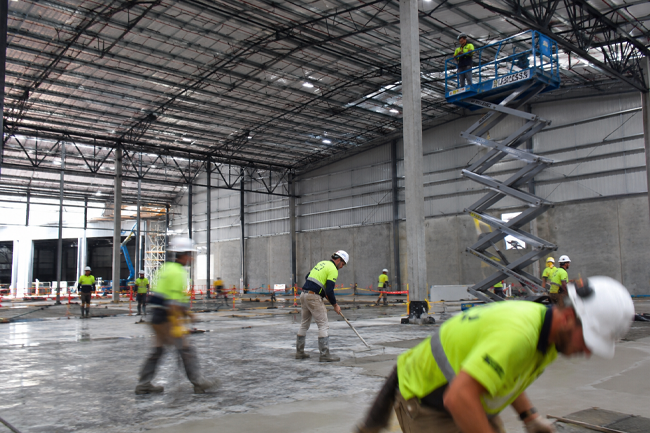
There has also been a strong lift in dwelling construction, which will, with a further lag, add to the stock of dwellings — supply, in other words.
At the same time, the growth in demand is cooling. Net migration levels are easing back to the pre-pandemic rates and with the recent tax changes around negative gearing and capital gains tax in the budget, investors will be less prolific buyers in the housing markets, especially for established dwellings.
In terms of interest rates and their impact on dwelling affordability, after the three interest rate increases in the first half of 2026, markets are increasingly embracing an outlook where there will be no more hikes in this cycle and rate cuts will be possible in 2027.
The task of accurately forecasting interest rates is particularly difficult. Even the RBA has given up forecasting (in its words, giving “guidance”) the likely path for rates. That said, it is increasing clear that interest rates over the next year or two are more likely to be down than up due to weaker domestic growth, rising unemployment, weaker wages growth, a fall in inflation linked to the downturn in global commodity prices and the tightness of both monetary and fiscal policy.
The high level of the Australian dollar is also impacting the export sector in a negative way.
A scenario for improved affordability
If, by way of illustration, over the next two years or so, if house prices fall 5-7% while household incomes for potential first home buyers rise 10% and interest rates are a moderate 50 basis points lower than where they are today (all of which are reasonable projections), housing affordability would be materially enhanced.
The house price-to-income ratio will, for example, drop from the current 5.5 times to around 4.5 times. This is back to where it was over 20 years ago.
With interest rates falling, for a household with the average income, borrowing 80% of the value of a median-priced dwelling would face monthly repayments as a share of their income at or slightly below the long-run average.
Improved affordability in other words.
What could go wrong?
As with all projections, there are risks. Threatening the path to improved affordability are strong increases in construction costs which could yet limit the increase in new supply. Higher unemployment, if delivered. would crimp income growth and demand for housing.
Even allowing for these risks, the prospects for improved housing affordability are squarely in place. This should open the market for first home buyers, which will boost home ownership rates in a relatively short timeframe.
Stephen Koukoulas is one of Australia’s most respected economists, a past chief economist of Citibank and senior economic advisor to an Australian Prime Minister. You can follow Stephen on Twitter/X @TheKouk.
 This work is licensed under a Creative Commons Attribution-NonCommercial-NoDerivs 3.0 Australia License
Support independent journalism Subscribe to IA.


Related Articles
- Debate on housing and intergenerational equity is just beginning
- Why we have a housing crisis and why government cannot fix the problem
- Four more things Australia can do to arrest house prices
- Class is the missing link in Australia’s generational inequality crisis
- Forum reveals widening divide over housing strategy and affordability targets