Electrical safety is the rental minimum standard most often missed. Here is what the rules cover, what changes in October 2026 and what renters can ask for.
Electrical safety is the part of rental minimum standards landlords keep missing
Australia's rental debate is mostly about price. Rent rises, vacancy rates and how long a lease actually lasts.
Habitability gets far less attention. And within habitability, one standard slips through more often than any other.
Electrical safety is the part of rental minimum standards people notice last, because it is the part nobody can see. A broken heater announces itself on the first cold night. Ageing wiring behind a plaster wall gives no warning at all.
That is about to matter more in Victoria, where a rule change in October 2026 will pull long-running tenancies into a safety regime they have never been part of.
Minimum standards are a legal floor, not a suggestion
Victoria sets 15 categories of rental minimum standards. They cover bathrooms, kitchens, heating, lighting, locks, ventilation, structural soundness, window coverings and electrical safety.
Since 25 November 2025, a property has had to meet those standards at the point it is advertised, not just before a renter moves in. Advertising a property that does not comply is an offence.
Most categories can be judged by looking, such as whether a door has a deadlock. Electrical safety is the exception.
Standards like these exist because quality is where a tight rental market applies least pressure. When demand outstrips supply, as it has right through Australia's housing crisis, renters have little leverage to push back on a property that falls short.
What changes on 13 October 2026
From that date, gas and electrical safety checks every two years will apply to every rental agreement in Victoria, whether it started before, on or after 13 October 2026.
Until now the two-yearly electrical check has only applied to agreements entered into after 29 March 2021. Tenancies that predate that and never rolled over have sat outside the mandatory check, covered only by a general duty to keep the property in good repair.
Rental providers will also need to keep records showing the property met minimum standards when it was advertised or offered for rent.
Why electrical safety keeps getting missed
The risk is hidden by design
A dead smoke alarm makes itself known. Deteriorated cable insulation in a ceiling space does not.
Much of Australia's rental stock was wired decades ago, then altered piecemeal by a string of owners. Problems build quietly and often surface only as a shock, a nuisance trip or a fire.
Working is not the same as compliant
An old ceramic fuse board can run a house perfectly well for years and still fall short of the standard.
Since 29 March 2023, Victorian rental properties covered by the minimum standards have needed modern switchboards fitted with circuit breakers and residual current devices, better known as safety switches. All power outlet and lighting circuits must connect to both.
Where a property still runs an old panel and fuse board, adding components may not be possible and the entire switchboard may need replacing.
Nobody quite owns the task
The obligation sits with the rental provider, or the agent acting for them. It never sits with the renter.
In practice it drifts between the two. A task nobody clearly owns is a task nobody books.
What a proper electrical safety check actually covers
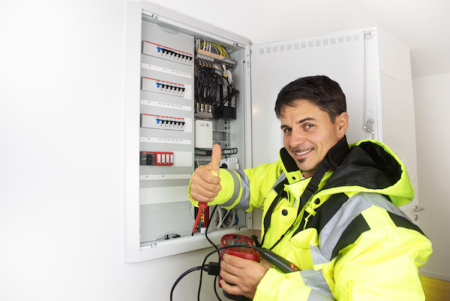
A safety check is an inspection plus testing, not a glance at the meter box.
Under the Residential Tenancies Regulations 2021, it must cover all electrical installations, fixtures and fittings, carried out in line with section 4 of AS/NZS 3019, the periodic verification standard.
Who is allowed to do it?
Only a licensed or registered electrician. In Victoria, they must be registered with Energy Safe Victoria as a Registered Electrical Contractor.
A property manager, building inspector or handyperson cannot perform the check, no matter how careful they are.
Registration is public and quick to confirm. Contractors display an REC number, and a Melbourne firm such as O'Shea Electrical lists REC 36928 openly, which is exactly what allows a renter or agent to verify it before anyone starts work.
What the record has to show
The electrician's report must name them, include their licence or registration number, state the date of the check and set out the results, including any repairs required and what was done about them.
It must also include a report prepared under section 2 of AS/NZS 3019. The provider keeps the most recent record until the next check replaces it.
What renters are entitled to ask for
The safety check record
A renter can make a written request for a copy of the most recent electrical safety check. The provider has seven days to supply it.
Before an agreement is signed, the provider must also disclose the date of the last check and any outstanding recommendations from it. Asking is not confrontational and an agent who cannot answer has told you something useful.
When something goes wrong
A dangerous electrical fault is an urgent repair under the Residential Tenancies Act 1997, which means the provider must respond immediately.
If they cannot be contacted or do not act, a renter can arrange the urgent repair themselves and spend up to $2,500. The provider must repay that within seven days of receiving a written request.
The 2027 standards will add to the same load
From 1 March 2027, new minimum energy efficiency standards begin phasing in across Victorian rentals. They cover heating, cooling, hot water, showerheads, ceiling insulation and draughtproofing.
A good share of that is electrical work. Heat pumps and efficient hot water systems draw from the same switchboard the safety check is examining.
Providers who treat the 2026 check as a single box to tick may find themselves back at that board within a year, paying for a second visit.
Conclusion
Minimum standards work when they are treated as a floor for safe housing rather than a paperwork exercise. Electrical safety is where that difference shows most sharply.
It carries the highest consequence when it fails and the lowest chance of being spotted before it does. The October 2026 change closes a genuine gap by finally covering tenancies that had quietly slipped past.
For renters, the useful step is a small one. Ask for the record and ask early.
Frequently asked questions
How often does a Victorian rental property need an electrical safety check?Every two years, by a licensed or registered electrician. From 13 October 2026, this applies to all rental agreements, including those that started before that date.
Who is allowed to carry out the check?
Only an electrician licensed or registered with Energy Safe Victoria as a Registered Electrical Contractor. Property managers and handypersons cannot do it.
Can a renter ask to see the safety check record?
Yes. After a written request, the rental provider must supply a copy of the most recent check within seven days. The date of the last check must also be disclosed before an agreement is signed.
What counts as an urgent electrical repair?
A dangerous electrical fault, or a failure of the electricity supply or a supplied appliance for hot water, cooking, heating or laundry. These require an immediate response from the provider.