A blackout turns an ordinary evening into a test of household priorities.
Properly configured solar battery storage can keep selected circuits running, while a home energy management system (HEMS) can manage stored energy and protect a backup reserve. A generator instead produces electricity from fuel.
Neither option provides unlimited power. Battery performance depends on usable capacity, inverter output, system configuration and available solar generation. Generator performance depends on rated output, fuel, ventilation, maintenance and a safe connection to the appliances or switchboard.
The better choice depends on the loads that must stay on, the likely outage length and whether the equipment should earn value between emergencies. Those questions matter more than a headline capacity figure.
Start with the household, not the hardware
List the circuits that protect food, communication, lighting, medical needs, water supply and safe indoor temperatures. Then separate essential loads from conveniences. Running a refrigerator and router is a different design task from supporting electric cooking, air conditioning, or pool equipment.
Capacity measures stored energy. Power measures how quickly an inverter can deliver it. A solar battery storage system may contain enough energy for hours, yet fail to start several high-demand appliances when their combined load exceeds inverter output.
A HEMS platform adds control but cannot create energy. It can monitor generation, consumption, tariffs and battery state, then shift flexible loads or preserve a reserve. The installer must still design the electrical system around the home's circuits and phases.
How each system supplies a home
Both solar battery storage and generators supply electricity, but their energy paths differ. A battery releases stored electricity. A generator converts fuel while running. This difference shapes response, installation, noise, maintenance and operating time.
Where the electricity comes from
A solar battery storage system charges from rooftop solar or the grid, according to its design. A generator uses approved fuel. Its runtime varies with electrical load, fuel capacity, engine efficiency and fuel availability.
What happens when the grid fails
A battery supplies backup only when configured for it. An islandable system disconnects from the grid and powers designated circuits. A generator can feed individual appliances, or a licensed electrician can connect it through an approved changeover arrangement.
Why kW and kWh are different
Kilowatts describe power delivery. Kilowatt-hours describe stored or consumed energy. The same distinction applies when comparing generator output with battery capacity. High output does not ensure long runtime, while a large energy store does not ensure high simultaneous output.
How supply is restored
Compatible solar battery storage can recharge during an outage only when the panels, inverter, controls and backup architecture support islanded operation. A generator can continue after refuelling, which requires safe fuel storage, shutdown, cooling and access during the emergency.
What installation changes
Generators must operate outdoors because combustion produces carbon monoxide. Backfeeding through a wall outlet is dangerous. Battery installations also require approved locations, compatible inverters, protected circuits and work by appropriately licensed and accredited professionals.
What changes during a long blackout
Long outages test energy supply. Installed solar battery storage may recharge in daylight, while a generator may continue with fuel. Weather, access, household behaviour and system design decide the practical result.
Sunlight can extend stored energy
An islandable solar system can power loads and charge its battery while the grid remains down. Standard grid-connected solar often stops for anti-islanding safety. Owners should confirm backup behaviour in writing before an emergency.
Cloud and short winter days reduce generation. A solar battery storage system therefore needs a load plan. Preserving refrigeration, communications and lighting can extend backup without trying to run every appliance normally.
Fuel can extend generator runtime
Refuelling extends generator operation, but that advantage weakens when roads close, service stations lose power, or stored fuel runs out. Fuel needs suitable containers, separation from ignition sources and handling according to instructions.
Portable generators need dry, open-air conditions and must never run inside a home, garage, shed, or enclosed space. A carbon monoxide alarm adds protection but cannot replace correct placement, safe cabling, or professional switchboard work.
Essential circuits matter
Large loads can drain a battery or overload an inverter quickly. The same loads can exceed generator output. An essential-load circuit makes backup more predictable and reduces rushed decisions during severe weather.
A HEMS controller may reduce discretionary consumption, preserve a battery reserve and show where energy goes. Households should still know how to shed loads manually, because internet-dependent features may be limited when communications infrastructure fails.
Control, maintenance and value between outages
Backup equipment spends most of its life waiting. Configured solar battery storage can work every day by increasing solar self-consumption or shifting grid use away from expensive periods. A generator normally creates value only when running, although that narrow role may suit some properties.
Automated energy management
A HEMS platform can combine solar forecasts, consumption patterns, tariff information and reserve settings. It may charge when energy is available at lower cost, discharge during expensive periods and hold energy for an outage. Results still depend on tariffs, weather, equipment and household use.
The daily role changes the economic comparison. In daily operation, solar battery storage may reduce grid purchases as well as provide resilience. A HEMS system can improve timing without constant manual checks. Neither feature guarantees a particular saving, so projected returns should use measured household data.
Maintenance and readiness
Generators require fuel management, starting checks, engine servicing and safe storage. A unit that has not been tested may fail when needed. Batteries avoid combustion-engine servicing, but they still need system monitoring, software support, warranty checks and professional attention when faults appear.
Readiness also depends on settings. A HEMS reserve set too low may leave little energy when the grid fails. A reserve set too high may reduce everyday savings. Reviewing settings after tariff, occupancy, or seasonal changes keeps the system aligned with household priorities.
A practical side-by-side decision
The table shows no universal winner. For grid-connected homes, solar battery storage generally suits households seeking daily energy management and quiet backup. Generators remain relevant where outages are very long, solar recharge is uncertain and a safe fuel supply can be maintained.
|
Decision factor |
Configured home battery |
Home generator |
|
Everyday use |
Stores available energy and may reduce grid purchases |
Usually reserved for outages |
|
Long outage |
Limited by stored energy and supported recharging |
Can continue while fuel remains safely available |
|
Start and control |
May switch automatically when backup is configured |
Manual or automatic, depending on installation |
|
Noise and exhaust |
No on-site combustion while operating |
Produces engine noise and exhaust |
|
Maintenance |
Monitoring, settings, warranty and installer support |
Fuel, starting checks and engine servicing |
|
Best fit |
Connected homes wanting daily value and backup |
Sites prioritising extended fuel-based supply |
Before buying, ask for a circuit schedule, expected loads, usable capacity, inverter output, backup behaviour and recharge assumptions. For a generator, confirm approved connection methods, fuel handling, placement, noise limits and servicing. A HEMS plan should show how reserve settings affect daily operation.
For many suburban homes with rooftop solar, the integrated battery path is likely to deliver broader value. It works outside emergencies and removes fuel handling during a blackout. A generator may still be the stronger contingency for remote properties or unusually long outages.
A strong fit for connected homes
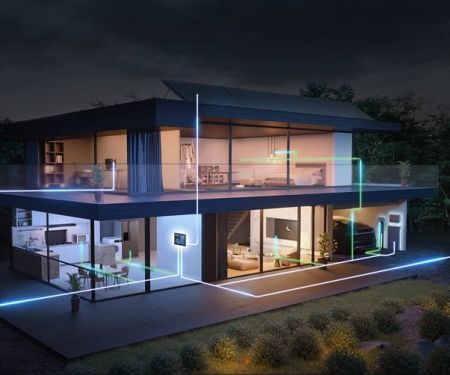
For households that want daily savings and planned backup from one system, solar battery storage paired with HEMS offers a coherent approach. It connects generation, storage, household demand and reserve settings, while leaving final capacity and circuit choices to an accredited installer.
Modern residential energy systems are increasingly combining battery storage, backup power and smart energy management in a single solution. Instead of relying on separate equipment for everyday energy optimisation and emergency backup, homeowners can manage solar generation, stored energy and critical loads through an integrated system.
EcoFlow OCEAN 2 Plus Single-Phase brings these functions together with integrated backup and no separate gateway. Its 72 A bypass is designed to support higher household loads during an outage, while 0 ms load-side switching is designed to keep connected appliances running without interruption. The system supports up to 24 kW of solar input across three independent MPPTs and scalable LFP storage up to 60 kWh per inverter.
EcoFlow HEMS coordinates solar generation, stored energy, household demand and dynamic tariffs through one platform, making the system a strong fit for homes seeking both daily energy optimisation and high-load backup.