While Australia has its share of problems, the economic, political and social struggles of Haiti remind us that we are indeed the Lucky Country, writes Mark Beeson.
ONE OF THE MORE striking features of our troubled planet are the extraordinary levels of inequality that exist both within and between countries. Geography determines destiny just as much, if not more than, demography. And yet, even in what U.S. President Trump delicately refers to as “shit hole countries”, it is possible to insulate yourself from troubling social reality — as long as you have the money, of course.
The growth of “gated communities” is emblematic of a growing preoccupation with personal security and a visceral desire to keep the barbarians at bay. Unsurprisingly, given its gun violence, crime and growing social polarisation, the pursuit of security in gated communities had its origins in the United States. Equally predictably, perhaps, the fashion has now spread to many other countries in South America and Asia, where the rich can afford to keep the poor in their non-threatening place.
While there are a few gated communities in Australia, such as Sanctuary Cove, they seem rather redundant. Despite all the hand-wringing about crime in Queensland and elsewhere, Australia is one of the safest places on Earth and the chances of being robbed or a victim of violent crime are gratifyingly low by world standards.
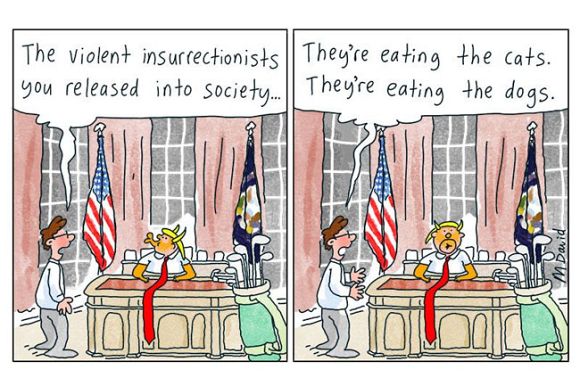
But before we congratulate ourselves on our good fortune, we need to remember how it’s been preserved. Australia is possibly the largest gated community in the world. How else are we to describe our collective ability to insulate ourselves from the chaos and despair that characterise life in so many other places? Being an island continent with the capacity to turn back or imprison those who would like to join us clearly has its advantages, or it does if you’re not of a cosmopolitan disposition, at least.
The idea that some nation-states are effectively gated communities is not new, but its application to places like the European Union has real limits. The EU’s problem is that the gates don’t work: growing unhappiness about unwanted migration has become a toxic political issue that is transforming the continent and its hard-won reputation for peaceful prosperity.
In Australia’s case, however, the gated community label seems to fit. But while we may have grown accustomed to the idea that the fortunate might act to keep the less fortunate out of their privileged enclaves, it doesn’t seem to have registered that gates can imprison as well as deter.
Comparisons may be odious, but they are also instructive. Even the most patriotic Australian might balk at the idea of describing this country as “heaven”. But when viewed from Haiti, it almost certainly is. Life expectancy in Australia is over 84, the sixth best in the world. In Haiti, it’s 65, which is 175th.
But it’s not just the relative brevity of life that sets Haiti apart. For most of the population, life is a brutal struggle for survival, where the state is noteworthy mainly for its absence. Armed gangs vie for control and terrorise the rest of the population. Life under former Prime Minister Scott Morrison looks like the epitome of transparent and effective good governance by comparison.
Whereas Australia had independence conferred upon it, in a process that has arguably still not fully been embraced, Haiti’s predominantly slave population had to fight French colonialists for their freedom, establishing an independent republic as early as 1804.
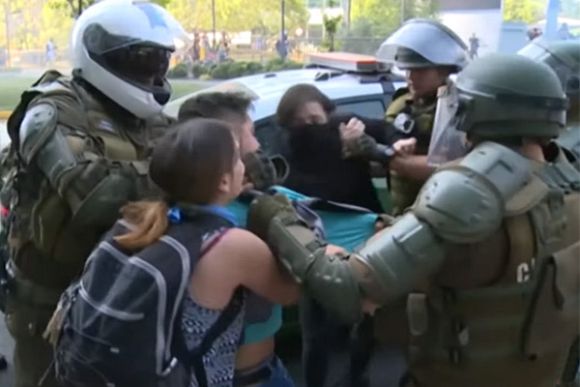
Unfortunately, this may have been the high point for domestic politics. Leadership in Haiti has often been incompetent, autocratic and breathtakingly corrupt. Haiti is routinely judged to be one of the most corrupt countries in the world, while Australia ranks in the top ten. The only leaders anyone outside Haiti can usually name are the infamous Duvalier dynasty, which ruled from 1957 to 1986, through a combination of political repression and mutually enriching relationship with compliant security forces.
Currently, Haiti doesn’t have a president, autocratic or otherwise. The last one, Jovenel Moïse, was assassinated in 2021, possibly for threatening to expose key public officials involved in the lucrative drug trade. Despite being in America’s backyard, or what looks like becoming an old-fashioned “sphere of interest”, it is noteworthy that the United States has shown no interest in helping to restore order in Haiti.
After controversies surrounding the conduct of UN peacekeepers, the “international community” has also been noticeably reluctant to get involved in Haiti’s domestic problems. The UN is unwilling to reinforce the token ‘multinational security support mission’ force of 1,000 until “significant progress has been made in substantially reducing gang territorial control”. Good luck with that.
In the meantime, Haiti’s version of a gated community exists to keep the population in, rather than keeping people out. Indeed, the Dominican Republic, with which Haiti shares the island of Hispaniola, has built a wall to keep would-be refugees imprisoned.
Whether we can successfully wall ourselves off from moral responsibility to those less fortunate than ourselves is a question that may yet be put to a searching examination, but not during an election campaign, of course.
Mark Beeson is an adjunct professor at the University of Technology Sydney and Griffith University. He was previously Professor of International Politics at the University of Western Australia.
 This work is licensed under a Creative Commons Attribution-NonCommercial-NoDerivs 3.0 Australia License
Support independent journalism Subscribe to IA.