Choosing a payment gateway in 2026 isn't as simple as picking the one your accountant uses. The market has changed considerably over the past few years and what works for a physiotherapy clinic in Parramatta is very different from what a Shopify store in Geelong actually needs.
There are now dozens of options competing for Australian small business owners and most of them will work. Technically. The question is whether they'll work well for your specific situation: your industry, your customers, your cash flow and how much time you're willing to spend on admin.
Here's a practical breakdown of the best options in 2026, matched to the types of businesses that are likely to get the most out of them.
1. Best for service businesses: Pinch Payments
If you run a business that invoices clients (a consultancy, allied health practice, trade business, or professional services firm), Pinch Payments deserves a serious look.
Most payment gateways are built for transactions, not relationships. Pinch Payment is designed specifically around recurring billing, direct debit, and the kind of payment workflows that service-based businesses actually deal with: variable invoices, instalment plans, bulk payment runs and clients who sometimes need a nudge.
The platform handles bank account and card payments in one place, and it integrates directly with MYOB, Xero and other accounting software that Australian businesses already use. The reporting is clean and the reconciliation process is considerably less painful than chasing payments manually.
For businesses that collect fees regularly, whether that's a fitness studio running memberships, a property manager collecting strata levies, or an accounting firm billing monthly retainers, Pinch's direct debit functionality reduces failed payments and cuts down on admin time.
Fees are competitive and the platform is built specifically for the Australian market, which matters when you're dealing with BSB and account numbers rather than credit cards.
Worth considering if: You invoice clients, run memberships, collect retainer fees, or deal with any kind of recurring payments.
2. Best for retail and in-person payments: Clover
For businesses with a physical shopfront (cafés, boutiques, salons, trade counters), Clover has become one of the more capable point-of-sale systems available in Australia.
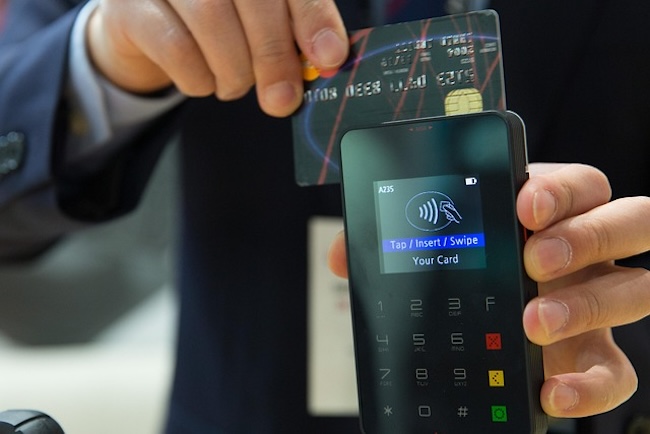
The hardware is genuinely good. Clover's terminals handle contactless, chip and swipe without fuss, and the system scales from a single counter to a multi-location setup. The POS software is more flexible than many competitors, with a proper app ecosystem that lets you add inventory management, loyalty programs and staff scheduling without switching platforms.
Where Clover stands out is the integration between payments and business operations. Sales data, stock levels and staff hours all feed into the same system, which saves the kind of time that small business owners can rarely afford to lose.
The main consideration is cost. Clover hardware isn't cheap and the monthly software fees add up. For a business processing decent volume, the investment pays off. For a very small or low-turnover operation, the numbers need careful scrutiny before signing up.
Worth considering if: You have a physical location, process a reasonable volume of in-person transactions, and want POS and payments in one system.
3. Best for e-commerce and custom websites: Stripe
Stripe remains the benchmark for online payments if you have any degree of technical capability or a developer on hand.
The API is excellent. If you're running a custom-built website, a marketplace, a SaaS product, or anything that needs payment logic beyond a standard checkout, Stripe gives you more control than almost anything else. It handles one-off payments, subscriptions, payment links, invoices and multi-party transactions, and it does so reliably.
For Australian businesses, Stripe supports local payment methods, handles GST correctly and produces clean reporting that integrates with most accounting platforms.
The honest caveat: Stripe rewards technical investment. If you're not comfortable with code (or don't have someone who is), some of its more powerful features will stay out of reach. For straightforward e-commerce on Shopify or WooCommerce, you might not need everything Stripe offers, though it still works perfectly well as a plug-in gateway on either platform.
Fees are 1.7% for domestic cards and 3.5% for international, with no monthly charges for the standard plan. For businesses with strong international sales, that international rate is worth factoring in against competitors.
Worth considering if: You run an e-commerce store, a custom website, or any digital product or service and want maximum flexibility.
4. Best for subscriptions and recurring billing: PayPal
PayPal's position in this list might raise an eyebrow. It's not fashionable to recommend it in 2026. But for certain businesses, particularly those selling online subscriptions or digital products, it still makes sense.
The key is trust. A significant portion of Australian online shoppers have PayPal accounts and a meaningful subset of them will only buy from sites that accept it. For businesses in the content, education, or digital product space, removing PayPal from the checkout can cost real sales, especially with customers who are cautious about entering card details with unfamiliar brands.
PayPal's subscription and recurring billing tools have improved considerably and work reasonably well for straightforward use cases. The dispute resolution process is imperfect, and fees are not the lowest in the market, but the reach and the trust factor are real advantages.
Where PayPal falls short is in more complex billing scenarios, deeper integrations and businesses where the vendor typically holds the upper hand in disputes. It's best treated as a supplementary payment method rather than a primary gateway for most businesses.
Worth considering if: You sell digital products, online courses, or subscriptions and want to capture customers who prefer not to enter card details directly.
5. Best for simplicity and small volumes: Square
Square's pitch has always been simple: no monthly fees, free card reader and you're up and running in an afternoon. In 2026, that pitch still holds and it's still the right choice for certain businesses.
For market stallholders, mobile tradespeople, pop-up retailers and anyone who needs to accept payments occasionally without a major commitment, Square is hard to beat. The flat transaction fee (1.6% for in-person, 2.2% for keyed or online in Australia) is transparent, and the free POS software handles basic inventory and sales reports competently.
Square has expanded its ecosystem significantly, with invoicing, payroll and appointment booking now built in. For a solo operator or very small team, this can be genuinely useful.
The limitations show when you need more control. International payments, complex integrations and high-volume businesses will find Square's per-transaction rate less competitive than alternatives. And the dispute resolution process has frustrated enough Australian business owners to be worth researching before committing.
Worth considering if: You're just starting out, trade part-time or at markets, or need a simple no-fuss setup with no monthly commitment.
6. Best for B2B and larger transactions: Ezidebit
Ezidebit doesn't have the brand recognition of Stripe or Square, but it's been quietly processing payments for Australian businesses for years, and it has a particular strength in B2B and high-value transaction environments.
The platform is built around direct debit and recurring payments for the Australian and New Zealand markets specifically. It integrates with a wide range of industry-specific software (fitness management platforms, childcare software, health practice systems) and it's a common choice in sectors where businesses collect regular fees from a client base.
For businesses transacting in the thousands rather than the tens or hundreds of dollars, the percentage-based fee model of some competitors becomes expensive quickly. Ezidebit's pricing structure can work out materially cheaper at higher transaction values.
Worth considering if: You run a fitness studio, health practice, childcare centre, or any business that collects regular fees through software integrations.
7. Best for international businesses: Airwallex
If your business operates across borders, whether you're paying international suppliers, receiving revenue from overseas customers, or managing multi-currency accounts, Airwallex is now genuinely competitive.
Founded in Melbourne, Airwallex has grown into a serious business finance platform. Australian SMEs can hold funds in multiple currencies, pay international invoices at rates considerably better than traditional banks and issue virtual cards for business spending. The payment gateway functionality sits within a broader financial infrastructure that makes Airwallex particularly useful for businesses where international cash flow is a meaningful consideration.
It's not the simplest option on this list and for a purely domestic business, it's probably overkill. But for ecommerce businesses selling internationally, agencies with overseas clients, or importers managing supplier payments, it solves real problems that other gateways don't address well.
Worth considering if: You transact internationally, deal with multi-currency invoicing, or want to move money across borders without paying bank-level fees.
How to actually choose
The honest answer is that most of these platforms will process payments reliably. The difference is in the fit.
Start with your business model. Service businesses with regular clients point clearly toward Pinch or Ezidebit. Physical retail points toward Clover or Square. Online-only or high technical complexity points toward Stripe. International operations point toward Airwallex.
Then look at your volume. Low volume and occasional transactions favour flat-fee or no-monthly-fee options. Higher volume makes per-transaction rates and monthly fees worth comparing carefully.
Finally, think about where your customers actually are. A platform that offers a great merchant experience but causes friction at checkout, or lacks the payment methods your customers prefer, will cost you sales.
Most of these platforms offer free trials or starter tiers. It's worth testing the one that looks right before committing, rather than finding out six months in that the integration with your accounting software isn't quite what the marketing suggested. And speaking of accounting software, if you're also weighing up practice management tools for your business, this roundup of the top accounting practice management software in Australia is a useful companion read.