The fact that people cannot afford to buy a home, and that rents are beyond the reach of so many, is a violation of basic human rights and international law, writes Dr William Briggs.
THE HOUSING CRISIS in this country may be an accepted fact, but that does not mean that it can ever be a tolerable one. What is being done about it, or rather not being done, reflects the economic realities that dominate Australia and the world, because it is a crisis that affects all nations, be they rich or poor.
The fact that there is a crisis, that people cannot afford to buy a home, and that rents are beyond the reach of so many is a violation of basic human rights and international law. There are timid attempts at tinkering at the edges of this monumental systemic failure, but the real question of why the problem exists is never answered.
Article 25 of the Universal Declaration of Human Rights states that housing is a fundamental human right. Under international law, the ‘right to housing’ means more than just having a roof over one's head. It requires that governments ensure that housing is both accessible and affordable.
Something has gone terribly wrong, and it is fundamentally linked to the economic structures that exist in all nations experiencing housing shortages and crises.
Capitalist economies, over the past several decades, have been marked by what is described as "the financialisation of capitalism". This, in its simplest telling, is where a shift occurs from making money by the physical production of goods to financial speculation.
Stock market speculation on what will probably come, rather than on what exists, sometimes described as "casino capitalism", earns vast profits without anything being produced. It is a process known as the use of fictitious’ capital. This process sees trillions of dollars cross the world within seconds with no benefit to anyone but the investor. This ‘financialisation’ of capital is clearly reflected in the real estate sector in all economies.
The housing crisis that is bringing such misery to so many in Australia is mirrored across all OECD states. It is clearly not a phenomenon that has any national boundary.
How the crisis arose is largely ignored by the government and economists. Why there is a crisis is also ignored. The shortage of houses is blamed, variously, on immigration levels, foreign ownership, the lack of labour, or budgetary constraints. Any or all of these are, at best, minor symptoms of a larger problem.
The financialisation of capital is a fact. The shift from production of useful goods to financial speculation is reflected in housing. Housing becomes, in such a scenario, no longer a social need and the provision of a social good, but rather a mechanism for extracting wealth.
A basic need and necessity (a house) becomes just one more commodity. The value of a home is no longer seen in terms of its use but in its potential to earn a profit.
The concept of fictitious capital is clearly observed in the real estate market. What comes to dominate this "market" is investment, portfolio accumulation, and investment in mortgage-backed securities. It is not so much a trade in bricks and mortar, but in speculation. Fictitious capital and speculative "bubbles" go hand in hand.
This is further exacerbated when profit levels in "traditional" investments decline. Real estate and property become safe and lucrative targets to absorb surplus capital. This works beautifully for the investor, but not so well for those looking for somewhere affordable to live.
The commodification of housing and its potential as a cash cow for investors is further highlighted in the pressurised world of the renter. Financial institutions and real estate investment trusts depersonalise the rental market and the loser is invariably the tenant. According to OECD figures, average rents across all OECD nations have risen by 55 per cent in the last 15 years. Wages have stagnated in this same period.
All of this raises the question of why there is a housing shortage if the market is so lucrative.
The unpalatable truth lies not in government mismanagement or immigration levels, but in the economic system itself. If housing becomes a commodity and is not seen as a basic right of the people, then it is logical to suppose that the investor will only produce goods that can quickly turn a profit and a good profit. Supply falls short because prices increase when there is a greater demand.
To further maximise profitability, developers prioritise channelling capital into luxury homes and apartments, commercial developments, and secondary residences. This gives a far bigger bang for your buck than building more modest dwellings for the working people or the poor.
It follows that it makes economic sense for private investors to leave scarce urban land and properties vacant. This further restricts supply, which pushes up value. The value is not the value to the consumer, but in dollar returns for the investor. Real estate as a social good becomes further subordinated to finance capital as banks and real estate investment trusts control the flow of credit. Once again, the fact that scarcity means increased profitability needs to be borne in mind.
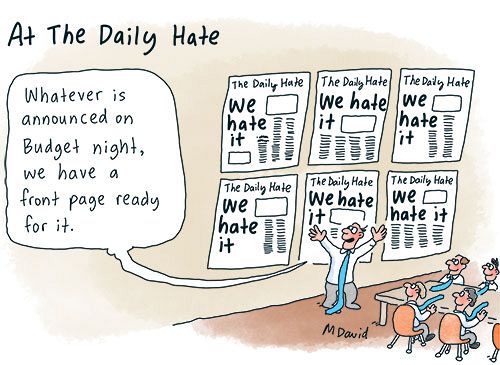
Much has been made of the recent Australian Budget and its treatment of housing and its very modest tax reforms. It is highly unlikely that these timid measures will alter what is a global movement towards the financialisation of capital as it relates to real estate.
Brad Duggan of Metricon, Australia’s biggest builder, expressed concern at what he described as "downward" pressure on prices that could flow from the budget, but also indicated that he thought the new measures would not have any impact on any new housing construction. This offers little hope for those in need.
The reality of the situation is beyond the wit or scope of government, despite the proclamations of the ALP or the opposition parties. The Labor government has made much of its claim that 75,000 more new homebuyers will have the chance to "enter the market" in the next ten years. Even if this eventuates, it will mean just 7,500 more a year, or just 0.034 per cent of all adult Australians. These "lucky" Australians will, of course, then be hit with ever-mounting mortgage repayments and stagnating or declining wages as the economy continues to falter in the face of what appears to be a looming global recession.
How this affects those who will never be able to find the deposit for a house, or are struggling with crippling rents, or sleeping in their cars, has not been subject to discussion but stands as an indictment of a system that allows for profit to ride roughshod over the needs and aspirations of the majority of people.
This, by any measure, violates the UN Charter and its demand that housing, including affordable housing, is a universal human right. But the "right" to turn a profit seems to outweigh human rights and decency.
Dr William Briggs is a political economist. His special areas of interest lie in political theory and international political economy. He has been, variously, a teacher, journalist and political activist.
 This work is licensed under a Creative Commons Attribution-NonCommercial-NoDerivs 3.0 Australia License
Support independent journalism Subscribe to IA.


Related Articles
- Four more things Australia can do to arrest house prices
- Forum reveals widening divide over housing strategy and affordability targets
- The human cost of Australia’s housing crisis
- The Great Australian Dream now belongs to landlords
- The Dom Pérignon buyers' scheme