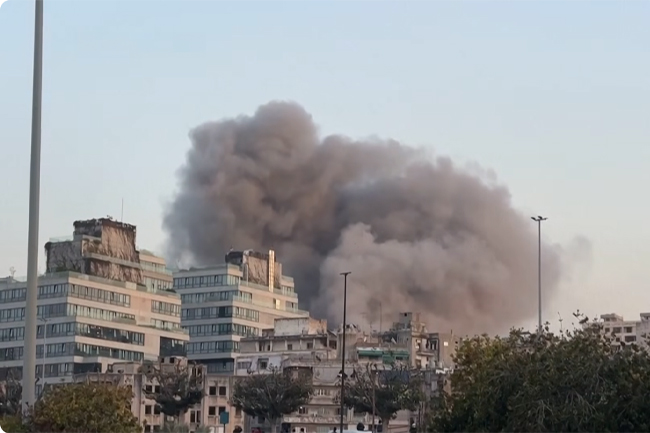
A war for oil isn’t just fuelling conflict — it’s torching the planet, accelerating emissions and burying climate action under the rubble of geopolitics, writes Dr William Briggs.
THE U.S.-ISRAELI WAR on Iran might be able to be resolved in a month, maybe two. Repairing the damage, economically, politically and environmentally, is quite another matter.
The toll in human lives and destruction of civilian infrastructure, and the devastation of so much of Lebanon as Israel goes about its lethal business, is known to us all and we weep at the slaughter of the innocents.
The focus of attention in Australia has been almost exclusively on the price of fuel, its availability and whether gas should be taxed at a more equitable rate. This is all understandable.
Before the war, there was a near consensus that we must do more to save the planet. It was clear that too little was being done to reduce emissions. International gatherings offer pleas which invariably fell on deaf ears as the world, controlled by so few and obsessed as they are with the need to wring as much profit from the heating planet as humanly, or more correctly, inhumanly possible.
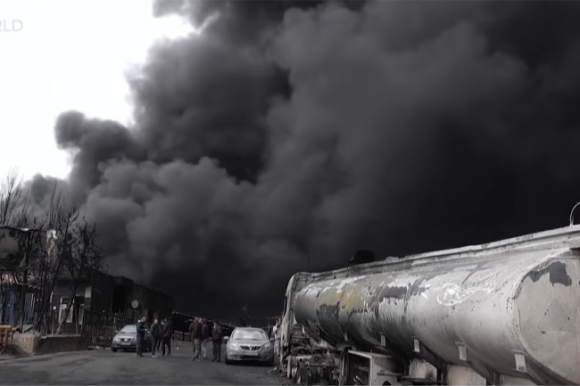
Then came the decision of the USA and Israel to seek the destruction of Iran and the subsequent oil crisis. Oil became the subject du jour. How to get it, whether to drill more wells and how to refine it became the most pressing of all considerations. The planet’s needs, the people’s real needs to live on a liveable planet, became muted and were effectively swept aside.
War, like a virus, has the potential to spread. The global great power rivalries go on. America and China remain locked in a struggle for economic hegemony. What has happened in the Middle East and what is happening is appalling. What could happen if this war became a regional or global war? It beggars belief.
A report was recently issued by The Climate and Community Institute (CCI). The CCI is a progressive climate and economy think tank. Its analysis, based on evidence from the first two weeks of the war, shows that more carbon and gas emissions were produced than are emitted by Iceland in an entire year.
Fully 5.1 million metric tons of carbon dioxide were emitted in that fortnight. It came from the destruction of civilian infrastructure, the burning of oil stored in refineries and tankers, the inevitable fuel consumed in combat and support operations, the destruction of military equipment, and the mass use of materiel; drones, missiles and the weapons used by all parties.
Those first 14 days of the U.S.-Israel war on Iran produced the equivalent of the total emissions from the world’s 84 lowest-emitting nations.
We can but imagine the consequences of a global war, even fought with conventional weapons.
Scant attention is being given to these crimes against humanity. However, the military of any country can and does act with impunity. When emissions are “counted”, they do not include those of the military. The Kyoto Protocol allows for such exemptions in record-keeping.
The total carbon footprint of the world's armies is such that, if it were a single country, it would be the fourth-largest emitter. The American military, were it a single country, would rank among the world’s worst emitters, or 47th on the planet.
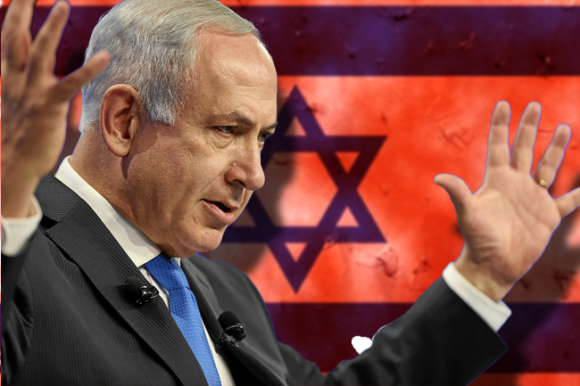
With such a mindset, the USA crashes onward. It has just one overriding objective: to maintain power and woe betide anyone who should stand in its way.
We do not need to imagine the immediate, post-Iran war scramble for more fossil fuels across all nations. The CCI report reminds us that every energy shock has been accompanied by a dramatic surge in the extraction of fossil fuels. Expanded drilling and expanded LNG developments will follow, locking in decades of expanding emissions.
The war was not about regime change or liberating an oppressed people. It was about control of oil as a means of maintaining capitalist market power. U.S. President Trump, unlike his predecessors, tells the truth as he sees it and how the USA has traditionally seen things, but has left unsaid.
As Trump stated at the beginning of April:
If I had my choice, I’d keep the oil.
Unfortunately, the American people would like to see us come home. If it were up to me, I’d take the oil, I’d keep the oil, it would bring plenty of money.
It is the same piratic worldview that drove the U.S. to seize Venezuela’s oil.
The USA and its imperial view of the world and of its place in the world is becoming more difficult to support. More states are seeking alternative arrangements, and then there is Australia and its ready acceptance of its vassal-like status.
A little over a year ago, the Wall Street Journal released a short propaganda video, extolling the advantages of the U.S. military using Australia as a suitable piece of real estate in its war preparations against China. Despite the fiasco of its Iran adventure, the U.S. still has its eyes firmly on the region and “dealing” with China.
In that short video, the audience is told that thousands of U.S. troops will be stationed on a revolve, in the Northern Territory, that Taiwan will be the “flashpoint” for a future conflict, and that the U.S. would intervene. Australia is described as a “strategic hub” and the old term that Australia is an “unsinkable aircraft carrier” was reiterated.
The video points out that, in the event of war with China, U.S. bases and fuel reserves will be “vulnerable” to attack, but that Australia is a “safe” place, being that little further away from Chinese missiles. It is a ludicrous claim, as Australia is well within reach. Among the disgraceful actions of the USA is the construction of fuel dumps that hold 300,000 litres of jet fuel in silos just 15 kilometres from Darwin CBD.
Bases are scattered across the length and breadth of Australia, and yet our leaders continue to bend the knee to U.S. power and investment. Deputy PM Richard Marles recently spoke glowingly of the new National Defence Strategy document, which was just released and carries his signature as Defence Minister.
That document states that:
The United States is our closest ally and principal strategic partner. Our Alliance contributes to the peace and stability of the region…
Any effective balance of military power in the Indo-Pacific will require the continued presence and role of the United States…
Australia’s force posture cooperation with the United States will continue to be a key pillar of our Alliance. It supports Australia’s ability to deter and respond, strengthens the credibility and resilience of the United States’ force posture in the region and supports collective deterrence efforts.
Heaven help us all. The war against Iran and Lebanon has plunged the world into economic chaos and has dealt a devastating blow to any chance of addressing the crisis of climate change. The ongoing policies of the USA, if unchecked, may mean that the carnage of the Middle East is a taste of what might come.
Australians need to be resolute and demand that our real interests are primary, not those of a succession of sycophantic governments of all stripes.
Dr William Briggs is a political economist. His special areas of interest lie in political theory and international political economy. He has been, variously, a teacher, journalist and political activist.
 This work is licensed under a Creative Commons Attribution-NonCommercial-NoDerivs 3.0 Australia License
Support independent journalism Subscribe to IA.


Related Articles
- Late 2026 — far from now
- Oil, war and ecocide: The destruction of the Middle East
- Who's making money? The arsenal trade after Ukraine and Iran
- Waning world order: Ethics in the age of great power politics
- Donald Trump and the Iran War path to madness