
Donald Trump is often treated as an aberration, but history suggests otherwise. In ancient Rome, the rise of Catiline shows how republics under strain can come to tolerate lies, division and political decay, writes William J Dominik.
HISTORY RARELY announces its returns. More often, it reopens fractures within political systems already weakened by neglect.
Familiar patterns reappear under altered circumstances, with just enough novelty to obscure recognition. When institutions weaken, when trust thins and when anger substitutes for policy, republics produce figures who thrive on disorder rather than coherence.
In the final decades of the Roman Republic, one such figure was Lucius Sergius Catilina. In the United States today, the obvious counterpart is President Donald Trump. The point of the parallel is not temperament or spectacle, but function — what such figures do to political cultures already under strain.
Trump’s appeal rests on a posture of perpetual grievance. He presents himself as the representative of those wronged by elites and institutions that no longer command confidence. His rhetoric does not aim at persuasion, still less at policy. It aims at mobilisation, not to manage disagreement but to sustain it.
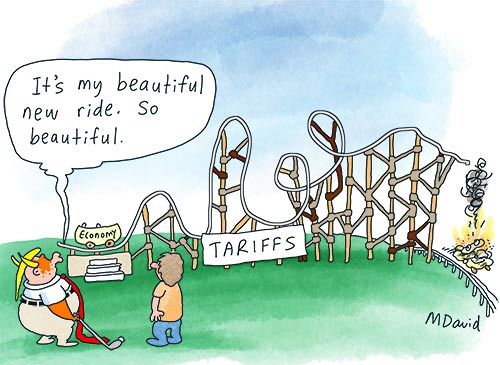
Precision becomes expendable, outrage essential and loyalty more valuable than competence. Politics becomes an arena of constant agitation, in which attention is the principal currency and conflict the principal product.
Within this framework, Trump’s relationship to truth is structural. Falsehoods function not as errors to be corrected but as instruments of cohesion. Elections are declared stolen without evidence, judicial decisions dismissed as corrupt and journalists named enemies. Repetition does the work. What begins as outrage dulls into familiarity, then habit. This pattern has played out in repeated assertions of electoral fraud, in the denigration of courts and officials and in the transformation of routine procedures into scenes of permanent emergency.
The Roman historian Sallust, writing during the Republic in the first Century BC, offers a strikingly similar diagnosis in his The War with Catiline. Sallust does not isolate Catiline as an aberration but situates him within a society already eroded by debt, inequality and corruption after decades of civil conflict. Catiline emerges less as a cause than as a symptom, a figure rising through a political body already compromised.
Catiline’s success lay in his ability to organise resentment. Promising renewal while accelerating division, he presented himself as the voice of the excluded while pursuing power without restraint. His claims did not require credibility; they needed only to resonate with a population that no longer trusted its governing class. Sallust’s judgment is unsparing: Catiline was not an interruption of Republican life but a consequence of its deterioration.
Trump’s politics follow a comparable logic. His falsehoods function as tests of allegiance rather than propositions about reality. Acceptance signals loyalty; rejection marks hostility; correction becomes persecution; and fact-checking is recast as partisan aggression. Truth ceases to function as a shared civic reference point and becomes another weapon in a broader cultural struggle.

Trump’s racism and bigotry operate within this same structure. They are not incidental lapses but signalling devices. Immigrants are cast as criminals and invaders, Muslims as threats, Black and brown communities as sources of disorder, and LGBTQ+ people as cultural dangers. Complex realities are reduced to antagonistic identities and, in doing so, channel diffuse anxiety toward designated targets.
Cruelty follows. Public mockery of the vulnerable, the humiliation of opponents, and punitive policies present themselves as authenticity and strength. Compassion is dismissed as weakness, restraint as duplicity. Over time, this inversion lowers the moral threshold of political life and normalises conduct once considered disqualifying.
Sallust emphasises how Catiline exploited humiliation among those who felt excluded from the Republic’s rewards. Trump’s rhetoric performs the same manoeuvre by redirecting economic insecurity and cultural unease toward convenient enemies while insulating power from scrutiny. Resentment becomes a renewable resource capable of sustaining loyalty even in the absence of achievement.
If Sallust explains the conditions that make demagogues possible, Cicero shows how institutions respond when those conditions harden into threat. During his consulship in 63 BC, Cicero exposed Catiline’s conspiracy in the speeches known as the Catilinarian Orations. Cicero frames Catiline as an enemy within the walls of Rome, a presence that justifies extraordinary vigilance and action. He speaks not just as an orator but as a guardian of Republican order; for him, exposure and denunciation are the means of arresting decline.
The conspiracy was contained. Catiline fled Rome late in 63 BC, raised an army and died in battle the following year. Yet Cicero’s response reveals a recurring dilemma. The confidence with which institutions identify enemies and authorise exceptional measures can deepen the habits of fear that demagogues exploit. Catiline is defeated, but trust is not restored. The Republic survives the crisis without resolving the conditions that made it possible.
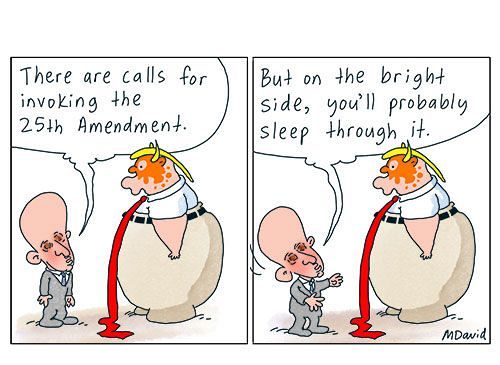
Modern American politics has traced a similar arc. Trump presents himself simultaneously as powerful and persecuted. Accountability is recast as oppression; legal scrutiny as conspiracy; and personal grievance as political principle. Corruption is normalised as public office is treated as personal property. Loyalty is rewarded, dissent punished and responsibility deferred.
Trump’s durability lies not merely in electoral outcomes but in the political culture he has consolidated. Contempt for truth becomes strategy, racism reframed as candour, cruelty mistaken for strength and corruption excused as shrewdness. Civic language hardens into insult and threat, while politics collapses into identity warfare rather than collective self-government. This is not simply a matter of individual character: it is a test of republican resilience.
Sallust closes his account of Catiline with an implication that history soon confirmed. The Roman Republic survived the conspirator, but not the conditions that produced him. Within a generation, after further cycles of internal violence, the Republic yielded to autocracy.
That is the warning worth heeding. Trump does not need to overthrow the state to damage it. The damage lies in accustoming citizens to falsehood, division, cruelty and contempt for democratic norms. Catiline fell on the battlefield; the Roman Republic dissolved more quietly, after the habits that sustained it had already eroded.
History does not predict outcomes, but it clarifies stakes. Republics rarely collapse in a single dramatic moment. They weaken gradually as trust thins, standards fall and spectacle replaces judgment. Political structures remain, but the habits that sustain them erode — until the republic falls.
William J Dominik has American and Australian citizenship with a PhD from Monash University, Australia.
 This work is licensed under a Creative Commons Attribution-NonCommercial-NoDerivs 3.0 Australia License
Support independent journalism Subscribe to IA.


Related Articles
- CARTOONS: Fight-loving peace president's latest White House stunt
- The making of America's first dictator
- Trump now placed to end U.S. democracy
- Donald Trump is trashing the Australian economy
- CARTOONS: Mark David's timing is off