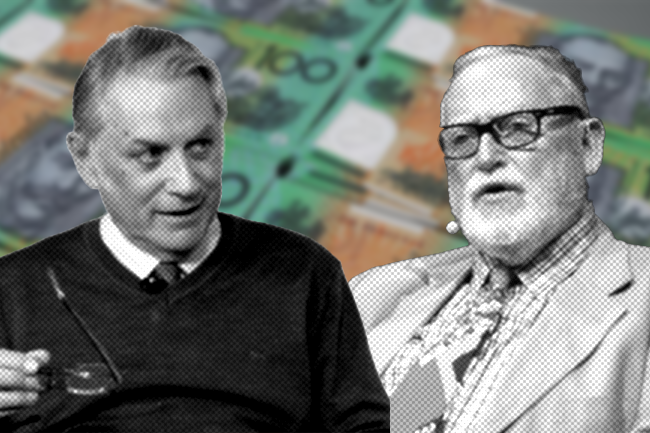
The myth that billionaires earn their fortunes through hard work is a convenient fiction that justifies extreme inequality and blames the poor, writes Dr James Schuurmans-Stekhoven.
LET’S GET ONE THING straight: no one becomes a billionaire by working hard. They become a billionaire by being lucky, born a meter from the finish line and then telling everyone who took off from the starting line that they out-sprinted them.
The “self-made” billionaire is the greatest fairy tale since the tooth fairy. Only the tooth fairy leaves pocket change. Billionaires take government hand-outs and leave smugness.
Here’s the argument you hear ad nauseam: “I earned my fortune through hard work and smart choices. The poor? They just didn’t try hard enough.”
It sounds almost noble until you apply even a toddler’s worth of logic.
First, if hard work made you rich, every cleaner, every nurse and every fruit picker in this country would be a millionaire. Every farmer in the third world would be rich. They work harder than any CEO, for a fraction of the pay.

The billionaire confuses “effort” with “extraction”. She didn’t work harder; she just captured more value created by other people’s labour. As the late Nobel laureate Herbert Simon estimated, about 90% of economic welfare derives from what previous generations left us. Wealth is largely the result of the “natural lottery” of the geography of birth and inherited advantage — not moral superiority.
Second, the argument assumes everyone wants the same thing. It never occurs to our billionaire that some people are perfectly content with a quiet life, a garden and time with their kids. They don’t lack motivation; they lack her neurotic, status-obsessed hunger. And given how many non-billionaires there are, that’s hard to call a moral failing. That’s sanity.
And third – and this is the killer – if everyone followed her advice and became a billionaire, what would happen? Absolutely nothing. A billion dollars would buy you a loaf of bread. Wealth is positional. Her status depends entirely on everyone else having less. She is essentially saying: “Run faster so you can stay exactly where you are, while I sit in the helicopter watching you sweat.”
But here’s the tell: she protests too much.
Have you noticed how often billionaires bang on about their own hard work? How they never miss an opportunity to tell you they were up at 4 A.M., that they “built this from nothing,” that they “didn’t inherit a dime”? President Trump is relentless at it.
It’s compulsive. It’s desperate. It’s the verbal equivalent of sweating through a lie detector test.
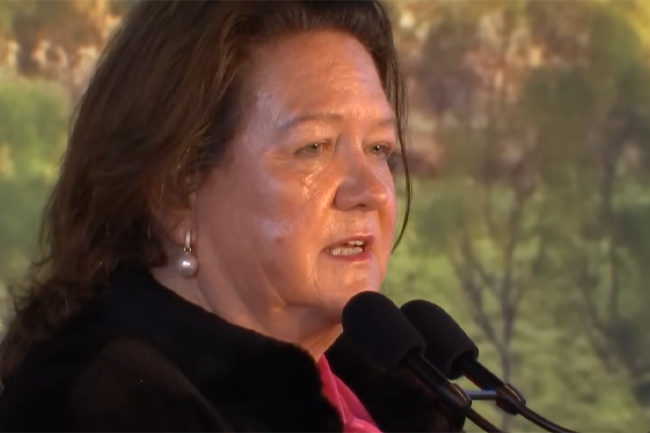
Take Australia’s richest person, Gina Rinehart. She has repeatedly insisted that “extremely hard work got us to where we are” and that if you want more money, you should “spend less time drinking, or smoking and socialising, and more time working”. She has actually told workers to take shorter lunch breaks and put in longer hours if they want to succeed. Who knew our biology was keeping us poor? What next, stop eating altogether?

But here’s the thing Rinehart leaves out: she inherited a mining company from her father, Lang Hancock. Yes, it was debt-laden. Yes, she built it into a giant. But she started with a mining empire and a famous surname – advantages 99.9% of Australians will never see. Hancock Prospecting didn’t emerge from a garage. It emerged from a fortune built on the back of a man who “discovered” iron ore in the Pilbara while flying a plane over land that had been there for millions of years.
Rinehart protests so loudly because she knows. She knows her fortune is largely arbitrary — a twist of fate, a helpful inheritance, a tax loophole her accountants found. She knows she didn’t “earn” it in any moral sense. And that knowledge gnaws at her. So she overcompensates. She repeats the myth until she almost believes it herself.
It’s the classic Shakespearean giveaway: ‘The lady doth protest too much, methinks’. The louder they insist they deserve it, the more obvious it becomes that they know they don’t.
The Australian context makes this even more obscene.
While our billionaires lecture us on hard work, the numbers tell a very different story. Between 2015 and 2025, the number of billionaires in Australia more than doubled, from 74 to 161. Their combined wealth surged by 160%, reaching a staggering $667.8 billion. That’s an average of more than $137 million added every single day over the past decade. Or, if you prefer, about $600,000 per billionaire per day.
Meanwhile, the 2025 Foodbank Hunger Report found that one in three Australian households experienced food insecurity — they either stressed about or struggled to put food on the table. Three-quarters of those struggling households were navigating food shortages for the first time ever. Some 3.7 million people, including 757,000 children, live below the poverty line.
Let that sink in. While Gina Rinehart adds $600,000 to her fortune before tomorrow’s breakfast, Australian families are deciding whether to pay rent or feed their kids. And she has the audacity to tell them that they’re not working hard enough?
The gap between the richest and poorest on the Financial Review Rich List has grown from $1.09 billion in 1984 (adjusted for inflation) to $37.36 billion in 2025 — an increase of 14 times over four decades. The top 10% of Australian households now control 44% of all our wealth. And 48 billionaires hold more wealth than the bottom 40% — almost 11 million people.
This isn’t a meritocracy or a symptom of a sloth-plagued workforce. It’s a rigged game.
So why do the rich and their desperate little disciples keep peddling this obvious nonsense?
Because it works. It’s not an argument. It’s a weapon.
For the billionaire, it’s psychological armour. She can’t sleep at night knowing her fortune is largely arbitrary. So she tells herself she deserves it. And to make that stick, she must tell the poor they deserve their poverty. It’s ugly. It’s cruel. And it’s completely self-serving.
For the wannabes, it’s false hope. The middle manager working 60-hour weeks laps up this myth because it tells him he’s not a loser, just “temporarily delayed”. It keeps him obedient, exhausted and too busy climbing the ladder to notice the billionaire owns the ladder.

And for the billionaire’s lawyers, it’s a political shield. If wealth is “earned”, then taxing it is “theft”. Never mind that her fortune was built on public roads, educated workers and a stable currency paid for by taxpayers. The intergenerational wealth transfer – estimated to reach $5.4 trillion in Australia by 2050 – is largely the result of an extraordinary housing bubble that has enriched Boomers at the expense of Millennials and Gen Z.
That bubble and the associated inheritance windfall are creating all sorts of economic and social problems: low productivity, greater inequality, lower fertility rates and a swiping away of the “fair go” that supposedly defines this country.
But let’s call this what it really is: disgusting, dehumanising garbage.
It reduces human worth to a bank balance. It implies a single mother working two jobs has less “will” than a hedge fund bro. It denies the poor their dignity, their struggles and their stories.
The most profound rebuttal to the billionaire’s argument isn’t economic — it’s moral. You don’t have to earn your right to exist, to have shelter, or to eat. A society that judges human value by net worth is not a meritocracy. It’s a caste system with a highly crafted PR campaign.
So the next time some fat-cat tells you the poor just didn’t work hard enough, don’t argue economics. Laugh in her face. Then ask her: “If you’re so confident you deserve it, why do you keep telling us?”
That silence – or that red-faced, sputtering rant – will tell you everything.
Dr James Schuurmans-Stekhoven has a career defined by high-level academic rigour, a polymathic approach to research and a commitment to strategic optimisation across multiple disciplines.
 This work is licensed under a Creative Commons Attribution-NonCommercial-NoDerivs 3.0 Australia License
Support independent journalism Subscribe to IA.


Related Articles
- Artificial inequality in the age of AI
- Australia's 'Young Rich List' is one more unneeded celebration of the elite
- Australia’s real economic challenge isn’t welfare dependency — it’s inequality
- Wealth divide seeing rich prosper at expense of millions in need
- Deteriorating health, housing and education upshot of inequality