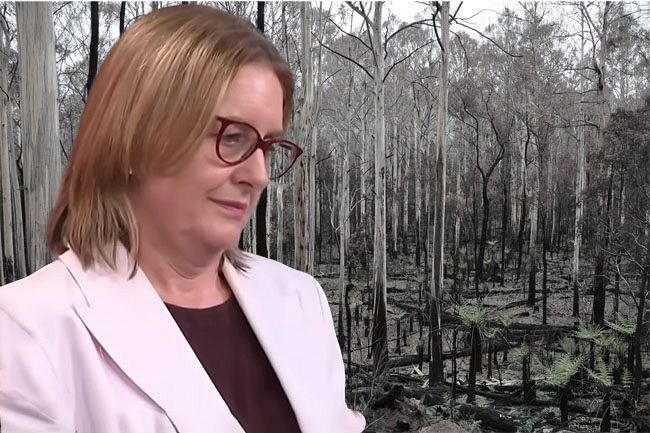
After devastating bushfires, critics say the Allan Government has abandoned wildlife rescue efforts while allowing hunting to continue, writes Sue Arnold.
THE VICTORIAN Labor Government, led by Premier Jacinta Allan, is providing clear evidence of what lies ahead for Australia’s wildlife, ecosystems and environment under Labor governments.
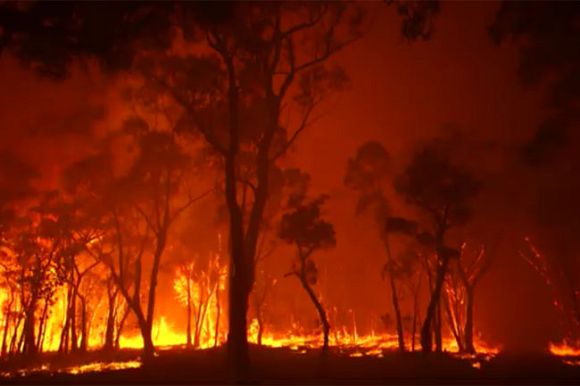
The devastating environmental damage caused by the ferocious bushfires in January and February provides a damning picture of environmental negligence by Allan’s government.
Georgie Purcell, leader of the Victorian Animal Justice Party and a member of the Victorian Legislative Council, summed up the current situation after ferocious bushfires destroyed more than 400,000 hectares.
It’s incredibly disappointing and alarming trying to get any information about wildlife from the Department of Energy, Environment and Climate Action (DEECA).
There’s a serious transparency issue on native animals. Questions on notice in Parliament have made it clear that trust issues will never improve with the lack of respect shown.
In stark contrast to the current concerns, actions and funding provided by previous Premier Daniel Andrews after the Black Summer bushfires burnt 1.5 million hectares across Victoria, Premier Allan’s response to the recent fires is deeply concerning.

The Andrews Government acknowledged hundreds of millions of animals were lost in the Black Summer fires in Victoria. As well as recognising areas where the rescue response could be improved. A Wildlife Welfare Bushfire Response Action Plan was put into motion.
The Andrews Government’s initiatives were funded by a $59 million bushfire biodiversity response and recovery program described as a part of a suite of measures to protect and enhance our precious environment, implemented since the 2019/2020 fires.
Georgie Purcell was heavily engaged in the Andrews Government wildlife welfare round tables organised after the fires.
I’m still trying to cope with the stark shift in sentiment, treatment and failure to respond to the current fires by the Allan Labor Government.
Wildlife and animal issues are always pretty woeful under Premier Allan, but they’re so much worse in the aftermath of these fires. I’ve been talking to many trained rescue volunteers who were waiting to receive a call from DEECA to take action. No calls were received, leaving volunteers faced with an impossible scenario. Go and help animals but only by breaking the law.
In the aftermath of the Black Summer fires, food drops, water stations, aerial monitoring, rescuers with more ability to take animals in, all happened. The round tables were convened to improve on the massive failures. We really hoped the recommendations would create a pathway to change.
We can point the deeply concerning shift in policy and priorities squarely at the Premier.
There’s no available evidence demonstrating DEECA is making food drops, installing water stations or undertaking wildlife surveys.

The Action Network – a coalition of Victorian conservation organisations – in an open letter to the Victorian Labor government wrote:
‘Horrendous devastation caused by ongoing drought and fires has inflicted immeasurable harm on Victorian wildlife and ecosystems, with some already endangered species approaching extinction. The neglect and continued destruction of wildlife by the Victorian Government is particularly distressing to those who work and volunteer in wildlife conservation and related fields.’
Conditions in Victoria are deteriorating with climate change impacts severely impacting the most cleared land state in the nation.
Professor Tim Flannery says south-eastern Australia (where the state of Victoria is located) has been getting hotter and drier for decades, and 2019 was Australia's hottest and driest year on record, with 2018 being equally dry over south-eastern Australia and almost as hot.
Victoria, with its topography, highly flammable vegetation and frequent exposure to extremely hot, dry, windy weather, has historically borne a far greater burden of bushfire disasters than other jurisdictions and other regions globally.
A Victorian Parliamentary Inquiry into the recent fires, primarily pushed by the Liberal and National parties in the Legislative Council, has broad terms of reference, including the impact on the environment and fire service funding. A report is due by 1 June, 2026.
Firefighters did it tough and their concerns are paramount in the Inquiry.
President of the CFA Volunteers group, John Houston, says:
Firefighters on the frontlines have been speaking out about the lack of safe appliances, equipment and basic resources.
The Allan Government has ignored and ridiculed the very same people it’s asking to put their lives at risk to protect life and property. This bushfire crisis became catastrophic. Victorians deserve to know why.
One very obvious and appalling demonstration of the Allan Government’s disregard for animal welfare, biodiversity and fire damage is the looming commencement of Victoria’s “recreational duck hunting season”. The season runs from 18 March to 8 June, resulting in an estimated 12.2% of Victoria’s waterbirds killed. Shooting can begin 30 minutes before sunrise to 30 minutes after sunset with a nine-bird limit daily.

Waterbird populations in Victoria and across Eastern Australia are experiencing a long-term critical decline, with surveys indicating a 90% drop in abundance over the last four decades.
Victorian waterbirds were heavily impacted by the recent fires.
Based on recent reports, an estimated 391,900 game ducks were harvested during the 2024 Victorian duck hunting season, representing a 22% increase above the long term average of approximately 320,000 birds.
A report by the Game Management Authority claims an estimated 457,400 stubble quail were harvested in 2024, almost triple the long-term average of 159,000.
RSPCA Victoria estimated between 23,500 and 157,000 ducks were wounded or not killed outright in the 2024 season, resulting in significant animal suffering. The agency estimates duck hunting is an activity undertaken by 0.18% of the population.
According to the Game Management Authority, any harassment of hunters could result in significant fines up to and exceeding $9,600 as well as criminal convictions.
In 2023-2024, the Electrical Trades Union, together with the CFMEU and AMWU, rejected a proposed ban on duck hunting, threatening industrial action if the Government proceeded with a ban.
The Allan Government agreed with the unions and in spite of a Labor-led inquiry recommending a ban on duck hunting, Allan insisted the hunt proceed. No doubt Allan was in sync with her father, Peter Allan, a long-standing member of the ETU, as well as her husband, Yorick Piper, a former Victorian official in the CFMEU.
A coalition of unions said ‘if a ban went ahead, they would “ban all state Labor politicians from attending BIG union projects, including the government’s Big Build projects”.’
The Big Build projects are currently the focus of claims by Geoffrey Watson SC of corruption at the CFMEU, citing blowouts linked to the union costing taxpayers at least $15 billion.
Unions argued that duck hunting is a legitimate, traditional, working-class recreational activity that provides essential mental health benefits, especially for shift workers. Shades of the Makah tribe in Washington state, USA, who seek to resume whaling to combat issues like drug and alcohol addiction among their youth.
According to the tribe, killing whales will re-establish traditional values, foster community cohesion to combat the despair and social challenges present on the reservation.
Victoria’s involved unions see any ban as leading to a ban on fishing, boating and other fantastic pursuits. In failing to adopt the Parliamentary Inquiry’s recommendation and agreeing with the unions, Premier Allan has, in effect, notified workers that killing wildlife is okay, as it will help any mental health problems.
Thus far, there’s no peer-reviewed published research that demonstrates killing ducks and whales will resolve mental health issues, combat drug and alcohol addiction and foster community cohesion.
A state election will be held in November. Whether there’s sufficient voter rage over the ongoing environmental negligence by the Allan Government remains to be seen. But the Labor message is loud and clear.
If ducks are in the way of mentally challenged workers, then kill ‘em off. Trouble is, we might all be ducks.
Sue Arnold is an IA columnist and freelance investigative journalist. You can follow Sue on Twitter @koalacrisis.
 This work is licensed under a Creative Commons Attribution-NonCommercial-NoDerivs 3.0 Australia License
Support independent journalism Subscribe to IA.


Related Articles
- Pressure mounts on Albanese Government over failure to sign nuclear ban Treaty
- Chalmers urged to solve a productivity problem that may not exist
- Jobs, inflation and luxury spending all keep setting records
- Election recap: Democracy was done but with dark clouds at extreme Right
- Now let’s see how Labor transforms the nation