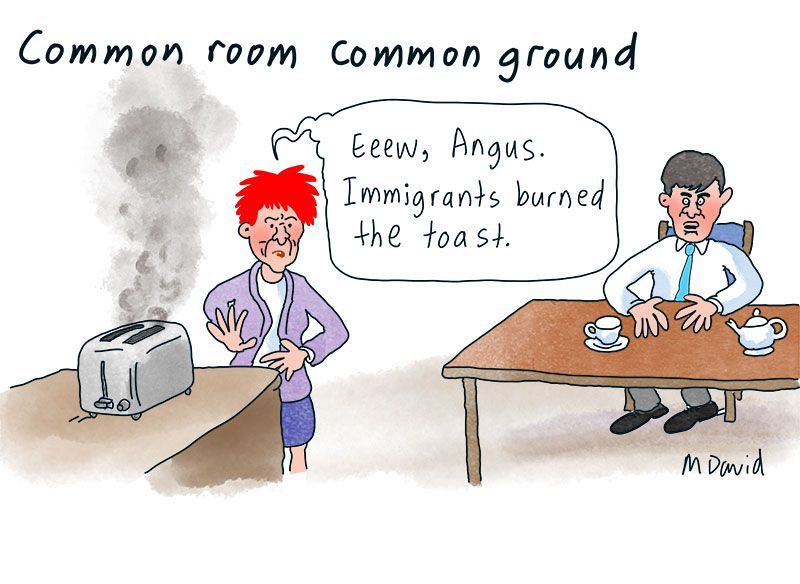
The practical, legal and economic realities behind Labor, Coalition and One Nation migration targets are far more complex than campaign slogans suggest, writes Dr Abul Rizvi.
IN HIS BUDGET REPLY, Opposition Leader Angus Taylor said he proposes to cap Net Overseas Migration (NOM) each year to the number of homes completed in Australia.
One Nation has a policy of negative 100,000 net migration per annum which would result in an unprecedented acceleration in population ageing while the Labor Government has also committed to further but a more modest reduction in net migration. So how would all three go about implementing their policies?
Taylor’s policy as currently described is beyond power
There is currently no power in the Migration Act that enables the Government to “cap” net migration. While the Government can “cap” most permanent and temporary visas it issues, it can’t actually “cap”net migration. That is because net migration measures people movements for periods greater than 12 months out of 16. Net migration is not a measure of visas granted nor the stock of visas in force.
An individual can move in and out of Australia many times with varying lengths of stay on the same visa. Temporary visas are time-limited in terms of length of validity while permanent visas and visas for New Zealand citizens are not. Most temporary visa holders can apply for further visas after arrival. Outside a pandemic, we have never capped people movements. No country has successfully “capped” people movements outside a pandemic.
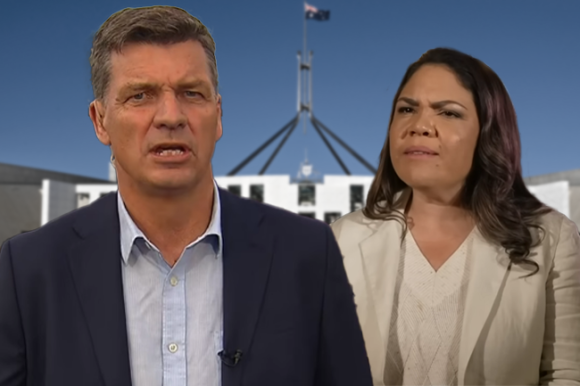
Capping net migration (as opposed to capping visas) would involve either preventing people with a right to enter Australia from boarding an aeroplane to Australia or turning them around at the airport in Australia when they land. Even if there was a legal power to be able to do so, this would be absolutely chaotic, particularly if large numbers of people were to be turned around at Australian airports because the net migration cap had been reached.
Whether Taylor intends to seek a general capping power for net migration and whether such a power would be constitutional or even workable is yet to be seen. He has made no mention of seeking such a power.
So how could he implement his policy without such a power?
Net migration and housing
Taylor went on to say:
‘The Housing Minister will report the number to Parliament each year and that number will set the ceiling for the NOM in the following year.’
If the very strong upward trend in housing commencements in the December quarter of 2025 at over 53,000 (over 210,000 per annum and rising less around 25,000 demolitions per annum) continues and if net migration falls to the 225,000 forecast by the Government, it would mean net house completions would significantly exceed population growth by 2027 (assuming an average of 2.4 persons per household).
If house prices start to fall (as now appears likely, including due to changes to tax arrangements), Taylor will quickly back out of his promise to annually link net migration to housing completions, especially if these increase strongly as forecast. His Housing Shadow Minister has already said, contrary to Taylor’s words in his Budget reply, that the policy intention is not a one-to-one match between housing completions and net migration. What kind of match is actually intended is not clear.
One Nation’s net migration target of negative 100,000 per annum, which would require a very weak labour market, as in Canada, would quickly create a significant excess of houses compared to population growth. The resultant fall in house prices would lead to builders becoming increasingly hesitant about building new houses. Australia’s property industry would be in turmoil.

Problems of timing
The latest 12-month data on housing completions was around 170,000 to end December 2025. Assuming a Coalition Government would have used 170,000 for its cap on net migration in 2025-26, at this stage of the financial year (May), Taylor would only have access to Australian Bureau of Statistics (ABS) net migration data to the September quarter of 2025. That was around 87,000, so less than his cap for 2025-26.
Preliminary ABS estimates of net migration for the December quarter of 2025 will not be available until July 2026 (after the financial year is over). Too late to be used to apply a cap.
But let’s assume Taylor would develop his own progressive estimate of net migration during the financial year. He may estimate that the cap of 170,000 was reached around January/February 2026. How would he then have implemented his cap, noting there is currently no power to cap people movements? He would have had to act much earlier in the financial year to cap visa grants across a range of visa categories (around September/October 2025).
That would be chaotic across a range of industries, including international education, tourism, agriculture, construction and health/aged care.
Net migration is about much more than housing
While housing is indeed important, the design of immigration policy is about much more than that.
Taylor knows that reducing net migration to the levels he proposes would require making some very difficult decisions that would anger a range of industries and many in the business community on whom he relies for support. It’s why he refuses to say where his net migration cuts would land. And he will dodge that question for as long as he can.
But applying a cap on net migration will eventually require him to reveal what he proposes to cut.
At some stage, One Nation may also have to reveal what they would cut to deliver net migration of negative 100,000 per annum without a very, very weak labour market. One Nation may actually need both to get to its target.

Net migration includes Australian and NZ citizens
There are around a million Australian citizens who are at any one time either living or holidaying overseas. If they have been outside Australia for more than 12 months out of 16 and return to Australia for more than 12 months out of 16, they are counted as a net migration arrival. At the time of arrival, it is difficult to say if they will stay in Australia long enough to be counted and hence the ABS can initially only make estimates of this.
In 2024-25, there were 64,000 Australian citizen net migration arrivals, plus a much larger number of Australian citizens who were overseas short-term. It would be illegal to prevent any of them from continuing to return. So presumably, the Government would have to allow for that in its cap, offset by the estimated number of Australian citizen net migration departures (around 81,500 in 2024-25).
A similar situation arises with NZ citizens where we have in place the Trans-Tasman Travel Arrangement (TTTA). In 2024-25, there were 53,000 NZ citizen net migration arrivals and 14,700 net migration departures. Unless the Coalition re-negotiates the TTTA, it would not be able to cap NZ citizen net migration arrivals or force them to depart earlier.
It would also need to find a practical way to separate NZ citizen net migration arrivals who are to be capped from NZ citizen tourist arrivals (who the Coalition presumably would not want to cap).
How One Nation would deal with NZ citizens under its net migration target of negative 100,000 is not clear. Senator Pauline Hanson may just unilaterally repudiate the TTTA in a Trump-like fashion. That could have severe consequences for Australia’s tourism industry, particularly in Queensland, where most NZ citizens visit.
Permanent residents and net migration
The next cohort Taylor would need to address would be permanent resident net migration arrivals and departures. This includes both existing permanent residents who may have been out of the country for more than 12 months, as well as new permanent residents who have recently received a visa. In 2024-25, there were around 88,000 net migration permanent resident arrivals and around 18,600 departures.
To reduce the number of net migration permanent resident arrivals who are new offshore permanent visa applicants, Taylor could cap the number of such visas issued and reduce the size of the permanent migration program. But the Migration Act does not allow the Government to cap partner and child visas. Taylor’s cuts would need to fall largely on the offshore humanitarian program and skilled migration visas. Cuts to the latter would lead to significant blowback from the business community, especially if the labour market remains strong.
It would not be possible to prevent the arrival of existing permanent resident visa holders who have been overseas for 12 months and seek to return. Taylor’s cap would somehow need to take these net migration arrivals into account.

For One Nation to meet its net migration target, it would need to abolish the humanitarian program (including withdrawing from the Refugee Convention as it has promised) and abolish the skill stream of the migration program other than from key nations favoured by One Nation (such as UK and Ireland). This would require an amendment to the Racial Discrimination Act.
This would negatively impact a range of industries, but the most immediate impact would be on health and aged care in the context of an acceleration in population ageing. Increasing numbers of elderly Australians in regional Australia in particular, the people most likely to vote One Nation, would face even longer wait times for access to health and aged care services.
Temporary entrants and net migration
In 2024-25, there were around 363,000 temporary net migration arrivals and around 148,000 net migration departures.
To deliver on their respective forecasts/targets, Labor, the Coalition and One Nation would all need to tighten policy on temporary entrants to different degrees as follows:
Students
- Labor: Needs to find a targeted, more cost-effective and less ambiguous means of further tightening student visa policy than just ramping up refusal rates. It would be best to reduce applications by requiring students sit a university entrance exam and meet designated passmarks to be able to lodge a valid application. A much more targeted temporary graduate visa would also be needed. But it could do that without a major further reduction in the size of the International Education industry.
- Coalition: Would need to do the same as Labor needs to do but with a much larger reduction in the size of the industry leading to larger job cuts with some universities and many private providers facing bankruptcy. Between 30 per cent to 50 per cent of university revenue is from the tuition fees of overseas students.
- One Nation: Would need to abolish overseas student visas leading to Australia’s fourth largest export industry being abolished along with job cuts approaching 100,000 (in both public and private providers) plus a negative impact on a large number of non-education businesses that operate near the precincts of international education providers and rely on overseas students for customers (such as fish and chip shops).
Working Holidaymakers
- Labor: Has announced a review of WHM visas. Key changes that could be made to reduce numbers include abolition of the third WHM visa option introduced by the Morrison Government and possible application of an English language test for all WHM visa applicants other than those from English speaking nations (requiring agreements with key nations to be re-negotiated). It would need to cease negotiating new agreements. These changes would be opposed by tourism and agriculture industries.
- Coalition: Would need to tighten WHM visas even further, possibly abolishing the option of both the second and third WHM visas. The Coalition may also abolish the WHM visa for “bad countries”. The opposition to this from businesses in regional Australia would be overwhelming.
- One Nation: May be able to retain the WHM visa for a few nations (such as the UK and Ireland) but unilaterally abolish it for other major countries (such as China, India, Indonesia, Japan, South Korea). Such a Trump-like approach may be strongly favoured by One Nation. The consequences of such unilateral actions for our trade relations with these nations could be severe (with a major impact on regional Australia in particular).
Skilled temporary entry
- Labor: Needs to slow the application rate for this visa possibly by further increasing the minimum salary (with nurses being an exception) and increasing the minimum skilled work experience requirement from one year to two years.
- Coalition: Would need to tighten policy even further, possibly abolishing regional concessions and an even bigger increase in the minimum salary.
- One Nation: May abolish this visa other than from certain countries (such as the UK and Ireland) with a massive backlash from the business community as well as contravening various free trade agreements (for example, with China and India).
Conclusion
Taylor will eventually need to accept that “capping” net migration is a non-starter. He will likely do this by pretending he never meant an actual cap on net migration but only a rhetorical cap. He will also need to accept that the likely rise in house completions over the next 1-2 years and a fall in house prices will mean linking net migration to housing completions no longer makes sense. If strictly applied, he may end up having to increase net migration above Labor’s forecast. He would not do that.
A better approach would be for both Labor and the Coalition to develop and explain to the Australian public a long-term plan for net migration that addresses the range of issues involved, not just housing.
Explaining that plan to the Australian public would not only be good policy but may also be the best way to address the surge in popularity of One Nation by exposing the consequences of One Nation’s immigration policies for Australia’s future (such as rapid acceleration of population ageing, particularly in regional Australia); making Australia a global pariah because it repudiates numerous international agreements and conventions and massive job losses as key industries are hit hard by a policy of negative 100,000 net migration.
Dr Abul Rizvi is an Independent Australia columnist and former Deputy Secretary of the Department of Immigration. You can follow Abul on Twitter @RizviAbul or Bluesky @abulrizvi.bsky.social.
 This work is licensed under a Creative Commons Attribution-NonCommercial-NoDerivs 3.0 Australia License
Support independent journalism Subscribe to IA.


Related Articles
- CARTOONS: Mark David doesn't like brown bread
- Feeding the rich, poor fed to wolves. Well done Angus!
- EDITORIAL: Feeding the rich, poor fed to wolves. Well done Angus!
- Behind Angus Taylor’s immigration plan is a Trump‑like economic agenda
- Angus Taylor pushes English requirement for permanent visa holders