The Gaza flotilla drew global attention, but its activists delivered a stark message: the suffering they briefly experienced reflects the daily reality faced by Palestinians, writes Wayne Hawkins.
SOMETHING HAPPENED RECENTLY that made the world pay attention.
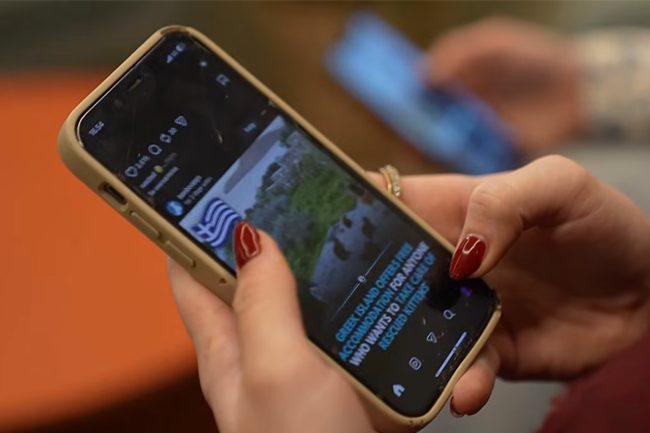
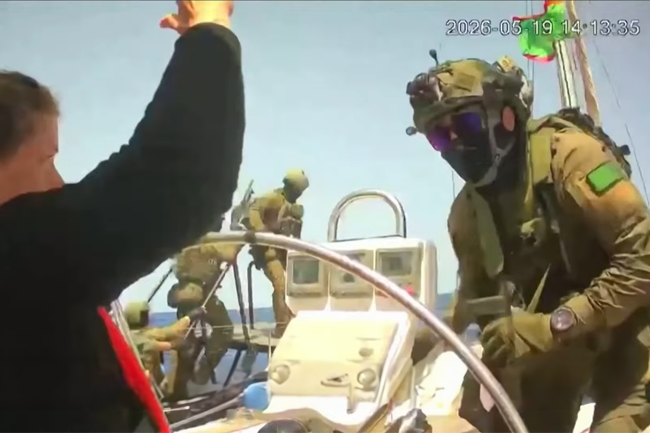
Activists aboard a humanitarian flotilla – journalists, politicians, aid workers and people of conscience from across the democratic world – found themselves in the path of a military operation in international waters. Their phones were taken. Their messages went dark. For hours, the world did not know where they were or what was happening to them.
Governments issued statements. Leaders demanded answers. Protests were held. The news cycle erupted.
And then the activists spoke. Almost all of them said the same thing, in one form or another: what happened to us for a few hours is what happens to Palestinians every single day.
It is a powerful and important observation. It was also, within the week, almost entirely lost.
This is the pattern. Not the violence — the forgetting.
The flotilla made the news because the people aboard it came from places the world has already decided matter. They held passports that carry weight. They had social media followings, government connections and the institutional credibility to make their disappearance impossible to ignore. When they were stopped, the mechanisms of international concern activated quickly and loudly.
None of that is wrong. Their safety mattered. The principle at stake – freedom of movement in international waters, the right to deliver aid to a civilian population – matters enormously.
But the activists themselves understood the dissonance before anyone else named it. They had volunteered to sail toward a place where this is not an exceptional event. It is Tuesday. It is every Tuesday and every day that comes after.
The question that deserves to outlast the news cycle is a simple one: why does the world respond to a few hours of danger for Western activists with an urgency it has never – not once, not consistently – sustained for the people those activists were trying to reach?
There was a school. It was being used as a shelter, as schools in Gaza have been throughout this war, because when everything else is gone, people go where the walls are thickest and the symbol of protection is strongest. The school was struck. People ran toward it to pull the wounded out. It was struck again.
The world noticed. There were statements. There were calls for investigations. The news moved on within the week.
There have been the journalists. Not one at a time; that would be easier to absorb, easier to mourn, easier to fit into the architecture of a single story with a single name and a photograph. In groups. Buried together, colleagues carrying colleagues, funerals held for people whose entire professional purpose was to make the world bear witness.
Gaza has become the deadliest conflict for journalists in recorded history. The Committee to Protect Journalists has documented the deaths. The numbers are not in dispute. The images of the burials exist. They circulated. They were shared. People said it was unconscionable.

The world noticed. The world moved on.
This is not an argument against caring about the flotilla activists. It is an argument about the architecture of our attention — about who gets to be a story and who gets to be a statistic, and about what happens to our moral seriousness when the camera turns away.
The activists said it themselves: their hours are Gaza’s years. They experienced a fraction of what the civilian population has lived continuously – the uncertainty, the powerlessness, the sense of being at the mercy of a force that holds all the cards – and they came back changed by it. They spoke about it with urgency. They pleaded with audiences to understand the scale of what they had briefly touched.
And the coverage moved past that plea to the diplomatic implications. To the bilateral tensions. To the question of what the relevant governments would do next.
What the relevant governments will do next, based on the evidence of the past several years, is issue carefully worded statements, hold some urgent meetings and eventually move on. They have moved on before. They moved on from the school. They moved on from the journalists buried in rows. They will move on from this.
The real test of whether the flotilla changed anything is not what governments say in the week that follows. It is whether, six months from now, the shelters are still being struck and the world is still looking the other way — and whether anyone will still be paying enough attention to notice.
The activists gave us the frame. They handed us the comparison and said: “This is what it is like, every day, for people who cannot leave.”
It would be a particular kind of failure to receive that gift and do nothing with it except feel briefly, deeply moved — and then move on.
Wayne Hawkins is a small business owner in Hobart, Tasmania, and an independent candidate for the federal seat of Clark at the 2028 Election.
 This work is licensed under a Creative Commons Attribution-NonCommercial-NoDerivs 3.0 Australia License
Support independent journalism Subscribe to IA.


Related Articles
- Prime ministerial loyalty on trial in Australia’s ‘Gaza’ war
- What Gaza and Ukraine reveal about a new era of imposed peace
- UN endorses Trump-backed Gaza plan, drawing condemnation from Palestinians
- Unseeing genocide: How the West lost Its moral compass in Gaza
- The Union remembers its dead