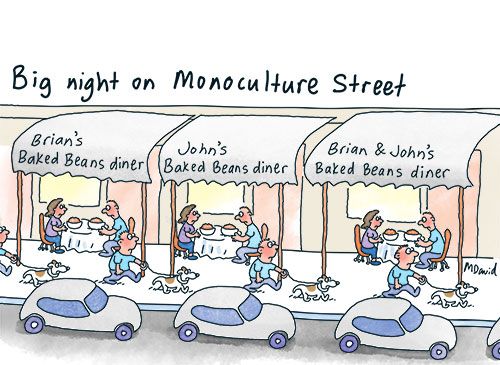
As Australia celebrates the multicultural Socceroos on the world stage, the rise of One Nation raises uncomfortable questions about who is accepted as Australian and under what conditions, writes Leon David.
ON SUNDAY AFTERNOON, 14 June, Nestory Irankunda scored for Australia with thousands, maybe millions, cheering his extraordinary goal against Türkiye at the World Cup.
Mere hours later, media outlets across Australia referred to polls showing that One Nation is the clear leader in national polling for the first time.
To any casual observer, it's a simple case of maths. If millions are cheering on Irankunda's stunning goal, there must be a large subsection of these very supporters also supporting One Nation. A party, despite its attempts to cover its racism under a cloud of concern for the country and its supposed identity, that would likely not want people like Irankunda here, not to mention many of his immigrant-origin teammates.
How can this juxtaposition exist?

Before people jump to conclusions, one point needs to be made clear. Advocating for a reduction in immigration is not the problem per se. The issue is that the One Nation narrative is tied up with a multi-decade track record of targeting certain types of immigrants, whether Muslim, Asian or any other people of colour. If that isn't racism, then I don't know what is.
It is, of course, not a unique phenomenon. It's not restricted to Australia, either. There are countless examples where a person of colour is lauded for his or her exploits on the sporting field only to face exclusion, discrimination and hostility once off it.
As far back as 1936, after Jesse Owens embarrassed the Nazi Party, he faced continued discrimination and segregation once he returned home in the United States. He was cheered whilst he was representing his country against an evil empire. But he was not considered American once back home.
Similarly, the three superstars of England’s 2020 Euro campaign were feted as they led their team to the final. However, as soon as Bukayo Saka famously missed the last penalty resulting in an England loss, he and his teammates of colour were subjected to vitriol and abuse.
Closer to home, Gout Gout, feted as Australia’s newest track and field superstar, is celebrated when he wins, but is subjected to abuse on social media and needs to continually demonstrate his “Australianness”.
So what's going on? As long as people of colour do extraordinary things for Australia, they're okay? What about the majority, those who are not sporting stars? What of the humble middle manager, the taxi driver or nurse? No goal, so no citizenship?
Or is the case that immigrants, visible ones, must continually achieve extraordinary things, whilst continually demonstrating their loyalty to Australia to belong? It seems that there is the acceptable immigrant and the one who is portrayed as being responsible for the cost-of-living crisis and housing shortages. There is the immigrant who scores a goal or hits a century. And on the other hand, there is the immigrant who is evidently taking our jobs and hurting our culture.
That such things are happening in Australia is not surprising. Racism here has a peculiar flavour. People freely express racist views, often to the very people who belong to the community that they are being racist towards. It is a curious phenomenon.
I have even been the recipient of whispered comments that there are “too many Indians” or that every Indian here is a student overstaying their visa. It is completely lost to such people that they are making these comments to me, a person of Indian origin. For some reason, because my accent is Australian, I’m okay. Or they don’t see that I’m actually a person of Indian origin.
It’s decidedly strange — colour blind, yet racist. Of course, when countering such views, there’s always the same response: “Of course not, mate, I don’t mean you. You’re one of the good ones.”
The One Nation wave is not all-encompassing, but it is most definitely a wave. There are still many of the others, however: those who still believe in acceptance, tolerance and inclusion.
These people, cheering on the multicultural Socceroos, should wear their green and gold with pride. To the others, the ones cheering on the Socceroos only to support the racism espoused by One Nation once the World Cup is over, be honest about it. Take off the green and gold and swap it for an orange one (with apologies to the Dutch supporters, of course).
Don't be a hypocrite and support people of colour (and Socceroos) such as Nestory Irankunda, Mohamed Toure or Nishan Velupillay when it suits you, only to turn once the party is over.
The Socceroos, like the Matildas, are an Australian success story. It doesn't matter how far they go in the World Cup. They represent modern Australia and play that way.
I just wish that it didn't take someone scoring a wonder goal at the highest possible level to feel like they belong.
Because that's not an achievement that the remaining 99 per cent of the immigrant population can ever hope to achieve. This 99 per cent belongs, too, goal or no goal.
Leon David is an IA contributor.
 This work is licensed under a Creative Commons Attribution-NonCommercial-NoDerivs 3.0 Australia License
Support independent journalism Subscribe to IA.


Related Articles
- Gen X backing billionaires to solve the problems those billionaires helped create
- PHON fear mongers fail when communities function
- Clive Palmer and the cult of Pauline Hanson
- Why One Nation endangers Australia’s homeless — and everyone else
- One Nation policies fall short of its promised future