When a community is actually functioning – when people know each other, walk together, look out for each other – the One Nation story stops making sense, writes Wayne Hawkins.
* CONTENT WARNING: This article discusses DV and suicide.
FOR A FEW YEARS, I lived in Romania — long enough to start a family there, long enough that it stopped being foreign and started being daily life. And daily life had a rhythm I’ve never been able to forget.
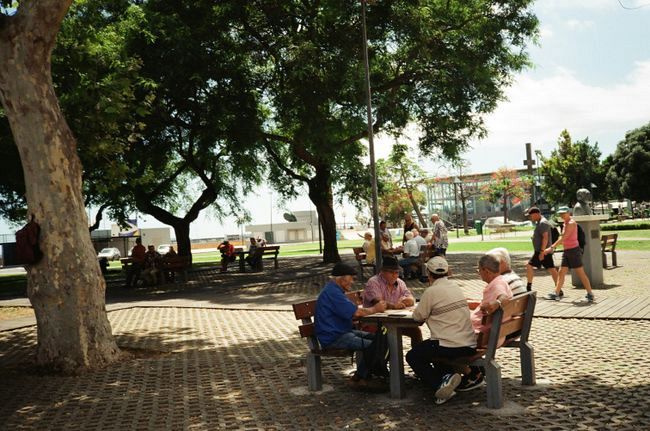
After dinner, we’d leave the apartment and walk down the lane that ran alongside the apartment blocks, under trees grown thick enough to form a canopy, past bench after bench of people talking. Not doing anything in particular. Just out. Neighbours said "hello", whether they knew you or not. Partway down there was a concrete table with a chessboard set into the top, and most evenings two old men sat at it, talking far more than they played. The game seemed to exist mainly as a reason to be there.
The lane fed into a park, and the park was the same scene on a larger scale. Kids running in packs. Grandparents on benches. Couples are doing slow laps. The whole neighbourhood, out in the open, every evening, for no reason other than that this is what evenings were for.
That’s the contrast I keep coming back to. Romania was poorer than Australia by every economic measure. But its public life was rich in a way ours mostly isn’t. Our parks sit empty at 7 pm. Our streets after dark belong to nobody. The Australian evening, for too many of us, happens indoors — in front of a screen, at the pub, or feeding money into a machine.
Part of the difference is what a home is for. In Romania – as across much of Europe – a home was a place you lived, often for generations, on the same block as your neighbours. It was not an asset class.
Here in Australia, we long ago stopped talking about "homes" and started talking about “the property market”, and we built a tax system that rewards treating shelter as an investment vehicle. The platforms are now exporting our disease: short-term rental sites have begun converting homes into hotel rooms worldwide.
Barcelona has seen rents surge 68 per cent in a decade, with more than 10,000 listings holding housing off the market, and cities from New York to Lisbon have moved to ban or heavily restrict whole-home short stays to claw housing back for residents.
And nowhere in Australia knows it as we do: Hobart has had nearly seven times more short-term rentals per capita than Sydney and almost half of them used to be somebody’s long-term rental. This week, our own council moved to ban new whole-home short stays in residential zones — an admission, finally, that a city where homes are businesses is a city where nobody is home.
And here is where I want to be honest about what “Australian culture” has actually become, because we talk about defending it often enough.
Australians lose more money per person to gambling than any other nation on earth – more than $31 billion a year – the bulk of it through poker machines deliberately placed in the suburbs that can least afford them.
Alcohol is stitched into nearly every social ritual we have, and the harm trails behind it: the death rate from alcohol-related injuries more than doubled in a decade, filling our hospitals and police callouts.
Last year alone, twenty-eight women were killed by a current or former partner, and one in four Australian women has experienced intimate partner violence.
And while we look away from all of it, around nine Australians take their own lives every day — more than three-quarters of them men, many of them carrying exactly the isolation that an empty street guarantees.

None of that arrived on a boat.
Yet the loudest voices in our politics insist the real threat to our way of life is migration. That newcomers will dilute who we are, change our streets, take something from us. It’s an old trick — when people are hurting and angry, hand them a target that isn’t the actual cause.
The pokies barons, the booze advertisers, the media owners who profit from both, are delighted for the conversation to be about anyone but them.
But walk through Australian history and the claim falls apart anyway.
Migrants didn’t erode Australian culture; they built half of what we now claim as ours. The Greeks and Italians gave us café culture and food worth eating. The Vietnamese and Lebanese revived dying shopping strips. Every wave we were told would ruin us instead made the place warmer, busier, more alive.
The things in Australian life that most resemble that Romanian lane – the noisy family restaurant, the festival, the street that smells like cooking – overwhelmingly came with the people we were warned about.
I see it in my own neighbourhood now. In the early mornings and the cooling evenings, East Asian families walk — often three generations together, grandparents and grandkids doing slow laps of streets the rest of us drive through. They are using our parks and footpaths the way parks and footpaths are meant to be used. Keeping them alive and safer, simply by being in them.
Romania wasn’t a paradise. It carried the bruises of dictatorship and real poverty, and plenty of its people would have traded places with us in a heartbeat. But it had held onto something we’ve let slip: the idea that the street belongs to everyone, that an evening is for being among your neighbours, that community is a habit you practise daily rather than a word politicians reach for at election time.
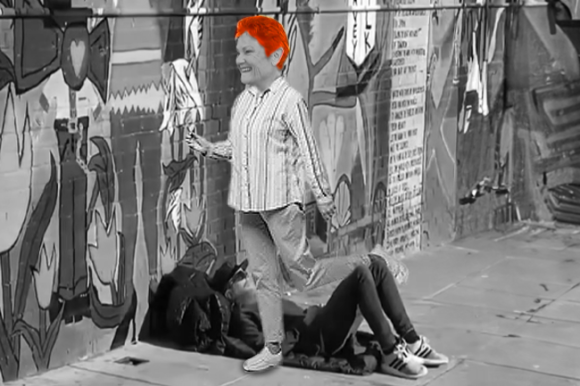
And we know we can do it, because right now Hobart is doing it. Dark Mofo is on as I write this — the streets bathed in red, the Winter Feast packed shoulder to shoulder, thousands of us out in the cold midwinter dark, together.
It proves the appetite for shared public life never left us. But notice what it takes: a festival, a ticket, a reason to spend. The challenge is to carry even a fraction of that into the ordinary weeks — to knock on the neighbour’s door, check the bloke down the street is doing all right, be present on our own footpaths without an event to summon us.
Because here’s what I’ve noticed: when a community is actually functioning – when people know each other, walk together, look out for each other – the One Nation story stops making sense. Fear of the stranger needs strangers. It can’t survive a street where everyone says hello.
So when someone tells you migrants threaten the Australian way of life, ask them which part. The gambling losses? The drinking? The violence behind closed doors? Because the people I see actually living the version of Australia worth protecting – out walking, talking, present – are very often the newest Australians of all.
The grandmother doing her evening lap of my street isn’t taking our culture. She’s showing us where we left it.
**If this article has raised issues for you, support is available 24/7: Contact Lifeline on 13 11 14, MensLine Australia on 1300 78 99 78, or Beyond Blue on 1300 22 4636. For family and domestic violence support, contact 1800RESPECT on 1800 737 732. For gambling support, contact Gambling Help Online on 1800 858 858. In an emergency, call 000.**
Wayne Hawkins is the owner of Crisp N Sweet bakery and café in Claremont, Tasmania, and an independent candidate for the federal seat of Clark at the 2028 Election.
 This work is licensed under a Creative Commons Attribution-NonCommercial-NoDerivs 3.0 Australia License
Support independent journalism Subscribe to IA.