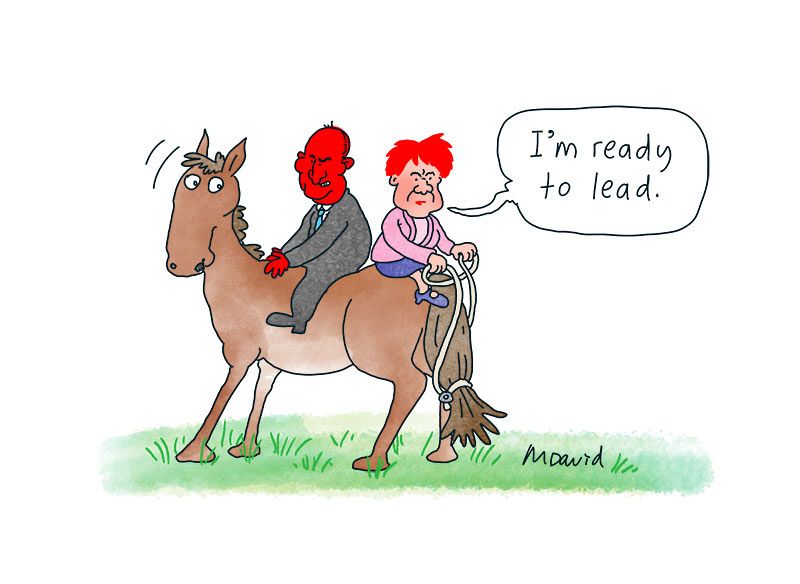
Gen X has every reason to be angry about housing, wages and the cost of living, but turning to One Nation risks handing power to the same billionaire politics that helped create the problem, writes Rob Powell.
It is quite compelling why Generation X would be so politically angry. Most of them are in their late 40s, 50s, or early 60s and, instead of settling down, they find themselves still paying off mortgages, working, supporting kids, taking care of elderly parents, and still the cost of living keeps eating whatever they have left.
The Guardian has reported that members of Gen X are now more likely to be in financial difficulty, less likely to fully own their home, and, at the same time, are the generation most attracted to One Nation. One survey found that One Nation’s support peaked at 43 per cent among Gen X voters.
And the anger is not unreasonable. It is based on their everyday experiences. It is based on the constant worry of rent, fuel, food, debt, insecure jobs, and that ever-persistent feeling that sticking to the “right things” just does not produce results anymore.
But even if the anger of Gen X is justified, the real question is: why is that anger being exploited by One Nation?
That is exactly where the political inconsistency becomes a major issue.
Australians are right to be angry with an economy that billionaire capitalists, powerful corporations, global events, and Trump-style disorder have shaped. Though some of them are reacting by supporting a party that is less and less separate from billionaire influence.
While Donald Trump portrayed himself as the defender of average Americans, his governance showed a billionaire manner. Currently, in Australia, One Nation is branding itself as the voice of neglected battlers, while Pauline Hanson openly admits that she has received policy advice from mining billionaire Gina Rinehart.
Every working person should be concerned about that. Billionaires rarely go into politics because of heartfelt concern for your rent, food bill, or your child’s future. Their entry into politics is geared towards influencing decision-making processes about tax, wages, mining permissions, industrial relations, environmental controls, and government expenditure.
They are aware of a fact that most voters are led to ignore: it is in politics that the wealthy protect their wealth.
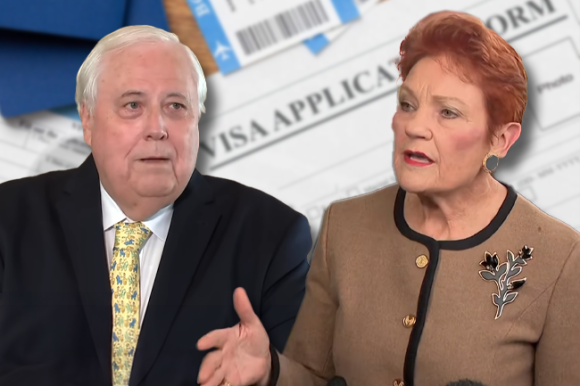
That means the growth of One Nation should not be seen as just a revolt against elites. Instead, it is possibly a revolt that is being channelled by another part of the elite. IA has already discussed One Nation’s connections to mining money, Clive Palmer, and the far-right ecosystem.
Whether Palmer and Rinehart are the same player politically or not, they sure share the same harsh reality that billionaire politics is very rarely about uplifting the working class. It is more about making sure that the working class points the finger elsewhere.
Usually, “someone else” refers to migrants, refugees, welfare recipients, students, public servants, environmentalists, or any other group that can be blamed for a problem they are not responsible for. The main economic difficulties that Gen X faces were not caused by an international student sleeping rough, a refugee family, or a person on Centrelink.
Decades of housing failure, wage stagnation, privatisation, underinvestment, and a political culture that has regarded ordinary people as economic units rather than citizens are what really created those problems.
One Nation’s main strength is not policy. It is emotional recognition. Hanson seems to say, “I see you.” For people who feel ignored by Labor, abandoned by the Liberals, and sneered at by professional politics, that counts. Yet recognition and solution are not the same.
As Tom McIlroy pointed out in The Guardian, the main political parties should compel Hanson to “please explain” her policies, because policy-making cannot be based on anger alone.
Such a challenge is essential because the policies One Nation offers do not appear to be the kind of future the party’s voters want. IA’s review of One Nation’s program concluded that these policies do not lead to the better future Australians say they want.
That is the place where Gen X voters need to focus.
The feeling of being listened to is good, but what happens when the cheering is over? Will your rent go down? Will your wages go up? Will your adult child be able to afford a home? Will your parent receive support? Will your community get the services it needs? Or will billionaires get another party willing to look after their interests while ordinary people are left fighting one another?
The way homelessness and non-citizens are handled indicates the moral direction of this politics. IA has cautioned that the way One Nation talks about migrants and “non-residents" is in danger of turning vulnerable people into scapegoats rather than confronting the systems that cause homelessness and poverty.
When politics has conditioned people to look downwards for the person to blame, it is a lot more difficult for them to look upwards at those who really have power.
The Nationals’ reaction clearly demonstrates this threat. Even if Matt Canavan dismissed a formal One Nation seat-sharing deal, the reality of such arrangements being discussed indicates just how quickly fringe politics can become a new normal when it begins to poll well.
The moment major parties start to woo One Nation’s voters without challenging One Nation’s assumptions, the entire debate shifts to the right.
Gen X is entitled to be angry. This was the generation assured that work, patience, and responsibility would result in security. For a lot of them, that promise has not materialised.
But politically, anger is a great resource, which is why there will always be people trying to buy it, label it, and redirect it.
The difficult question for Gen X is this: if billionaire politics was one of the reasons the world became so hard to survive in, why trust another billionaire-backed politics to save you from it?
Rob Powell is a retired mature-aged student currently studying politics and philosophy, focusing on how ethical frameworks shape public policy and political behaviour.
 This work is licensed under a Creative Commons Attribution-NonCommercial-NoDerivs 3.0 Australia License
Support independent journalism Subscribe to IA.


Related Articles
- PHON fear mongers fail when communities function
- Clive Palmer and the cult of Pauline Hanson
- Why One Nation endangers Australia’s homeless — and everyone else
- One Nation policies fall short of its promised future
- News Corp jumps on One Nation bandwagon