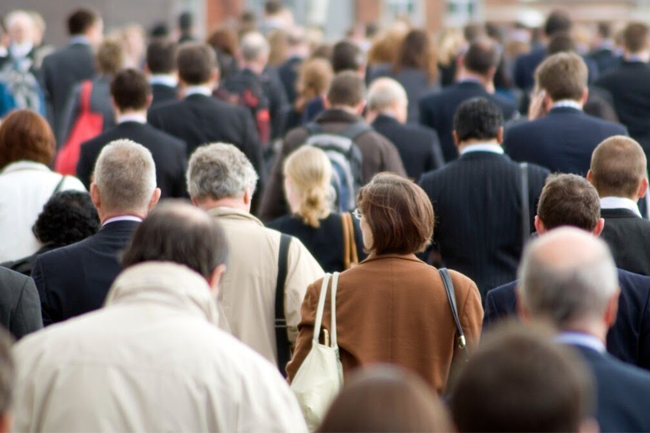
A Federal Minister for Loneliness and Social Connection would give loneliness a clear voice within government and a point of focus for a challenge that reaches across portfolios, governments and communities, writes Mainul Haque OAM.
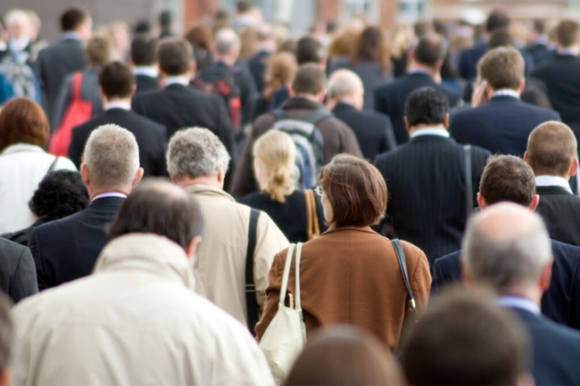
IN APRIL 2025, two in five Australians reported experiencing loneliness at least some time during the previous week.
Behind that statistic are people who may be living alone, disconnected from family, struggling to find a sense of belonging, or simply going through life without enough meaningful human contact.
Loneliness is often treated as a personal experience. But its causes and consequences extend well beyond the individual. Housing, transport, neighbourhoods, community facilities, volunteering and access to services can all influence whether people have opportunities to connect.
Australia measures loneliness and social isolation, but responsibility for social connection is spread across many parts of government. Health, aged care, housing, transport, disability, community services and local government each address part of the picture.
What is missing is a clear national focus. That is why I am proposing that Australia appoint a "Federal Minister for Loneliness and Social Connection".
My own understanding of this issue began almost 40 years ago, with an experience I did not fully understand at the time.
I grew up in Bangladesh in an extended family where three generations commonly lived under the same roof. Parents, grandparents and grandchildren shared a home and many responsibilities of everyday life. Looking after older family members was simply part of family life.
In 1987, I travelled from Kuala Lumpur to Thunder Bay, Ontario, to begin postgraduate study in economics at Lakehead University in Canada. I had never lived in a predominantly white Western country before and knew nobody there.
During the journey, I met a young man named Joey, who was studying at the University of Ottawa and had previously studied at Lakehead University. He was travelling to Thunder Bay to perform with his band that evening.
Joey asked where I was going to stay and whether someone would meet me at the airport. I had arranged university accommodation but had no one to meet me.
He introduced me to his friend Spencer, who took me to the university. It was a Friday afternoon and the student office was preparing to close. The staff were trying to work out what to do with this new international student.
Joey simply said, "Stay at my place." So I did.
The following evening, Joey asked me to accompany him and his father to visit his grandfather. I assumed we were going to his grandfather's home.
Instead, we went to an aged care facility. I had never heard of such a place before and had no concept of residential aged care.
I remember being surprised. Coming from Bangladesh, I had expected someone like his grandfather to remain in the family home, surrounded by children and grandchildren. Yet he was living in residential aged care.
Looking back almost 40 years later, I recognise this as my first encounter with a very different social and family environment, and with the possibility of loneliness and social isolation in later life.
The experience stayed with me.
Australia today has many different family structures, and government cannot preserve one particular model. But when traditional sources of connection weaken, an important policy question remains: what other opportunities do people have to belong and participate?
The scale of the issue is now clearer.
The Australian Institute of Health and Welfare (AIHW) reported that in 2024, 15% of Australians aged 15 and over experienced loneliness and 15% experienced social isolation. People aged 35 to 44 had the highest rate of loneliness, at 17%, while social isolation among people aged 15 to 24 was 17%.
Loneliness and social isolation are not the same thing. A person can have relatively few social contacts without feeling lonely, while someone surrounded by people can still feel lonely.
That distinction matters. The response cannot simply be to treat loneliness after it occurs. We also need to consider whether our communities and public services provide enough opportunities for people to participate and maintain relationships.
This is where my experience in government has shaped my thinking.
I spent more than 30 years in the Australian Public Service (APS), working across economic, social and public policy areas. One lesson that stayed with me was how easily issues that cross traditional portfolio boundaries can become fragmented.
Different departments have different responsibilities and programs. One part of government may deal with health, another with aged care, another with housing or disability, while transport and community infrastructure sit elsewhere. State and territory governments and local councils have their own responsibilities, alongside community organisations and volunteers.
From the perspective of government administration, these distinctions are understandable.
From the perspective of someone experiencing loneliness, they may make very little sense.
A person does not experience loneliness as a health issue, an aged care issue, a housing issue or a transport issue. They experience it as a lack of connection.
That is why I believe the issue deserves a clear place at the Federal Cabinet table.
A Minister for Loneliness and Social Connection would not be expected to solve loneliness or take responsibility for everything that affects social connection. The value of the position would be in providing national leadership and coordination around an issue that cuts across portfolios, levels of government and the community.
My more than 30 years of community leadership and volunteering outside government have reinforced this view.
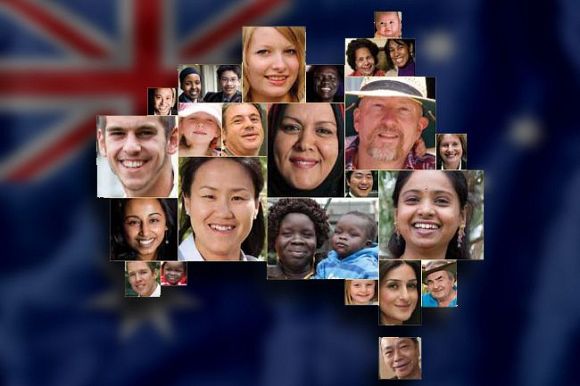
Through volunteering with the Australian Red Cross and my involvement in community organisations, I have seen first-hand the difference human connection can make. A volunteer who takes the time to visit someone, a community organisation that creates a place where people can come together, a sporting club that welcomes a new participant, or simply a neighbour who notices that someone is becoming isolated can sometimes achieve what government cannot.
Government cannot manufacture friendship or community. But it can influence the conditions in which connection becomes easier or harder. Australia would not be starting from scratch.
In 2018, the United Kingdom appointed Tracey Crouch as its first Minister for Loneliness and subsequently developed the policy paper, A connected society: a strategy for tackling loneliness, its strategy for England. The approach recognised that loneliness could not be addressed by one department alone and required action across government and society.
Australia does not need to copy the British model. Our population, geography, institutions and social structures are different.
But there is a useful lesson: when an issue cuts across government responsibilities, it needs clear leadership and coordination.
My own journey has made this issue particularly personal.
I grew up in a society where an extended family often provided an informal network of care and connection. I then experienced the cultural difference of arriving in Canada as a young international student with no family or established social network.
Decades later, through volunteering, community involvement and more than 30 years working inside government, I have seen both the importance of human connection and the limitations of fragmented policy responses.
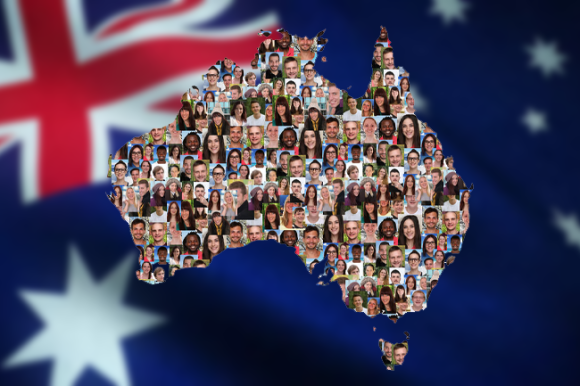
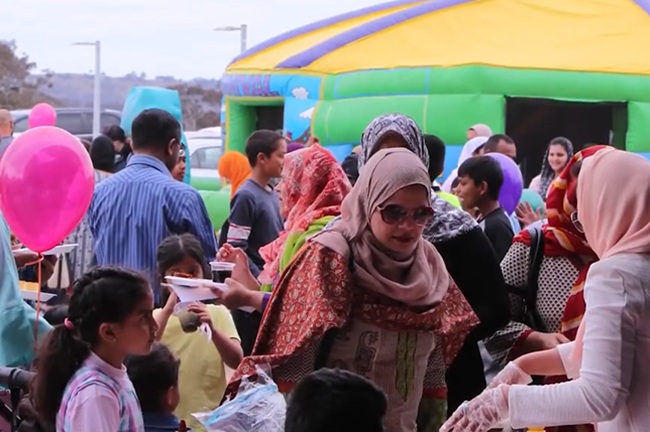
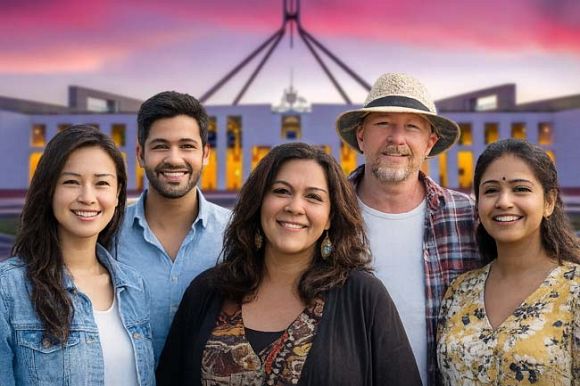
Australia is a diverse society. We are First Nations Australians with deep connections to Country, culture, family and community. We are Australians whose families arrived generations ago. We are migrants and refugees who have built new lives here. We live alone, with partners, in extended families and in many other forms of household.
None of us is immune from loneliness.
Government cannot replace family, friendship, faith or community. But it can recognise the importance of social connection and make sure that responsibility for it does not disappear between portfolios.
Almost 40 years ago, a young man I had just met on a journey invited a stranger to stay at his home. I have never forgotten that act of generosity.
My journey from Bangladesh to Malaysia, Canada and Australia has exposed me to very different understandings of family, community and belonging. My years in government and volunteering have given me another perspective: good policies and services can still fall short when responsibility is fragmented, and nobody is looking at the whole picture.
Loneliness deserves that broader view.
Australia has always valued the idea that we look out for one another. We lend a hand, check in on a neighbour and make sure no one is left behind.
A Federal Minister for Loneliness and Social Connection would give this issue a clear voice within government and a point of focus for a challenge that reaches across portfolios, governments and communities.
Because in the end, people need people. We have always prided ourselves on looking out for our mates. In tackling loneliness, perhaps it is time for government to do the same.
Mainul Haque OAM is a retired Australian public servant with nearly three decades of experience in government, academia, and community leadership.
 This work is licensed under a Creative Commons Attribution-NonCommercial-NoDerivs 3.0 Australia License
Support independent journalism Subscribe to IA.