The question should gradually change from what does the Muslim community need? to what can the Muslim community contribute? writes Mainul Haque OAM.
WHEN I THINK ABOUT MUSLIM AUSTRALIA in 2050, I do not think first about how many Muslims there will be. I think about a young Australian Muslim sitting in a university lecture, running a business, working in a hospital, teaching in a school or sitting around a table in Canberra making decisions about the future of the country.
She may be the third or fourth generation of her family to live in Australia. Her grandparents may have been born here, while her great-grandparents arrived from another country. She may know something about her family history and perhaps speak the language of her grandparents, but Australia will be the country she knows as home.
She will not spend much time explaining that she is both Muslim and Australian. For her, there will be nothing unusual about it.
That is the Australia I imagine when I think about 2050. It is not simply a larger Muslim community. It is a community that has had time to develop its own Australian character.
I came to Australia as a migrant in 1992. The Muslim community was much smaller then. Many of us were finding our way in a new country, building families, establishing businesses, finding jobs and creating places where we could pray and maintain our traditions. We were also learning what it meant to be Australian.
Much has changed since then. In the 1990s, Australia had around 150,000 Muslims. By the 2021 Census, that number had grown to around 813,000, around 3.2 per cent of the Australian population. If current growth trends continue, the Muslim population could reach around 1.5 million by 2050.
However, what interests me now is what will happen when the children and grandchildren of those migrants become the people shaping the community themselves.
The third and fourth generations will have a different relationship with Islam and Australia from their grandparents. Some will be deeply religious, others will practise quietly, while some will have little interest in organised community life. Some will speak the language of their grandparents, while others will not.
Some will marry within the Muslim community and others will marry outside it.
None of this necessarily means that their Muslim identity will disappear. It may simply mean that it becomes naturally Australian.
A community does not remain frozen in the form in which the first generation created it. Each generation makes its own choices about what it carries forward, what it changes and what it leaves behind.
Some traditions will endure, others will fade, and new ones will emerge from the experiences of Australian Muslims themselves.
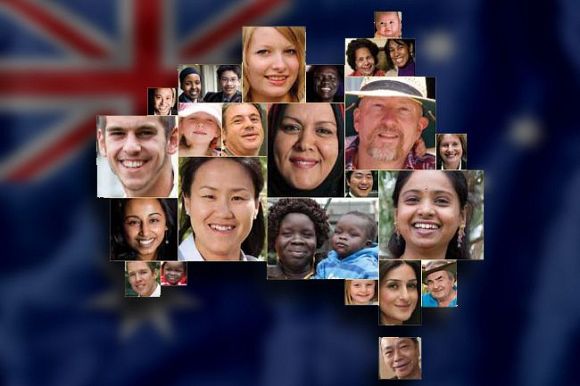
The community will also become more diverse. There will be Australians with South Asian, Middle Eastern, African, Southeast Asian, European and mixed backgrounds, as well as converts and families whose Muslim identity stretches back several generations.
They will not always agree, and I hope they do not. A confident community does not require everyone to think alike. It needs people who can disagree without turning every disagreement into division.
I learned something about this when I was president of the Canberra Muslim community and helped lead the development and delivery of the Gungahlin Mosque, which opened in 2017.
More than 40 ethnic communities came together to make the project happen. People brought different languages, cultures, experiences and ideas about how things should be done. We did not always agree, but we had a common purpose.
Looking back, the experience was about much more than constructing a mosque. It showed what can happen when people accept that they do not have to be the same to build something together.
That lesson will become even more important by 2050.
For the first generation, building mosques and community organisations was often about establishing a place in Australia. The next stage should be about building institutions that can serve people for generations.
The mosque of 2050 will look quite different from the mosque we know today. It will still be a place of prayer and religious education, but it will also be a community hub, with spaces for young people, families, older people and people with disability, as well as education, counselling and other community services.
By 2050, loneliness will become more challenging for older Muslim Australians, particularly as the first generation of migrants ages. Technology will change how people learn and communicate, but it will not replace human connection. Older people will still need someone to visit them, share a meal, listen to them and simply be there.
Muslim women will also have an increasingly visible role in Australian life. The daughters and granddaughters of today’s Muslim migrants are already becoming doctors, lawyers, teachers, academics, entrepreneurs, public servants and community leaders. By 2050, I expect Muslim women to be judges, ministers, senior executives, philanthropists and leaders across Australian institutions.
Just as importantly, they will play a greater role within Muslim institutions themselves. A Muslim woman leading a mosque, serving on a board or heading a community organisation should be unremarkable. Whether through a career, community leadership, raising a family or all three, their contribution will be part of the future of Muslim Australia.
My own experience of community advocacy has shown me that practical issues can open the door to wider questions about participation.
My advocacy for female-only swimming sessions was one example. What began as a question about access and participation became a broader discussion about whether Australian institutions can accommodate different needs without making people feel that they do not belong.
The important point was not that every Australian should want the same arrangement. It was that a practical accommodation could help more women participate in swimming and water safety. Inclusion does not always require changing the values of an institution. Sometimes it requires finding a way for more people to participate in it.
This is an important lesson for the future of multicultural Australia.
For a long time, much of our energy went into establishing the basics. We needed mosques, community organisations and places where families could meet and new migrants could find support. Those foundations remain important, but the next stage should be about building lasting social and economic capital.
This is where waqf and endowments could have a much larger role.
By 2050, I envisage waqf and community endowments to play a larger role supporting scholarships for young Australians from disadvantaged backgrounds, education and research, affordable housing, aged care, disability care and retirement living.
I have previously explored this idea in The Mandarin, arguing that a waqf-inspired national endowment model could help build long-term community capital to meet Australia's future ageing and care needs.
The principle is simple. Instead of continually raising money to respond to the next immediate need, communities can build assets that generate benefits over generations.
That represents an important change in mindset.
The question should gradually change from what does the Muslim community need? to what can the Muslim community contribute?
My own professional and community life has given me some insight into how that transition can happen.
My work has taken me through economics, public policy, government, multicultural affairs, boards, interfaith activities and volunteering. As a former ACT Multicultural Ambassador, I saw Australian society from different perspectives. Community work taught me the importance of listening to people and understanding their experiences.
Volunteering with the Australian Red Cross, including visiting older Australians in their homes, taught me something even simpler. Not every contribution needs a title. Sometimes sitting with someone, listening to them and giving them some company is enough.
In 2023, I was honoured to receive the Medal of the Order of Australia for service to Canberra's multicultural community. My own journey is only one small example of how a migrant can become part of the wider Australian story.
I arrived as a migrant, built a professional life, became involved in the Muslim community and then became increasingly involved in the broader Canberra community. Over time, those different parts of my life became less separate.
I suspect that is what will happen for many more Australian Muslims.
By 2050, I expect third and fourth generation Muslim Australians to be increasingly prominent across Australian life. Many will lead in government, business, the professions, universities, community organisations and public life.
But perhaps the more significant change will be that many successful Muslim Australians will no longer think of themselves as representatives of a particular community.
They will simply see themselves as Australians contributing through the work they do: as scientists, teachers, doctors, entrepreneurs, public servants, judges, corporate leaders, professionals, artists, parents and volunteers.
Some will become well known. Most will not.
Their collective contribution will nevertheless be woven into everyday Australian life in ways that may no longer be described as a distinct Muslim contribution. It will simply be part of the contribution Australians make to their country and to one another.
Perhaps the biggest change by 2050 will be the movement of Australian Muslims from the margins to the mainstream.
Not because Muslims will become less Muslim, or abandon their faith and heritage, but because they will be increasingly present in every part of Australian life.
They will not be asking for a place at the table. They will already be sitting at it, and increasingly helping decide what is on the table.
That is why I am optimistic about the future.
There will be difficult conversations about religion, identity, migration and social cohesion. Muslims will not always get everything right, and there will be moments when communities feel misunderstood. But the long-term direction matters more than the occasional setback.
The Muslim community is becoming part of the ordinary fabric of Australian life.
Multiculturalism should not mean different communities simply living beside one another and occasionally meeting at cultural festivals. It should mean people from different backgrounds participating fully in the life of the country, serving on boards, entering public service, running businesses, volunteering, teaching, creating, debating and disagreeing, voting, raising families and contributing to the society they call home.
That is citizenship. Not merely living in Australia, but taking part in its institutions, communities and future.
The Muslim story in Australia also goes back further than many people realise, from the long history of contact between Indigenous Australians and Muslim visitors from Makassar, to the cameleers and later generations of migrants who became part of Australian society.
My generation is only one chapter in that much longer story.
The third and fourth generations will write the next.
We cannot know exactly what they will write, and perhaps that is the point. Our task is not to tell them exactly what Muslim Australia should look like in 2050. It is to give them strong foundations, good education, confidence in who they are and the freedom to make their own contribution.
I have seen how much can change in one lifetime. I have seen migrants find their feet, communities build institutions and people from very different backgrounds learn to work together. I have seen a mosque rise in Gungahlin because people believed they could build something together.
By 2050, I hope we will look back at those early efforts not as the destination, but as the beginning of something much bigger.
The Muslim Australia we become will not be defined by how many Muslims there are, how many mosques we have or how visible the community is. It will be defined by the contribution we make to the country we share.
By 2050, I envisage Muslim Australians contributing across every part of national life: as judges and Cabinet ministers, scientists and teachers, doctors and nurses, business leaders and senior executives, partners in major professional firms, public servants, philanthropists and community volunteers.
Some will be household names. Most will simply be getting on with their lives and doing their bit, as millions of other Australians do.
And perhaps that will be the real measure of how far we have come.
By then, a young Australian Muslim should not feel the need to choose between being Muslim and being Australian, or to explain why both identities sit comfortably together.
She should be able to get on with the business of living, working, raising a family, serving her community and helping shape the country around her.
We often talk about the Australia we want to leave to our children. The real question is what we are prepared to build for them.
My generation has laid some foundations. The next generations will take them further, change them and, in some cases, build something entirely different.
That is as it should be.
After all, Australia has never been a finished project. We are always building it, together.
And when our children and grandchildren look around Australia in 2050, I hope they will not ask whether they belong.
They will simply know that they do, roll up their sleeves and get on with building the country they call home.
Mainul Haque OAM is a retired Australian public servant with nearly three decades of experience in government, academia, and community leadership.
 This work is licensed under a Creative Commons Attribution-NonCommercial-NoDerivs 3.0 Australia License
Support independent journalism Subscribe to IA.


Related Articles
- Before the marches: They were already here
- Islamophobia: Asia's ugly growth industry
- BOOK REVIEWS: Islamism, totalitarianism and the Islamic State
- New Report: Australian Islamic State defectors tell the true story