Australia must confront falling fertility, an ageing population and growing skills shortages with a long-term strategy that looks beyond migration alone, writes Mainul Haque.
MORE THAN THREE decades ago, I experienced two very different conversations about population.
I grew up in Bangladesh, where rapid population growth was a major economic and social concern. More people meant greater pressure on jobs, schools, housing, health services and the environment. The challenge was how a developing country could provide opportunities and basic services for a rapidly growing population.
Then, in the late 1980s, I found myself in Montreal, Canada, pursuing postgraduate studies in economics. The contrast struck me. The Quebec Government was offering a baby bonus to encourage families to have more children. Instead of worrying about rapid population growth, as I had seen in Bangladesh, the Government was concerned about having too few births.
I found the contrast fascinating.
When I migrated to Australia in 1992 and joined the Australian Public Service the following year, I entered a country that was also thinking increasingly about its demographic future.
By the time my son was born in 1997, Australia was encouraging families to have children and looking at ways to support working parents. A few years later, the Howard Government introduced the Baby Bonus.
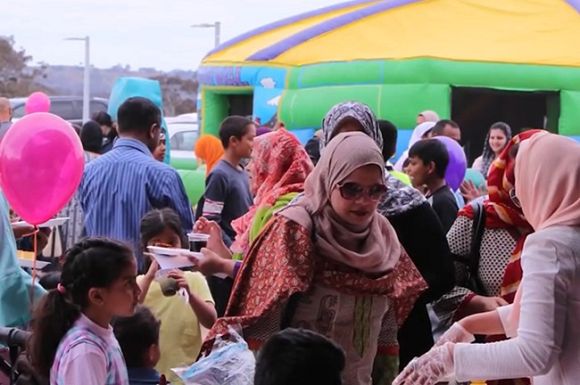
Then Treasurer Peter Costello captured the mood of the time with his famous appeal: ‘One for your husband, one for your wife and one for the country.’
I received the Baby Bonus when my son was born. At the time, it was simply a benefit for our young family. Looking back, it was part of a much larger conversation about the population Australia would need in the future.
Almost three decades later, that conversation has returned, but the circumstances are very different.
The latest Intergenerational Report projects Australia’s fertility rate will fall to 1.34 children per woman by 2065. Population growth will slow and the population will become considerably older. The report also examines how artificial intelligence, the energy transition and other structural changes will reshape the economy over the next 40 years.
Those demographic changes will have consequences for the workforce. Jobs and Skills Australia projects almost 2 million additional jobs over the decade to May 2035, taking total employment to around 16.6 million. More than 90% of projected employment growth is expected to be in occupations that typically require post-secondary qualifications.
That brings me back to a presentation I heard more than 20 years ago.
At the time, I was working in tourism policy and attended a senior officials' presentation about Australia’s future workforce. The professor showed us a population pyramid and explained how Australia’s ageing population would gradually change the shape of the workforce. The base, representing younger people entering working life, was becoming narrower.
He then made a passing observation that has stayed with me.
Australia was benefiting from skilled I.T. professionals from India. He asked what might happen when the Indian economy became much stronger, perhaps by around 2030, and those professionals had more opportunities at home. Would they still want to come to Australia?
It was not really a question about India. It was a question about Australia’s assumptions.
We have benefited enormously from attracting skilled people from around the world. But the world does not stand still. Countries that supply skilled workers today can become more prosperous and need more of those workers themselves.

That old question is becoming harder to ignore.
Australia will need people with skills in health care, aged care, construction, engineering, technology, energy and many other fields. At the same time, we will have a smaller proportion of younger people entering the workforce and a growing number of older Australians needing care and support.
That puts several responsibilities in front of us.
We need to educate and train Australians more effectively. We need to make it easier for people to participate in the workforce for longer where they can and want to do so. We need stronger productivity and better use of technology. And we will continue to need skilled people from overseas where there are genuine shortages.
The important point is that these things are connected. Skilled migration can complement the domestic workforce, but it cannot substitute indefinitely for developing our own skills and lifting productivity. Nor can Australia assume that the rest of the world will always have a surplus of skilled workers available to us.
That brings us to one of the most difficult parts of the demographic conversation: migration.
The 2026 Lowy Institute Poll found that 55% of Australians believe the number of migrants coming to Australia is too high. At the same time, 73% said Australia’s culturally diverse population has been positive for the country.
Those views can coexist.
People can be concerned about the pace of population growth, housing, infrastructure and pressure on services while recognising the contribution that generations of migrants have made to Australia.
The current debate is heavily focused on net overseas migration (NOM). The Federal Government is working towards 225,000 net overseas migrants by 2027-28, following a period in which NOM rose sharply after the pandemic and has since fallen. The latest figure was 292,000 for the year to March 2026. Other political parties have proposed substantially different approaches and lower levels.
The debate will continue, but there is a risk in reducing such a complex issue to one number.
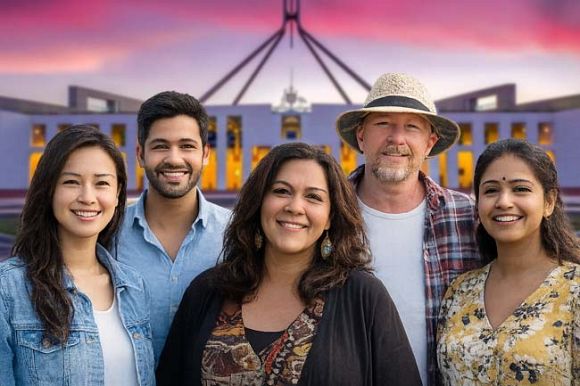
Net overseas migration includes people arriving and leaving Australia under a range of visa arrangements, as well as returning Australians. The composition of migration matters as much as the headline figure because a nurse, engineer, construction worker, international student, family member and temporary worker can have very different effects on the economy and society.
That is why migration needs to be considered alongside the rest of the demographic picture.
If fertility continues to fall, the population continues to age and demand for skilled workers continues to grow, Australia will need to think carefully about where those workers will come from.
That does not mean migration should be unlimited, nor does it mean population growth should be treated as an objective in itself.
It means the level and composition of migration need to be considered alongside Australia’s ability to train people here, housing supply, infrastructure, public services, productivity and the skills that cannot readily be supplied from our own population.
The question should therefore be broader than simply how many migrants Australia should accept. It should also ask what skills we need, where those skills are needed, what we can train for ourselves and what kind of population growth our infrastructure can support.
Australia has seen before how quickly demographic assumptions can change.
The 2002 Intergenerational Report projected that Australia’s population would reach 25.3 million in 2042. Australia passed that population level in 2018 to 19. Treasury later identified higher migration as the primary reason the population was larger and younger than projected. The 2002 report had assumed net overseas migration of 90,000 a year, while NOM averaged around 200,000 a year between 2002 and 2022.
I do not see this as evidence that long-term projections are useless. They are based on assumptions about fertility, migration, participation, productivity and other factors that can change.
It does show, however, how quickly circumstances can change.
Fertility can change. Migration can change. Technology can change. Workforce participation can change. The economies of other countries can change.
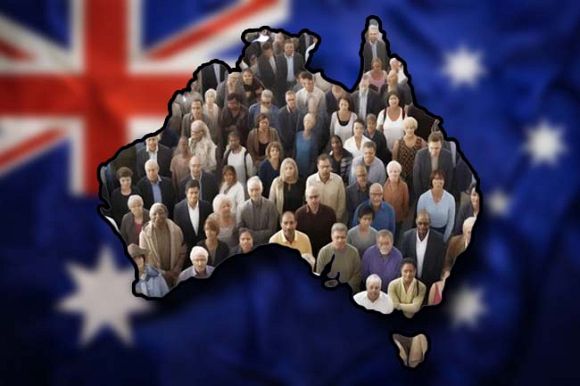
Good demographic policy therefore has to be capable of adapting to a world that will not remain static.
Perhaps the most important part of this story is the one least visible in a population table.
I see some of it through my volunteering with the Australian Red Cross, visiting older people. One thing that has stayed with me is how deeply loneliness can affect an older person. Sometimes a simple visit and a conversation can make a real difference.
We often talk about the future of work in terms of artificial intelligence and productivity. Those changes will be important. AI can help people perform many tasks more efficiently and may transform the way entire occupations operate.
But an ageing society will also require something that cannot simply be automated: human care.
A technology system may help a nurse or carer with their work. It cannot sit beside an older person who is lonely, listen to their stories and provide the warmth of human company.
That is why the demographic discussion is ultimately about more than population numbers or workforce shortages. It is about the kind of society we want to sustain.
Australia is not a monocultural country. Its story has been shaped by First Nations Australians and by generations of people who have come here from different parts of the world. Migration has helped build businesses, universities, professions, neighbourhoods and communities.
But diversity by itself does not create social cohesion.
People need opportunities to participate and contribute. They need to feel that they belong. They need confidence that their children can build a future here and that older Australians will not be left behind.
Those things cannot be separated from demographic policy. A growing population needs homes, schools, transport and health services. An ageing population needs care and companionship. A changing economy needs skills. A diverse society needs a sense of belonging.
These are different parts of the same national challenge.
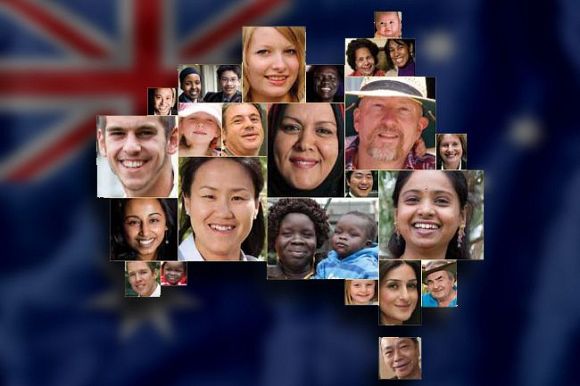
I sometimes think back to Bangladesh, where population growth was once seen as one of the country’s biggest challenges.
Then I remember sitting in Montreal and hearing about government efforts to encourage families to have more children.
Later, in Australia, I received a Baby Bonus after the birth of my son.
Three very different experiences, but they all lead back to the same question: What kind of population does a country need to sustain the society and economy it wants to build?
There is no simple answer.
Family decisions cannot be reduced to a payment. They are influenced by housing, childcare, work, relationships, financial security and personal choices.
Migration can help Australia respond to skills shortages, but it cannot be the only answer.
Technology can lift productivity, but it cannot replace the human relationships that hold a society together.
And Australia cannot assume that the rest of the world will always provide the skilled workers we need.
Perhaps that is the lesson I take from those three very different experiences.
Bangladesh taught me why rapid population growth can place enormous pressure on a society. Montreal showed me that demographic anxiety can also run in the opposite direction. Australia has taught me that fertility, migration, productivity, skills and social cohesion are not separate questions.
They are all part of the same conversation about the future.
The question is not simply how many people Australia should have.
It is what kind of Australia those people will live in, and whether we are prepared to build it.
That is why Australia needs to think beyond the annual migration debate and develop a longer-term demographic and workforce strategy. We cannot know exactly what Australia will look like in 20 or 40 years. But we can prepare for different possibilities, connect population decisions with housing and infrastructure, invest in the skills of Australians, use technology to lift productivity and make sure we can attract the skills we cannot provide ourselves.
Demography will not wait for us to settle every argument. The better approach is to build a policy framework that can adapt as circumstances change.
We know the broad shape of the challenge. The task now is to think beyond the next political cycle, plan for the next generation and get on with it.
Mainul Haque OAM is a retired Australian public servant with nearly three decades of experience in government, academia, and community leadership.
 This work is licensed under a Creative Commons Attribution-NonCommercial-NoDerivs 3.0 Australia License
Support independent journalism Subscribe to IA.


Related Articles
- Australia's ageing immigrant population bomb
- Water planning 101: Stabilise the population
- UN says population slowing, but we're now living longer
- Big Australia is the 'elephant in the room'
- Treasury tacks 'well-being' onto their endless growth framework