The working poor don’t need pity, they just need a government that gets out of its own ideological box long enough to see them — and then does something about it, writes Wayne Hawkins.
THEY CHANGED THE WORDS to the song a long time ago. The Government just hasn't noticed yet.
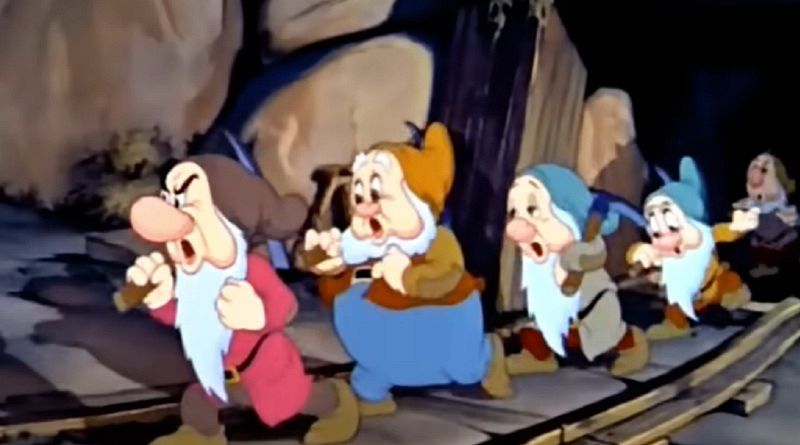
There’s a joke buried in an old Disney song. The Seven Dwarfs march off to the mine singing heigh ho, heigh ho — cheerful, purposeful, pickaxes swinging. Somewhere along the way, someone changed the words to 'I owe, I owe'. It works because it sounds almost identical. Same rhythm. Same bright march. Same weary Monday-morning trudge out the door before the sun is up.
Except now it isn’t a song about work. It’s a song about debt. About an obligation that never ends. About the shift you can’t afford to miss because yesterday’s bills are still on the table and tomorrow’s aren’t looking any better.
A lot of Australians know that version by heart.
They are not unemployed. That’s the part we don’t say out loud.
They get up before the city does. They pull on the same work boots, the same high-vis, the same apron, the same name badge. They make the coffee that someone else sits down to drink. They stock the shelves that someone else empties. They drive the vans, clean the rooms, flip the burgers, wash the dishes, and mind the children of people who are too busy to mind their own.
They do this six days a week, sometimes seven. They do it quietly, because dignity is the one thing that costs nothing and cannot be repossessed.
And then they go home to a share house with five adults in it. Or a caravan on a cousin’s block. Or a car.
The working poor are not a statistic at the margins of the Australian economy. They are load-bearing.
According to the Australian Council of Social Services (ACOSS), more than three million Australians live below the poverty line. A significant proportion of them are employed. They work and they are poor. Both things are true at the same time, and our political language has almost no vocabulary for it, because the story we tell ourselves about this country is that work is the answer. Get a job. Pull your weight. She’ll be right.
She is not right.
The minimum wage in Australia sits at just over $24.00 an hour. That sounds reasonable until you price a one-bedroom flat in any capital city, or fill a grocery trolley, or put petrol in a car you can’t afford to service.
Casual workers – and there are more than two million of them – get a loading on paper that evaporates the moment their hours are cut, their shifts are cancelled, or the season ends. No sick leave. No certainty. No floor.
These are not people who made bad choices. Most of them made the only choices available.
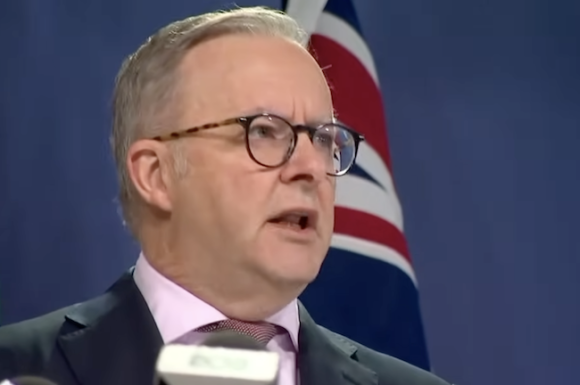
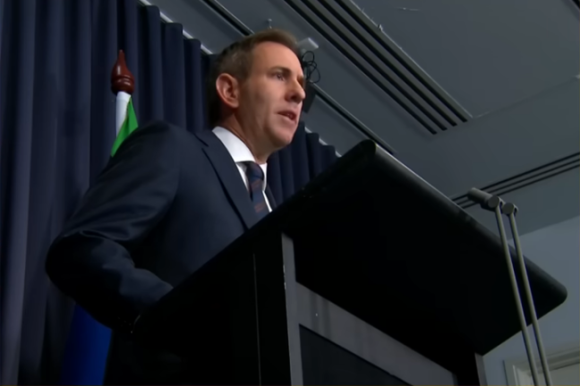
Yesterday, the Treasurer handed down a budget. It is worth reading carefully.
The theme is 'building an economy that works for all Australians'. There are tax cuts in it. A new Working Australians Tax Offset worth up to $250. A staged reduction in the tax rate for lower-income brackets. A $1,000 instant tax deduction, no receipts required. The Government says an Australian worker on average earnings will be nearly $2,000 better off this year.
The average earnings in Australia are $81,245 per year.
The working poor do not earn average wages. The $250 offset – the headline measure aimed at workers – amounts to less than five dollars a week. It will not cover the gap between the rent and the pay. It will not stop the car registration lapsing. It will not put the kid on the school excursion.

Look at who the Budget chose to illustrate its generosity. Kerry, a cybersecurity engineer. Matt, a pharmacy nurse earning $90,000. Dean, the mechanic, on $70,000. These are not bad people.
But they are not the people who work every day and still live rough. They are not the aged care worker doing double shifts for wages that would embarrass a country that calls itself civilised. They are not the fruit picker, the kitchen hand, the cleaner, the delivery driver.
Those workers are in the Budget somewhere, too. In the aggregate. In the rounding.
The cottage in the woods was always for somebody else.
Now let’s talk about what the Budget didn’t say. Let’s talk about health.
When you are living rough and working hard, health is the first thing you trade away. Not because you don’t value it. Because you can’t afford it. The GP gap payment is deducted from the grocery budget. The dental checkup gets pushed to next month, then the month after, then next year, then never. The prescription gets halved because a full course costs more than a day’s pay. You tell yourself you’ll deal with it when things settle down.
Things don’t settle down.
This is not a personal failing. It is a rational response to impossible choices. But it is also a false economy of staggering proportions, and every health economist in the country knows it. The tooth that wasn’t treated becomes the abscess that becomes the emergency department admission. The blood pressure that wasn’t managed becomes a stroke that becomes years of rehabilitation. The mental health that frayed quietly under financial stress becomes the crisis that the system scrambles to catch at the worst possible moment.
Neglect a person’s health today and you pay for it tenfold tomorrow. Not as a moral claim. As a budget line.

The Budget lists cheaper medicines. That is welcome. It lists the Medicare Urgent Care Clinics that have been made permanent. That is welcome too.
But there is no serious dental care in Medicare. There has never been serious dental care in Medicare. Dental health – which is directly linked to heart disease, diabetes, infection, and mental wellbeing – remains a luxury good in this country. If you can’t afford it, you don’t get it. And if you don’t get it, the rest of the system pays eventually, at a cost that dwarfs whatever was saved by leaving dental out of the public system in the first place.
This is not complicated. It is a choice. And it is the wrong one.
The NDIS and aged care are already carrying more weight than the architecture was designed to hold.
Aged care in this country runs on the labour of some of the lowest-paid and most undervalued workers in the economy. The people who wash and dress and comfort and sit with strangers at the end of their lives do so for wages that reflect how little we have decided their work is worth. The Budget gestures toward more beds and more support packages.
But the workforce crisis in aged care is not a funding footnote. It is a structural emergency. You cannot deliver quality care with a revolving door of exhausted, underpaid workers who leave the sector the moment something better comes along.
The NDIS, meanwhile, is under the kind of pressure that does not resolve with tighter eligibility rules and harder assessments. The people who need the NDIS are not gaming the system. They are trying to live in it.
When you shrink the support available to the most vulnerable, you do not make the need disappear. You push it onto families who are already stretched, onto community services that are already overwhelmed, and eventually onto the acute health system — which is the most expensive place of all to meet a need that could have been met earlier, more humanely, and more cheaply.
Governments that cut corners on care do not save money. They defer the cost and compound the interest.
There is a particular kind of exhaustion that doesn’t come from working hard. It comes from working hard and going nowhere.
It sits behind the eyes of the checkout operator who has worked every public holiday this year because the penalty rates help, just barely. It lives in the shoulders of the small business owner who hasn’t taken a day off in three years because the business is the family and the family needs to eat.
It is the silence of the person who hasn’t seen a dentist in four years, who knows something isn’t right, but cannot face what it will cost to find out. It is the parent who cuts their own medication in half so the kids can eat properly this week.
This exhaustion does not announce itself. It doesn’t march. It doesn’t trend. It gets up tomorrow and goes back to work.
That’s what quiet dignity looks like from the inside. From the outside, we mostly just don’t look.
Australia likes to think of itself as the land of the fair go.
The fair go used to mean something structural — a welfare state, wage arbitration, a public health system, subsidised education — a set of agreements that said your starting point didn’t have to be your ending point. Those structures still exist, technically. But they have been hollowed out, means-tested into irrelevance, underfunded into dysfunction, and politically weaponised into shame.
Ask for help and you are a burden. Work three jobs and still need help, and you are an inconvenience to a narrative that cannot accommodate you.
We elect governments to do a job. That job, at its most fundamental, is to look after people. Not the few who can afford a lobbyist. Not the many who can afford an accountant. The masses. The ones who changed the words to the song. The ones who are up before dawn tomorrow, because the bills don’t stop and neither do they.
Governments that govern only for the comfortable are not governing. They are managing.
The working poor don’t need pity. They need a government that gets out of its own ideological box long enough to see them — and then does something about it.
Dental care in Medicare. Real wages that track real costs. An NDIS that treats need as the threshold, not suspicion. Aged care workers paid what their work is actually worth. A health system that intervenes early because it understands that cheap prevention is infinitely better than expensive crisis.
None of this is radical. All of it is overdue.
Today they will go to work.
Yesterday they went to work.
Tomorrow they will go to work.
The Budget was handed down yesterday. The Dwarfs are still singing.
I owe, I owe.
The least we can do is finally look up and see them.
Wayne Hawkins is a small business owner in Hobart, Tasmania, and an independent candidate for the federal seat of Clark at the 2028 Election.
 This work is licensed under a Creative Commons Attribution-NonCommercial-NoDerivs 3.0 Australia License
Support independent journalism Subscribe to IA.