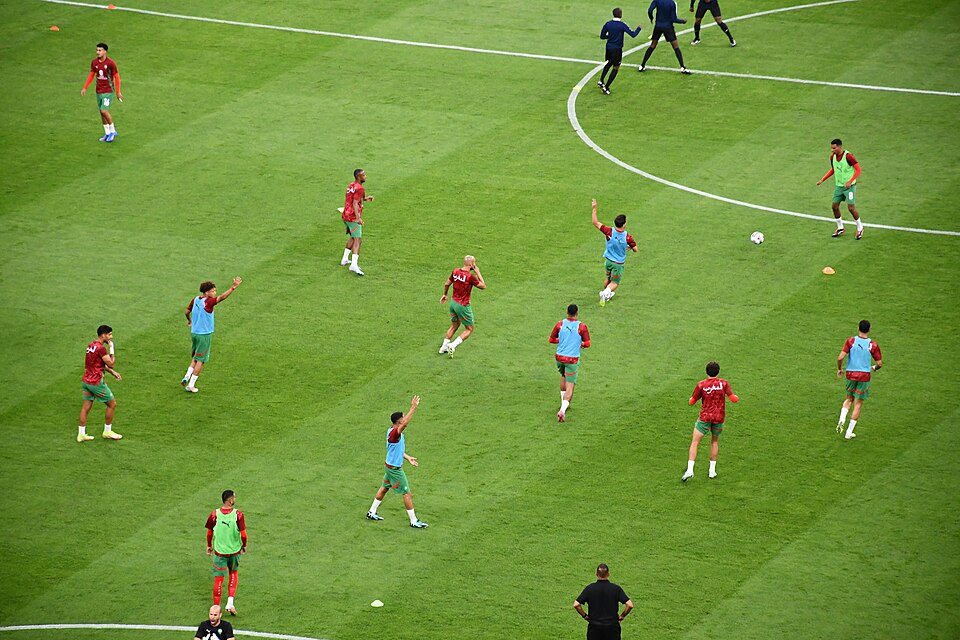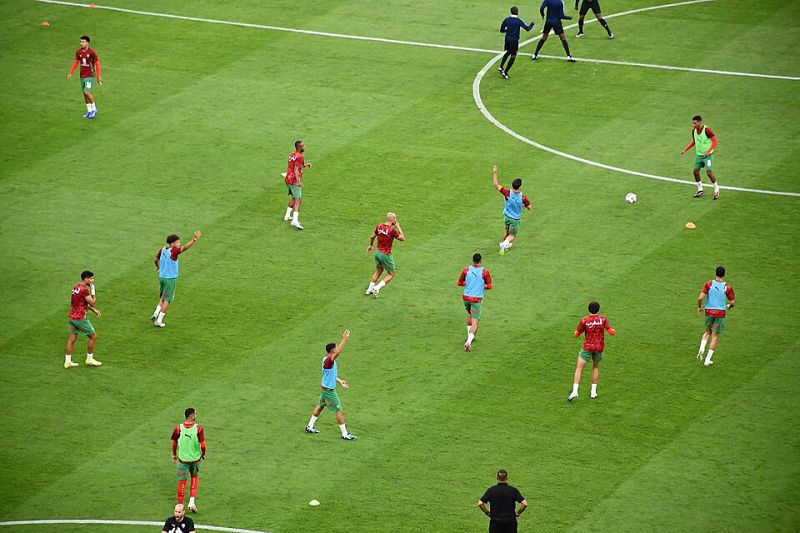
As visitors arrive in Mexico for the 2026 World Cup, Mexican advocates hope the tournament will bring not only economic benefits but also greater international attention to the families searching for their loved ones, writes Finley Monaghan-Mc Grath.
* CONTENT WARNING: This article discusses kidnapping, violence and organised crime
MARTA LETICIA GARCIA CRUZ, affectionately nicknamed Marlety by her son, César Ulises Quintero García, has been living in a nightmare, one shared by tens of thousands of Mexican families.
Marlety told this writer:
“César left home in 2017 and I'm still waiting for him. When he would arrive home, he'd turn off the garage light and yell, 'I'm home, Mum!, and I'd say:
'Okay, turn off the light and lock it up tight'."
She sobbed:
“That garage light is still on, because one day he'll come home… turn off that garage light and say, ‘I'm home, Mum'."
Marlety’s family is from Jalisco, a Mexican state that has recorded the nation’s highest disappearance rate since 2019, with more than 16,000 officially recorded cases. Its capital, Guadalajara, will begin hosting matches in June for the 2026 FIFA World Cup.
Many of these disappearances are not voluntary. They are the consequences of cartel-led abduction circuits – a report from the Inter-American Commission on Human Rights found that state actors are involved at an "alarming" rate – to expand narco-controlled territory and business operations.
Over 130,000 people are missing across Mexico in total.
The impunity rate for violent crime in Mexico is roughly 95 per cent, which consequently means these networks operate largely without fear of consequence.
Amid gaps in institutional search efforts, family members like Marlety have formed search collectives that uncover graves, document evidence and demand justice for their missing. Since 2010, at least 27 members of these grassroots search collectives have been murdered, most of whom have been mothers.
These search groups, over the past year, have found roughly 500 bags that contained human remains across four different grave sites, all of which were discovered 20 kilometres from Akron Stadium, which will soon host four World Cup games.
Marlety believes that the international attention surrounding the World Cup could offer a rare opportunity to draw awareness to the crisis.
But for lasting change to occur, Anna Karolina Chimiak, former co-director of Centro de Justicia para la Paz y el Desarrollo (CEPAD), speaking with this writer, explained that political priorities need to shift as state and federal governments pour fiscal funds into event preparation:
“This pattern reflects the broader tendency to prioritise not only image but also the economic interest over justice and the protection of victims.”
Disappearances as a weapon of power
Guadalajara is the country’s second-largest city and is a hub for technology companies, foreign investment and wealthy expatriates.
The state is also home to one of Mexico’s most powerful criminal organisations: the Jalisco New Generation Cartel (CJNG), known for its military hierarchy, extreme violence and global reach.
Alejandra Guillén González, a professor at ITESO, Universidad Jesuita de Guadalajara, described the reach of organised crime groups in Mexico:
“The linking of legal and illegal economic power, which are now two sides of the same coin. That’s where the real obstacle lies.”
Guillén González further explained this economic power and the phenomenon of forced disappearances, describing it as:
“A strategy of violence that allows territorial control and with it, the control of all kinds of businesses.”
While there are many motives behind cartel abductions, Lauro Rodríguez, an investigative journalist based in Jalisco, explained that forced recruitment is one of the most common:
“Forced recruitment is currently one of the factors influencing the disappearance of young people and adolescents, mainly between 15 and 19 years old. We have noticed that they are taken through false job offers or promises of earning a lot of money by joining criminal groups.”
He claims that these people are then taken to training houses or camps in rural areas where:
“They are beaten, forced to commit crimes, forced to watch how other people are killed and forced to use weapons, all with the aim that they can be incorporated into the ranks.”
Although cartels are responsible for most disappearances, Rodríguez claimed that security forces are complicit as well:
“In 2018, it was confirmed that police from Tecalitlán [municipality in Jalisco] disappeared three Italian citizens and handed them over to organised crime.”

According to The Washington Post, more than 300 officials since 2018 have been investigated for suspected involvement in abduction networks.
Mexican President Claudia Sheinbaum’s Government has denied that the state at any level is involved in systematic disappearance circuits.
An interior-foreign affairs joint press release stated:
'We reaffirm this government's absolute commitment to the eradication of enforced disappearances, the strengthening of search and identification efforts, and the guarantee of truth and justice for victims and their families.'
Underfunded institutions
Jalisco-based criminal lawyer Joseph Oid believes that Mexico’s executive branches are structurally ill-equipped to investigate the mounting number of open cases.
As executive powers are split between federal and state authorities, Mexican law states that cases linked directly to organised crime should fall under federal jurisdiction, but in practice, they often don’t.
Oid said:
“Overlapping jurisdictions complicate investigations. The federal prosecutors don’t want to work on these cases.”
Which, he says, leaves thousands of cases to the state departments, which have limited resources and an inadequate ability to coordinate with federal counterparts.
The forensic system is also at a breaking point. Across Mexico, the Inter-American Commission on Human Rights (IACHR) report claims there are over 70,000 unidentified bodies in state custody.

Official records show that from 2018 to 2026, authorities have processed 242 clandestine burial sites in Jalisco, resulting in the recovery of 2,128 bodies.
Marlety, whilst partaking in searches with her collective, Entre Cielo y Tierra Oficial, has first-hand experience of how difficult it is to identify these bodies:
“Here in Jalisco, they leave them dismembered, sometimes in as many as 22 parts. When we do field searches, we can find bags with only heads, legs or hands."
Teuchitlán: The cost of inaction
The consequence of this judicial paralysis and lack of resources was exposed to the world in March 2025, when a civilian search collective uncovered a ranch in Teuchitlán, two hours from Guadalajara, suspected to have served as a CJNG training and extermination site.
Descriptions of bone fragments, bullet casings, clandestine ovens and piles of personal belongings spread rapidly across social media and international outlets.
The property had been under state protection since September 2024, yet no police officers or site security were present when the collective arrived following an anonymous tip. State prosecutor Salvador González claimed there was no evidence of organised crime activity, but the discoveries told another story.
As global outrage grew, state and federal prosecutors blamed each other, the former condemning the state for failing to monitor the site and the latter criticising the federal government for neglecting its jurisdiction over organised crime.
In April 2026, a volunteer collective that was unsatisfied with the investigation’s process returned to conduct another search. They found another unexamined section of the property, a septic pit full of human teeth and bone fragments.
A crisis buried under World Cup spending
While the exact amount earmarked for World Cup-related upgrades remains unclear, the mayor of Guadalajara has confirmed that MXN$2.2 billion (AU$178 million) will be invested in public works and infrastructure projects in 2026 for the city alone.
In comparison, the 2026 Expenditure Budget released by the state of Jalisco shows that the total sum the government spends on all search-related operations across the state is just over MXN$2.2 billion (AU$178 million).
Additionally, Jalisco has made public four contracts relating to preparations for the World Cup, which exclude any infrastructure projects.
These contracts total MXN$339 million (AU$27 million), with the majority of this sum spent on the FIFA Fan Festival Guadalajara 2026.
By comparison, key institutions responsible for searching for missing persons operate on similar annual budgets. The state's Search Commission received MXN$105 million (AU$8.5 million) to operate annually, the Special Prosecutor’s Office for Missing Persons received MXN$145 million (AU$11.8 million), and the Secretariat of Intelligence and Search received MXN$101 million (AU$8.2 million).
Together, this accumulates to approximately MXN$344 million (AU$28 million).
Rodríguez claimed that the allocation of these fiscal funds is clear evidence of the authorities' disregard for the crisis:
“It's a complete contradiction, because we’re talking about thousands of millions of pesos. Imagine what could be done with that amount to address this crisis.”
The World Cup transcends sport and is regarded as the world’s game for a reason.
As visitors arrive in Mexico, Marlety and other advocates hope the tournament will bring not only economic benefits but also greater international attention to the families searching through dirt, rubbish and rubble for their loved ones.
If this article has raised any issues for you, contact Lifeline on 13 11 14 or 1800RESPECT on 1800 737 732 or online at 1800RESPECT.org.au.
Disclaimer: The majority of the quotes in the article were in Spanish and have been translated
Finley Monaghan-Mc Grath is an investigative freelance journalist who has reported in both Mexico and Australia.
 This work is licensed under a Creative Commons Attribution-NonCommercial-NoDerivs 3.0 Australia License
Support independent journalism Subscribe to IA.