Britain's growing push for proportional representation is shining a spotlight on Australia's own electoral system and the case for reform, writes Dr Klaas Woldring.
BRITISH MP Andy Burnham is the likely new PM of Britain. He is a great believer in proportional representation. He is likely to make a great impact on the voting system in the UK. To understand why, we in Australia need to consider the difference between proportional and preferential voting systems — and why it matters here.
This article is based on a related one posted online in Britain on 11 June 2026 by Mike Wright, head of communications of the very active Electoral Reform campaign in the UK.
Australia was specifically added by Wright in his article, as it is often believed – questionably – that the single transferable vote system used in Australia for lower house elections is or can be proportional. This misconception appears to stand in the way of serious reform in Australia. Even Wright is not entirely clear about this.
The electoral system reform discussion has come into focus in the UK as senior figures in the British Labour Party have made statements backing serious electoral reform in recent weeks.

Andy Burnham, who is seen as the frontrunner to be the next Labour leader, after he won the Makerfield by-election, has said he wants electoral reform for Westminster. He believes that proportional representation is an idea whose time has come.
Wes Streeting, another likely contender in the next Labour leadership contest, has also recommitted his support for scrapping the existing first-past-the-post system.
Burnham, in particular, has been a passionate advocate for electoral reform for a number of years now. He has previously explained how he was converted to the cause by his experiences running to be the Mayor of Manchester. This gave him his first taste of campaigning under a non-first-past-the-post electoral system.
In his most recent interview with The Observer, Burnham said, 'I am committed to proportional representation'.
Burnham’s conversion to electoral reform came through experience of a preferential system, rather than proportional, but he has rightly identified that proportional representation is the answer for Westminster.
That may seem like a small difference, but it is a crucial one when considering which electoral system should replace the first-past-the-post system and whether it would lead to parliaments that truly represent what the country voted for.
Crucial difference between proportional and preferential systems
Broadly speaking, when discussing the alternatives to first-past-the-post, electoral systems are either “proportional” or “preferential”.
Proportional systems are designed to ensure that an elected chamber, a parliament or a council reflects the way people voted. So, if party X won 30% of the vote, it then gets roughly 30% of the seats. This, in a nutshell, is what is meant by “proportionality” — it effectively means accurate representation between votes and seats.
However, this doesn’t work for elections to a single position (for example, as mayor), as a party can’t hold 30% of a single mayor. In these situations, preferential voting is the best way to ensure that more votes count towards the result.
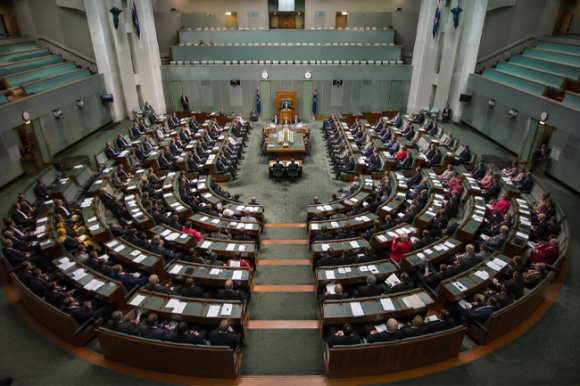
Australia shows that preferential voting doesn’t mean accurate representation between seats and votes.
Wright states:
‘Australia shows that preferential voting in single-member seats does not reliably produce proportional outcomes.’
In 2025, the Australian Labor Party won 34.6% of primary votes but secured around 63% of seats. Remarkably, this echoes the recent UK General Election in 2024, where Labour won two-thirds of the seats (63%) on just a third of the vote (34%), which produced ‘the most disproportional parliament in UK history’.
In short, Wright argues that:
‘Preferential voting can only make individual contests fairer; proportional representation makes the whole parliament fairer.’
Wright's conclusion:
‘Only a proportional system fixes the problem of less and less representative parliaments.’
The article continues:
‘This is not just a technical quibble but goes to the heart of what electoral reform is meant to achieve. Only a proportional system would address the problem we currently have of parliaments looking less and less representative of what the voters expressed at the ballot box.’
However, the recommendations then present the belief that proportional representation can be effectively combined with what is known as the single transferable vote (STV). This is questionable because of what has actually happened in Australia.
The outcome of the 2025 Federal Election in Australia – and of earlier federal elections as well – is a combination of single-member districts with the STV in each of the 150 districts.
The outcome of that election still grossly favoured the ALP Government, as much as the British Labour Government in 2024, which did not use STV.
It would make much more sense not to use the STV in multi-member electoral districts at all, but rather for the voter to use his/her vote for their preferred party instead of attempting to provide a series of preferences in a single vote.
This is actually what is happening in existing examples of multi-member electoral districts. Each party participating in the election provides a list of preferred candidates and electors are required to use just one vote for the party they prefer.
In most cases, they go for the party’s list of priorities of candidates and accept their list of preferences. If the party receives ten times the quota for an MP, the first ten are in. If there are votes for candidates lower on the list, these will be counted first. In that way, say, number 12 or 15, who may have received many preferred votes, may qualify to be elected.
However, in party list systems, this is fairly unusual. The voter, in any case, votes for one party in the first place. The STV idea essentially belongs to the single-member district system.
It is worth noting that plans are afoot to set up an independent commission in the UK to examine the electoral system for Westminster. We may soon see proportional representation in the next Labour manifesto.
In the literature on this possibility, mention is made of important changes made in New Zealand in the 1980s and 1990s, which resulted in the introduction of proportional representation while maintaining a form of dual-member electoral systems. This unique example has not been copied elsewhere. I don’t think it should be followed in Australia, either.
Whatever process the Brits go through to determine what system comes after first-past-the-post, the central question has to be how its replacement ensures that parliament actually reflects how people voted.
Clearly, what happens in the UK has been advocated by a number of activists there for several years already. It is puzzling that Australia is clearly trailing behind here, but the emergence of One Nation as a very likely threat to the ALP may finally result in progressive action.
Action should start as soon as possible and apply to both federal and state electoral systems. We should reflect on the fact that 85 other countries use proportional representation. Our system is in serious trouble as it is. Immediate action should be taken.
Will this issue be discussed at the forthcoming national conference of the ALP? If not, that should change.
Dr Klaas Woldring is a former associate professor at Southern Cross University and former convenor of ABC Friends (Central Coast).
 This work is licensed under a Creative Commons Attribution-NonCommercial-NoDerivs 3.0 Australia License
Support independent journalism Subscribe to IA.


Related Articles
- Electoral reform and education essential to eliminate populist politics
- What New Zealand can teach Australia about democracy
- Our political culture is rotting at its core