A productive economy relies on many things, particularly on people believing that their contribution will be recognised and rewarded, writes Professor Carl Rhodes.
ASK AUSTRALIA'S business leaders what keeps them awake at night and the most common answer is productivity. It ranks ahead of economic uncertainty, political risk, business transformation and financial management.
According to the Business Council of Australia (BCA), the problem lies largely with government. Excessive regulation, outdated workplace laws, inefficient tax settings and barriers to investment are said to be holding productivity back.
If those matters are resolved, they argue, Australia will:
'... create an environment where businesses can grow, workers can benefit, and Australia remains globally competitive.'
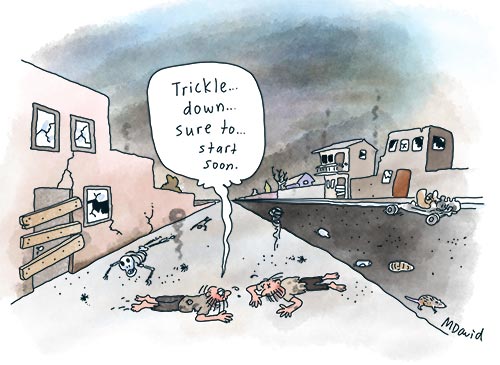
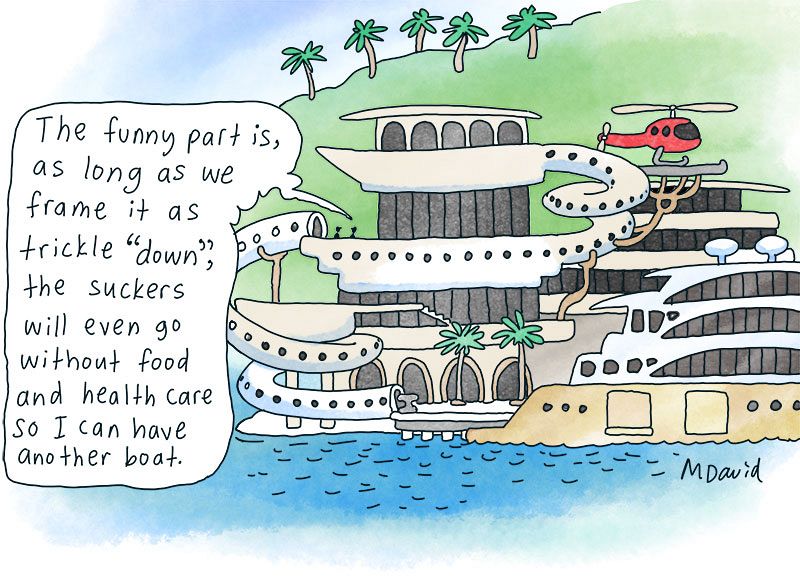
It is a well-worn story. If only government would get out of the way, business would generate stronger economic growth and everyone would share in the rewards.
But there may be another way of understanding Australia's productivity problem. Rather than looking solely to regulation, taxation or labour market reform, it is worth asking whether prevailing business practices and organisational cultures are themselves part of the problem.
The missing link between productivity and pay
Research presented by Warwick Smith and Adelajda Soltysik from the Centre for Policy Development (CPD) at the Economic Society of Australia (ESA) annual conference earlier this month found that workers’ pay has failed to keep pace with productivity growth since the 1990s.
Rather than flowing into higher wages, a growing share of productivity gains has failed to show up in workers' pay packets. Perhaps more strikingly, workers have fallen furthest behind in the very industries where productivity has grown most rapidly.
It is not just that productivity is outstripping pay; workers are actually going backwards. The OECD has just reported that since 2021, real wages in Australia have fallen by around 5 per cent, one of the sharpest declines among advanced economies. While living standards across OECD countries have generally improved since the pandemic, Australian workers have experienced a significant decline.
Australia's labour market remains relatively strong, and unemployment is low by historic standards. Australians are working. The question is whether they are still receiving a fair share of the value their work generates.
For a country that prides itself on fairness, this raises a deeper question: What happens when people work harder, become more productive and help create greater prosperity, but increasingly struggle to see the benefits in their own lives?

The fraying productivity bargain
A productive economy relies on more than regulation, technology, investment and efficient markets. It also relies on people believing that their contribution will be recognised and rewarded.
Workers are asked to invest their effort, creativity and commitment in the expectation that they will share in the prosperity they help create. The gap between productivity and pay matters because it weakens that expectation.
This is not merely an abstract economic argument. It is the lived experience of Australians who find housing increasingly unaffordable, discover their pay buys less at the supermarket each year, and are repeatedly told the economy is growing while their own living standards stagnate.
Could this help explain why Australia’s productivity growth has weakened? Workers who feel valued, respected and fairly rewarded are more likely to contribute the effort, initiative and innovation needed to drive improvement.
By contrast, when the rewards of economic growth are increasingly captured by business while workers are left behind, the motivation and willingness to contribute that underpin long-term productivity can begin to erode.

Reconnecting effort and reward
Rather than looking to government alone to solve the productivity crisis, all of this suggests that business itself may hold part of the answer.
Most debates focus on how productivity growth can lift wages and living standards. Far less attention is paid to the possibility that the relationship might also run in the opposite direction.
Workers who can see a clear connection between their efforts and their rewards are more likely to embrace change, invest in new skills and contribute the discretionary effort that organisations need.
In this sense, Australia may not just have a productivity problem. It may have a fairness problem that is holding productivity back.
For years, many organisations have pursued strategies based on wage restraint, labour flexibility, outsourcing and relentless cost cutting. Such approaches may deliver short-term financial gains, but over time they can undermine the trust, loyalty and engagement that sustain long-term performance.
Perhaps Australia's productivity crisis is not simply a problem of government policy. Perhaps it is also the consequence of a model of business that has increasingly failed to reward the people whose work underpins its success.
If workers no longer see a meaningful connection between effort and reward, business should not be surprised when productivity becomes harder to find.
Carl Rhodes is Professor of Business and Society at the University of Technology, Sydney. He has written several books on the relationship between liberal democracy and contemporary capitalism. You can follow him on X/Twitter @ProfCarlRhodes.
 This work is licensed under a Creative Commons Attribution-NonCommercial-NoDerivs 3.0 Australia License
Support independent journalism Subscribe to IA.


Related Articles