Trust in Australian business has been strained after years of corporate scandals and widening inequality, resulting in low public confidence, writes Professor Carl Rhodes.
AS AUSTRALIA SEARCHES FOR ways to grow productivity and investment, business groups insist that one of the answers is less regulation. The Business Council of Australia (BCA) has been especially vocal, earlier this year calling for a 25 per cent reduction in regulatory costs by 2030.
Responding to the Federal Budget, its chief executive, Bran Black, said that cutting regulatory costs by more than $10 billion a year was:
“...a most welcome step towards lifting Australia’s productivity and investment competitiveness.”
The message is simple. Red tape is a cost holding business back and prosperity will follow when the government gets out of the way. It is a familiar morality tale of honest, hard-working firms being thwarted by bureaucratic obstruction.
But the story is only half told. The other half lies in the incentives, norms and patterns of corporate conduct that have repeatedly undermined public trust.

The trust deficit
The business sector’s critique of regulation often treats it as little more than pointless compliance that smothers innovation and growth.
Not all regulations are well designed, and poorly constructed rules can impose real costs on firms and consumers alike. But regulation is not simply bureaucratic clutter.
When businesses cannot be relied on to act responsibly, governments regulate more heavily. Rather than reflecting hostility to either firms or markets, it reflects a loss of confidence that businesses will act responsibly without oversight.
Trust in Australian business has been under strain for years. Corporate scandals, widening inequality and perceptions that economic gains disproportionately benefit elites have weakened public confidence.
In the 2025 Edelman Trust Barometer, 66 per cent of Australians reported worrying that business leaders deliberately mislead people by saying things they know are false or gross exaggerations.
This poses a dilemma. Business wants fewer constraints in the name of growth, yet many Australians do not trust it to use that freedom in the public interest.
Trust is both a moral virtue and economic infrastructure. Markets work better when people believe institutions are competent, fair and accountable. When trust collapses, regulation expands to fill the gap.
So, the question is not just why businesses face so many rules. It is why so many Australians believe those rules are necessary.

AstraZeneca and the limits of commercial reasoning
If business wants the public to accept fewer constraints, it must first show that greater freedom will be exercised responsibly. Two recent corporate controversies help explain why many Australians remain unconvinced.
Pharmaceutical company AstraZeneca is withdrawing the breast cancer and endometriosis drug Zoladex 3.6mg from the Australian market from 1 November 2026. The only explanation it gave was that it was for "commercial reasons".
The drug was filled 94,000 times in the previous 18 months and patient groups say the decision has left many women anxious about losing access to a treatment on which they rely.
Companies inevitably make decisions based on commercial criteria. The problem is that many patients felt commercial criteria had been given greater weight than patient care. For women dealing with serious, sometimes life-threatening conditions, the withdrawal of a vital medicine with little public explanation was bound to deepen distrust.
Decisions justified only by “commercial reasons” may satisfy a boardroom. They are far less likely to satisfy the public.

KPMG and the price of lost trust
Where AstraZeneca illustrates how commercial imperatives can conflict with social expectations, the revelations about KPMG show what happens when commercial ambition appears to corrode professional obligation.
The controversy centres on whistleblower allegations that confidential Lendlease board papers were used internally to help KPMG pursue audit work with other companies such as Westpac and Dexus.
KPMG’s internal review and a later external review by Ashurst did not substantiate the allegations.
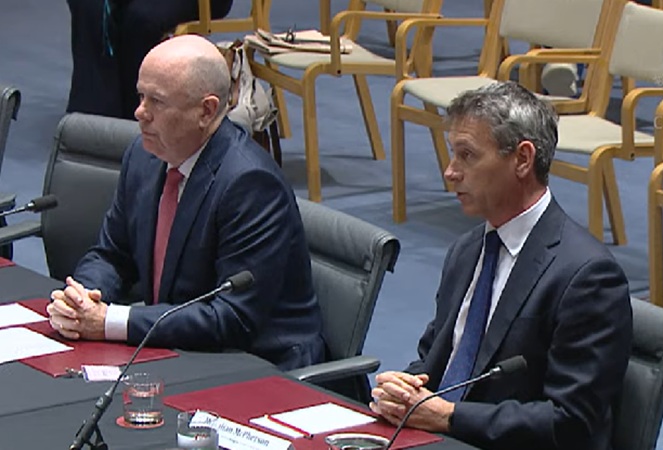
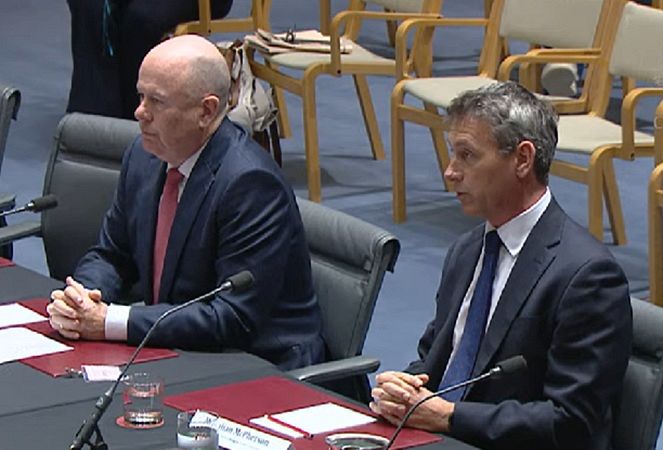
Despite that, the fallout has been severe. In May 2026, KPMG chief executive Andrew Yates and audit leader Julian McPherson resigned over the handling of the whistleblower matter.
The Australian Securities and Investments Commission (ASIC) has since launched a formal investigation, and the federal Department of Finance has announced an independent review of KPMG’s governance, culture, ethics and integrity frameworks. KPMG has also agreed not to bid for new Commonwealth work until 30 September 2026.
The significance of this case goes beyond KPMG. Audit depends on trust. Firms such as KPMG sell technical services, but they also trade on claims to independence, discretion and professional integrity.
When those claims are undermined, so too is the credibility of the market institutions that depend on them.
Trust before deregulation
AstraZeneca and KPMG are very different cases, but they point to the same underlying problem. Low public confidence cannot simply be dismissed as cynicism. It reflects a growing perception that commercial imperatives too often take precedence over responsibilities to customers, workers and the wider community.
Under such conditions, it is unsurprising that trust is low. The call for deregulation assumes that businesses will act responsibly when constraints are removed. Recent experience gives the public little reason to believe that.
If corporate Australia wants fewer rules, it must first give Australians fewer reasons to demand them. The strongest case for deregulation will not be made in lobbying campaigns, but in conduct that earns public trust.
Carl Rhodes is Professor of Business and Society at the University of Technology, Sydney. He has written several books on the relationship between liberal democracy and contemporary capitalism. You can follow him on X/Twitter @ProfCarlRhodes.
 This work is licensed under a Creative Commons Attribution-NonCommercial-NoDerivs 3.0 Australia License
Support independent journalism Subscribe to IA.