Addressing the discontent that is driving the rise of One Nation requires confronting deeper questions about who owns wealth, who exercises power and who benefits from the way the economy is organised, writes Professor Carl Rhodes.
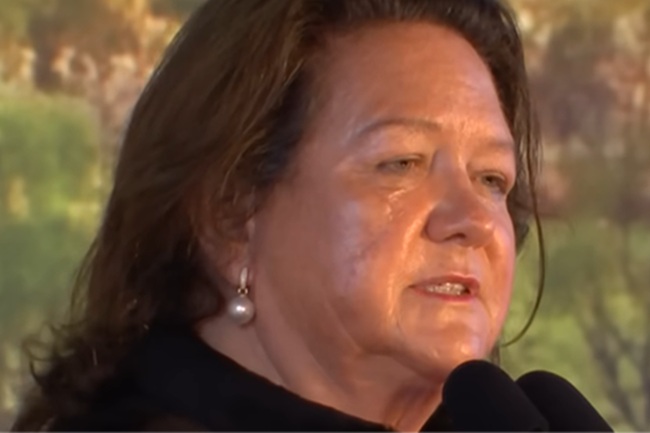
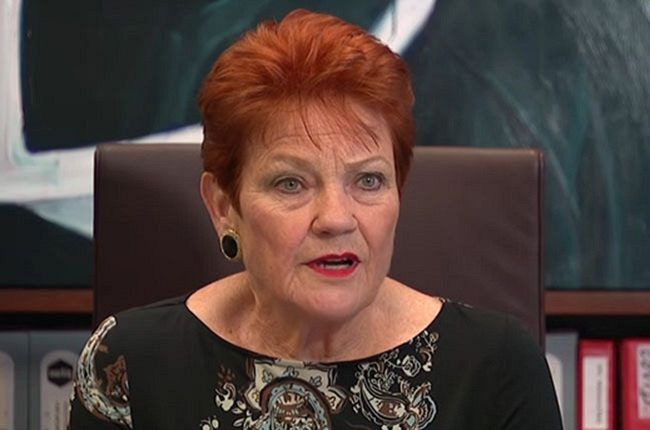
LAST WEEK, Pauline Hanson's updated parliamentary registry of interests revealed that Australia’s richest person, Gina Rinehart, had paid for her to fly from London to Sicily to go to a Dolce & Gabbana fashion show.
It is the latest in a series of gifts and benefits provided by Rinehart to Hanson and her One Nation party, including domestic flights, hospitality and even a Cirrus G7 private jet worth $1.3 million.
When it comes to their relationship, Treasurer Jim Chalmers is on record as saying: “Pauline Hanson is a wholly owned subsidiary of Gina Rinehart”, working against the interests of “workers and battlers”.
There is a striking paradox here. One Nation’s growing support is driven in part by rising living costs, housing stress and a widespread sense that the economic system no longer works for ordinary Australians.
If that is the case, why is Australia’s richest billionaire among the party’s most enthusiastic supporters?

Turning economic pain into cultural grievance
A key to addressing this question is illustrated in the events surrounding Pauline Hanson’s recent European “fact-finding mission”.
The trip was supposedly about immigration, multiculturalism and national identity. “I don’t want Australia to become like Britain has,” Hanson explained. Mass deportations? “Oh, I love it,” she said.
The culture war campaigning continued when she got home. Having focused on immigration abroad, she soon turned her attention elsewhere. Taking domestic violence leave from work? That’s a scam for a holiday, she claimed. Single motherhood? That’s a get-rich-quick scheme.
Last month, workers were in her sights. Why are we in such economic dire straits? It’s because, to use her words, workers “actually are lazy” and businesses “can’t sack people these days”.
There are clearly no new "facts" here, only familiar themes from the Far-Right populist playbook. If Hanson has learned anything recently, it is not about immigration, multiculturalism or national identity. Rather, it is how to convert economic pain into support for the cultural grievances she has championed for decades.
The missing question of inequality
With One Nation, Australians struggling to make ends meet amid stagnant wages and rising prices are encouraged to blame immigrants, single mothers, domestic violence victims and supposedly lazy workers.
What is conspicuously absent is any serious scrutiny of concentrated wealth, corporate power or economic inequality. This is where Rinehart comes in.
When asked why One Nation is supported by Gina Rinehart, Hanson recently said that Rinehart is a:
“... very smart, clever woman. She’s a very proud, patriotic Australian and she sees the same in me. That’s why she backs me.”
Hanson has publicly acknowledged consulting Rinehart on policy matters and has credited her with developing at least one One Nation policy proposal. While counting her as a “friend”, she also refers to her deferentially as “Mrs Rinehart”.
Appeals to friendship, patriotism and shared values tell only part of the story. The other part is One Nation’s silence on the extraordinary accumulation of assets by billionaires, the tax advantages enjoyed by the wealthy, or the widening gap between those who own assets and those who rely on wages.
Voters are encouraged to see immigration, multiculturalism, government regulation and political correctness as the source of their problems, rather than asking who benefits from the unequal distribution of wealth and power.
This is what makes the relationship between Hanson and Rinehart far less paradoxical than it first appears. One Nation gives expression to genuine economic frustration while directing political anger elsewhere.
The result is a policy platform that promises little in the way of changing the inequalities embedded in the economic status quo, or Rinehart’s position at the very apex of it.
Hope for whom?
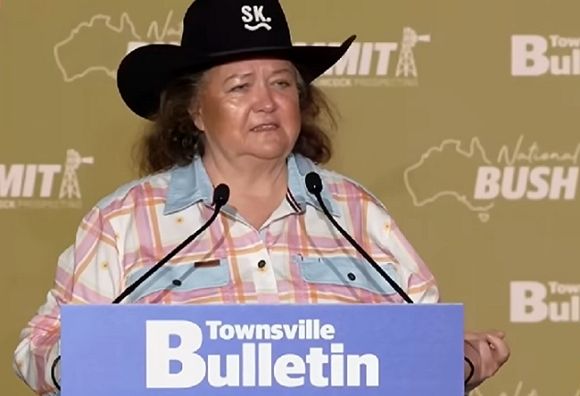
Speaking at the Townsville Bulletin Bush Summit in June, Rinehart blamed the problems facing regional Australia on “big spending government, wasteful government”, high taxes and excessive regulation. Hanson, by contrast, was praised for giving “Aussies across our country hope”.
But hope for what?
There are many ways of addressing the growing reality that prosperity is being shared less and less fairly. Think of wealth taxes, higher taxes on billionaires, inheritance taxes, major reforms to capital gains concessions, reducing the political influence of the rich or stronger redistribution of wealth and income.
None of these is on One Nation’s policy agenda. Instead, the party offers explanations centred on immigration, cultural change, welfare dependency, government regulation and political correctness.
The discontent driving One Nation’s rise is real. But addressing it requires confronting deeper questions about who owns wealth, who exercises power and who benefits from the way the economy is organised.
Until those questions are confronted, the frustrations on which One Nation thrives will persist and the inequalities that generate them will continue to deepen.
Carl Rhodes is Professor of Business and Society at the University of Technology, Sydney. He has written several books on the relationship between liberal democracy and contemporary capitalism. You can follow him on X/Twitter @ProfCarlRhodes.
 This work is licensed under a Creative Commons Attribution-NonCommercial-NoDerivs 3.0 Australia License
Support independent journalism Subscribe to IA.


Related Articles
- The multicultural generosity Pauline can't see
- CARTOONS: Pauline Hanson's billionaire-backed colours are showing
- Pauline Hanson’s New Zealand migration plan misses the mark
- Pauline shines in the political gutter, enjoying spoils from wealthy donors
- EDITORIAL: Pauline shines in the political gutter, enjoying spoils from wealthy donors