Australia’s embrace of AUKUS exposes the absurdity of prioritising militarisation while the far greater threat of climate change demands urgent action, writes David Higginbottom.
THERE IS SOMETHING faintly old-fashioned about the climate debate.
It remains obsessed with solar panels, public transport, building upgrades, electrification and the tedious business of not cooking the planet. It assumes that a climate policy should preserve a liveable society, a benign climate and keep food growing.
Whilst charming, this is insufficiently ambitious. Australia is, after all, a nation capable of thinking strategically. We have learned to pronounce “cohesiveness” and to discuss security in the commanding grammar of inevitability. So, when the Government tells us that climate disruption is an existential threat, while preparing substantial military infrastructure, perhaps the public should ask whether it has an ingenious solution.
There are encouraging signs that the country is preparing to take national security seriously, but, up until now, I did not realise that climate change was behind this strategy. The Department of Defence says that, from as early as 2027, the planned Submarine Rotational Force at HMAS Stirling will involve one United Kingdom and up to four United States nuclear-powered submarines.
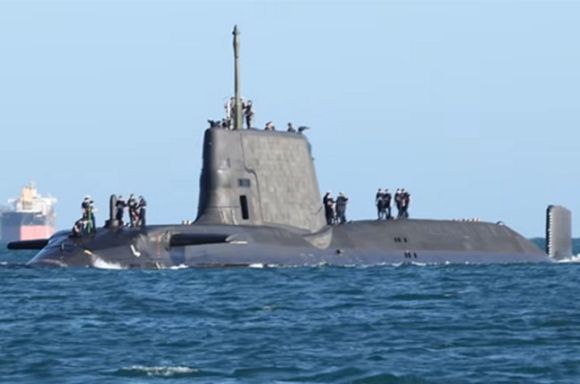
Nuclear-powered submarines are not nuclear weapons; however, U.S. and UK nuclear submarines do carry nuclear weapons. This makes them a target when docked in port — vulnerable as any sitting duck and a major concern for all residents. However, what if the execution of this threat, through a pre-emptive strike on HMAS Stirling, was part of the plan all along?
I have seen a leaked copy of a Cabinet Submission (note for ASIO: this has been destroyed; I don’t want to take over David McBride’s cell).
This is a short summary of the submission:
AUKUS Proposal:
Replace the difficult task of reducing emissions with a brief period of planetary dimming, followed by food-system collapse, ecological disruption, radioactive contamination, mass displacement and an acute shortage of everything people generally need to stay alive.
Key performance indicator:
Technically lower temperatures, for however long anyone remains in a position to record them.
I am told that this submission was praised for its fiscal discipline. After all, there would be no need to spend years improving homes against heat, building resilient public transport, restoring ecosystems, supporting Pacific climate adaptation or rapidly replacing fossil fuels. The sun itself would be downsized.
Agricultural output would become a legacy service. The distinction between “net zero” and “no harvest” could be addressed later, perhaps by a taskforce chaired by someone who has previously sold defence consultancy, or maybe a commissioner from the National Anti-Corruption Commission (NACC).
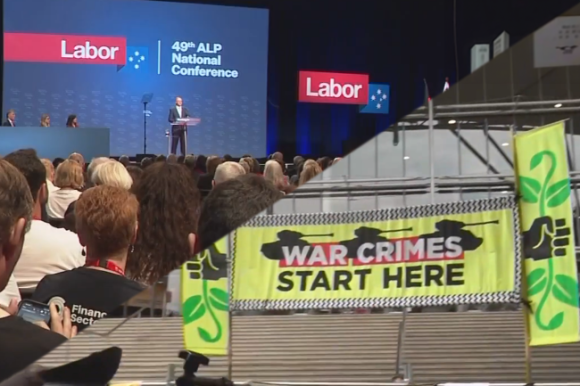
Why labour over the slow, inconvenient work of decarbonisation when one might reduce global temperatures the old-fashioned way: by ensuring that so much smoke reaches the atmosphere that the planet receives less sunlight? It is an audacious programme. It has immediate visual impact — and it makes the phrase “cool change” sound rather more enticing than a battery rebate.
The absurdity is not that anyone has secretly designed a nuclear-winter climate policy. The absurdity is the policy that makes this joke intelligible.
What should be national priorities?
If a nation can devote such concentration to the architecture of military integration while treating climate action as a matter for another strategy, another summit, another consultation paper and perhaps a particularly moving television advertisement, it is reasonable to ask what sort of future is being built?
Public language becomes alarmingly elastic when militarisation is described as a substitute for security. The vocabulary becomes clean and technical: “posture”, “capability”, “interoperability”, “deterrence”, “presence”. The human consequences are left in a locked filing cabinet labelled “contingencies”.
Yet the final test of a security policy is not whether it produces impressive nouns. It is whether it reduces the probability that ordinary people will lose their homes, food, family members and future.
The phrase “nuclear winter” has a pleasant sound, as though one might put on a cardigan, light a fire and complain about the seasonal lack of tomatoes. In reality, it is shorthand for a world in which firestorms loft soot into the upper atmosphere, sunlight fails to reach the Earth, temperatures and precipitation patterns shift, crops fail, fisheries suffer, trade fractures and hunger follows — a darker, radioactive planet.
The proposal for nuclear winter is the perfect caricature of a politics that has mistaken the road to survival as increased militarisation — and that increases the probability of destroying the conditions of life.
Australia can choose another path. It can reduce emissions without creating a nuclear winter. It can build resilience without making war more thinkable. It can treat the climate emergency as a reason to invest in life rather than a backdrop to an arms race. And it can remember.
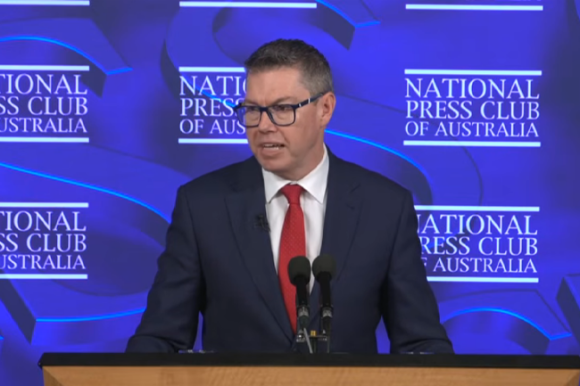
The point of national security is not to prevail over a ruined world, but to help prevent one.
The real scandal is that we are not short of climate solutions. We are short of the political willingness to fund and deliver them at the necessary speed. The International Energy Agency’s Renewables 2025 tracks the deployment of renewable energy in electricity, transport and heat through 2030.
That is the direction a practical government should take: clean power, efficient buildings, electrified transport, storage, resilient food systems, public infrastructure and support for communities already living with climate disruption. None of it is magical. All of it is preferable to turning the stratosphere into an accidental mausoleum.
Nor is climate security separable from peace. The Pacific Islands Forum Secretariat identifies climate change as the single greatest threat facing the Pacific and frames its 2050 Strategy around climate resilience, peace, security and prosperity.
A serious Australian security policy would listen rather than treating the region chiefly as a map on which larger powers arrange their equipment. It would put diplomacy, conflict prevention, civilian preparedness and genuine regional partnership alongside the defence of territory.
It would ask, before each grand military commitment, whether the same public resources could reduce danger more effectively if invested in climate resilience and peacebuilding.
That parliamentary inquiry should be public and unembarrassed by these questions:
- What is being built?
- Who has authority over its use?
- What risks does it create?
- What alternatives have been rejected?
- What would Australia gain by becoming better at preventing conflict rather than merely more prepared to join it?
These questions are not anti-security. They are the beginning of security.
David Higginbottom is a member of the coordinating committee of the Independent and Peaceful Australia Network (IPAN) and coordinator of the Make Peace A Priority campaign (mpap.au).
 This work is licensed under a Creative Commons Attribution-NonCommercial-NoDerivs 3.0 Australia License
Support independent journalism Subscribe to IA.