

What began as loss and mourning became an unexpected medical emergency everyone should be warned about, writes Henry Pawlaczyk.
IN 1972, AMERICAN SINGER BJ Thomas released the song ‘Billy and Sue’.
Few will recall that tune, though it reached number 34 in the States, but some might recall this line:
“He didn’t die from a bullet, but he died from a broken heart.”
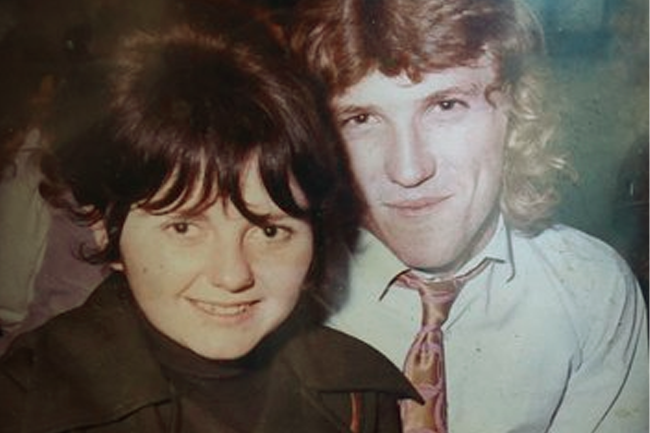
On 8 March 1972, I drove into the driveway in our six-pack apartment building to park under Flat 4. I got out and looked up at the balcony and there was my darling Catherine, with our baby Michael, waiting for me. They had just moved in that day.
I had given Cath the keys the weekend before.
Fifty-two years we were together, Catherine and I, through thick and thin, good and bad, joyous and wonderful times, and sometimes through hardship and pain.

One of the darkest times was when our 49-year-old eldest daughter got pancreatic cancer, which went metastatic.
Nicolette never saw her 50th birthday.
Given six months to live by her oncologist, Nicolette made it to six months and two weeks.
As it turned out, that tragedy hastened Catherine’s decline. Only 15 months later, she also passed, aged 70.
Bradycardia
Saturday, 21 September 2024, around 8 PM
Now I want to talk about bradycardia and where that song line comes in.
For the following six months after Catherine passed, living in the remote Goldfields of Western Australia, now abruptly alone, I had been slipping in and out of grief.
One night, I was sitting at my PC, doing whatever, when all of a sudden I felt a dizziness like I had never felt before. Then began to feel nauseous as well.
I got up to go to the den, where I kept my blood pressure meds, to see if I had taken them that day.
As I walked, my legs were not going properly; they felt weak and wobbly. I was in a state of fear, with no idea what was going on, my body suddenly foreign to me,
I had taken my meds, as it turned out. So I returned unsteadily to the lounge room, sat in my recliner and tried to relax. But the dizziness began again, far greater than before.
It was so strong had to use all my willpower not to pass out.
When that spell abated, I thought to myself: “Shit, Henry! You were a volunteer ambulance officer for three years — check your vitals!”
So out came the blood pressure machine, the oxy pulse meter, the blood sugar level monitor and the temperature reader.
The first thing I checked was my blood pressure. It was 101 over 61.
“That’s bloody low,” I thought to myself.

The blood pressure monitor said my pulse was 40.
“Fuck, I’m in the shit!”
I check my pulse with the oxy/pulse meter. Oxygen: 96; pulse: 40.
Not good. Very bad, in fact.
I call the hospital. I talk to a male nurse.
He asks: “Are you okay to drive, or should we call an ambulance?”
I told him, if he’s not looking at me in 20 minutes, call an ambulance.
Laverton Hospital
Saturday night
I drove there very carefully; they were waiting for me.
By 8:30 PM on that Saturday night, I’m in the ER at Laverton Hospital, Western Australia, hooked up to an ECG monitor, and a Perth heart specialist is on a big telehealth screen on the wall, talking to the nurse and me.
“Nurse, can you show me Henry’s latest reading?” he asks. The nurse goes to the screen with the readout.
The nurse turned to me. “Henry, you’re going to get a pacemaker.” He walked back to the ECG machine.
“Have I got bradycardia?” I asked the nurse. The nurse confirmed my query. He told me that he worked in the ICU in Perth for six years, but left because of the pressure of the job.
I knew I was in good hands.
And I could see from the monitor, the adrenaline drip had brought my blood pressure up now to around 70.
The Flying Doctor Service
Sunday morning
When I was a volunteer ambo, I had transported many a patient to the Laverton Airport and assisted their boarding onto Royal Flying Doctor Service planes.
This time, it was me.
I get flown directly to Perth. On the small aircraft was a doctor and a nurse.
From the airport, an ambulance transported me to Fiona Stanley Hospital, where I was speedily processed and placed in a private room (all on Medicare) to await life-saving treatment.
The first specialist enters shortly after — a heart specialist, accompanied by a small entourage of student doctors.
He then tells me that a radiologist will be along shortly, but he will be back soon after with the results, to tell me about the next steps.

The radiologist
This guy is smooth. He is doing his scans, moving me where directed.
He tells me (maybe he shouldn’t, but we got along like old chums from the start):
“Your heart's top chamber is not beating in sync. In fact, it’s not beating regularly at all and your bottom chamber is doing all the work.”
An hour after the radiologist left, the heart specialist came back in with a heart surgeon and a couple of others. I did not know their function.
Pacemaker
The specialist explained to me that the electrical impulses going to my heart’s top chamber had failed, and I was to be fitted with a pacemaker with two wires — one for the top chamber and one for the lower. The deluxe model, so they said.
The pacemaker was to keep my heart at a regular 60 beats per minute, I was told.
“Why not 72?” I asked.
He told me they liked 60 beats per minute and that I’d live longer, because we all have only a certain number of heartbeats per lifetime.
I loved that explanation.
The heart surgeon
Monday morning
The cardiac unit is on the seventh floor and I am taken by gurney into the waiting section, or pre op, where I am given oral Valium to calm me.
My turn comes and I am wheeled in. It is a nice place full of busy professionals.
Indeed, the heart surgeon could well have been a stand-up comedian.
He looks down at me kindly, before saying: ”Hello Henry, you are today’s winner of the deluxe model pacemaker, that will take you from 40 to 60 in under a second.”
The operation is performed under local anaesthetic, meaning was awake the whole time. I counted nine needles in my chest area.
A vertical short screen was placed across my neck, so I couldn’t see the operation, but I could see the surgeon’s face and upper torso.

When the needles numbed me, he went to work. We chatted throughout.
I told him of my darling wife passing six months before and he told me, “Yes, you nearly died of a broken heart.”
He also told me I would be sent home with a monitor that goes on my bedside table and that they could do adjustments from Perth if needed. I was impressed by the super-tech.
Tuesday morning
I was wheeled across a high walkway that goes over the street to the seventh floor “Medihotel” part of the complex.
I am given medication, which I am told I will have to take for the rest of my life.
Bisoprolol fumarate is a prescription medication belonging to a class of drugs called beta-blockers, primarily used to treat high blood pressure (hypertension) and heart failure.
In comes the nurse who gives me a rail ticket to Kalgoorlie, because I'm not allowed to fly for at least seven days after being fitted with a pacemaker. She also gives me a cab voucher (all paid by Medicare).
But who will I call about getting back to Laverton from Kalgoorlie (375 kilometres)?
So I phoned a mate in Kalgoorlie — Rex, a retired 22-year veteran copper in Laverton. He tells me he has to go to Laverton on Wednesday arvo and he'll take me.
Wednesday morning and afternoon
I phoned the cab company to pick me up at 6:30 AM to take me to the railway station.
I got myself a feed in the cafeteria and boarded The Prospector at 7 AM.
I am alive and had a great trip up the Swan Valley, then the forested Avon Valley, aplenty with running water, all the way to Northam and got into Kalgoorlie at 2:30 PM.
Rex was waiting for me and I was home by 6:30 PM.
So there it is. Maybe heart issue; Laverton Hospital 8:30 PM Saturday night; fitted with a pacemaker in Perth and home by 6:30 PM Wednesday night.
I wrote this because I understand the human condition and wish to share what wonderful treatment I received, and to warn people not to take danger signs haphazardly concerning their health, especially the relatively poorly known condition of bradycardia.
Bradycardia (slow heart rate) symptoms often involve reduced blood flow, causing dizziness, lightheadedness, fainting, fatigue, weakness and shortness of breath, especially with exertion, plus potential confusion, memory issues, or chest pain. Some people have no symptoms, but if you experience these, see a doctor, as it means your heart isn’t pumping oxygen-rich blood enough.
Note: Very fit athletes or people sleeping may naturally have heart rates below 60 bpm without symptoms, which is normal.
 This work is licensed under a Creative Commons Attribution-NonCommercial-NoDerivs 3.0 Australia License
Support independent journalism Subscribe to IA.






