

Motor neurone disease is one of the cruellest battles anyone can face and the fight to defeat it has never mattered more, writes Ben Peterson.
MOTOR NEURONE DISEASE (MND) is one of the cruellest diagnoses imaginable. I know this because it took my grandfather fast — eight months from diagnosis to death.
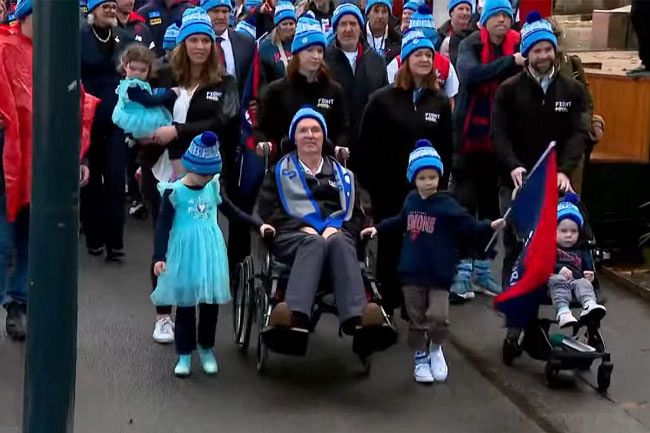
On 9 June, the Big Freeze at the Gabba once again saw Australians don silly costumes and launch themselves into icy water. It's become a light-hearted tradition, but is born from something brutal.
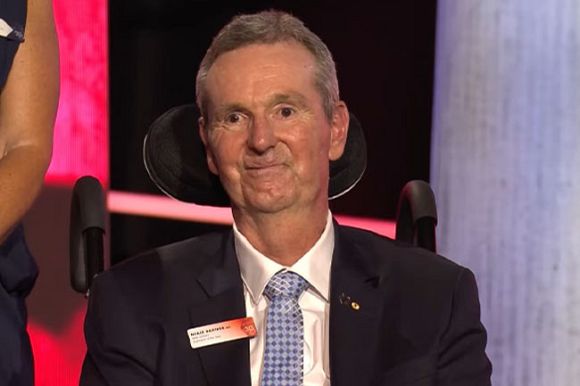
Neale Daniher calls MND “the Beast” and he's right. As brutal as the disease is, it's also one with many faces, some you may not recognise. My family met it face-to-face.
It is Christmas of 2017 and my grandfather has just been told his cancer is in full remission — what a Christmas present. A stalwart of a man, although he is ageing, his 6'2”, 100 kilogram frame hasn't yet deserted him. A feat, for if medical records earned Brownlow votes, he'd have his own wing at AFL House. He'd had over a dozen cardiac stents and more for his kidneys, and survived prostate cancer, bowel cancer and secondary liver cancer.
I vividly recall after bowel surgery, being contacted by St Vincent's Hospital to advise me to gather the family. He was critically unwell and likely wouldn't survive the night. Like every other battle so far in his life, he prevailed.
Fast forward to February 2018 and my grandfather is suffering from a tickle in the throat, one he can't seem to shake. He doesn't seem generally unwell; it is more agitation from spices, or perhaps some dust in the air. We playfully tease him for being concerned: “We can still hear you on the phone from a suburb away, there's nothing stuck in there!”
It's March and I've just returned from working overseas. His condition hasn't improved. As always, it fell to me to fix things. I was used to this by now; after all, I'd grown familiar with most of his doctors over the years. It was never a burden. In fact, it was an honour that he trusted me to help. The only frustration this time was how minor it all seemed.
We go to the chemist and they say, “See a doctor”.
We go to the local doctor, who recommends a speech pathologist.
We go to the speech pathologist.
Something's not right. I pull them aside after the consultation and ask what they think it is. They suspect “something neurological”.
We go to a neurologist.
My grandfather is diagnosed with motor neurone disease.

The news is understandably devastating; however, my exposure to the illness is largely limited to Stephen Hawking and the relatively recent diagnosis of Neale Daniher. We brace for a tough fight, but with his advancing years, we think perhaps he might be spared the full brunt of it.
But his diagnosis came with a cruel twist. His is a particular variant known as Bulbar onset.
Within eight weeks, he can no longer speak. Yes, eight weeks.
Another eight and he can barely walk.
And within eight months of diagnosis, my incredible grandfather passed away.
There's no scoreboard for suffering. No ranking system. But was cruel. Rapid, brutal, dehumanising. And yet, it's just one of the many faces of the Beast. And also a challenge faced by many Australians with other illnesses, every day.
It's said we walk through doors we didn't open, on floors we didn't lay.
Neale, Fight MND and the Freeze at the G give us more than just a way to raise money.
The fight against MND is crucial, but it's not just that we fight. Or even how we fight. It's why we fight.
Because the “why” speaks to the best in us. In a world that so often presents suffering, cruelty, indifference and injustice, we choose to push back. To reach for joy, to offer compassion, to insist on fairness. To be a constant reminder that even in the darkest of corners, humanity can still shine.
Leigh Matthews once said, quoting the film Predator, “If it bleeds, we can kill it”. Neale Daniher and the team at Fight MND have shown that the Beast can bleed.
It will take more research. More fundraising. More freezing.
But eventually...
We will kill it.
Ben Peterson is a small business owner and a graduate of the UoM (Commerce and Arts, Political Science major).
 This work is licensed under a Creative Commons Attribution-NonCommercial-NoDerivs 3.0 Australia License
Support independent journalism Subscribe to IA.








