After almost 30 years of telling Australians to listen to what she has to say, it's time Pauline Hanson started listening to all Australians, not just those who applaud her, writes Di Ridley.
PAULINE HANSON HAS SPENT ALMOST 30 years telling Australians that she is prepared to say what other politicians will not. Her supporters call it courage and plain speaking. Her critics call it fear, division and politics built around finding another group to blame.
After three decades, however, Australians do not have to judge her on one headline. They can look at the whole record.
The latest argument began with somebody who cannot answer back: Anthony Albanese's late mother, Maryanne Albanese.
Hanson criticised the fact that Maryanne remained in public housing for decades, arguing that social housing should be a hand-up rather than a lifelong home. Maryanne was a single mother and disability pensioner who lived with severe rheumatoid arthritis.
Albanese answered that he was 'proud to be a houso' and described his mother as compassionate, generous and kind.
There is a real policy question underneath the politics. Australia has too few social homes and far too many people waiting for one.
But Maryanne's life poses another question. If secure public housing allowed a disabled single mother to raise her child in stability, and that child eventually became prime minister, is her story only an example of somebody staying too long — or is it also an example of what secure housing can make possible?
Hanson chose to make another family's history part of a political argument. That makes her own public history relevant too — not gossip about relatives, but the words and positions that are actually on the record.
Go back to 1996. Hanson entered federal Parliament after being disendorsed by the Liberal Party during the election campaign following controversial remarks about Aboriginal welfare.
In her first speech, she attacked multiculturalism and warned that Australia was "in danger of being swamped by Asians". She said some Asian migrants formed ghettos and did not assimilate. Those words became one of the defining moments of her political career.
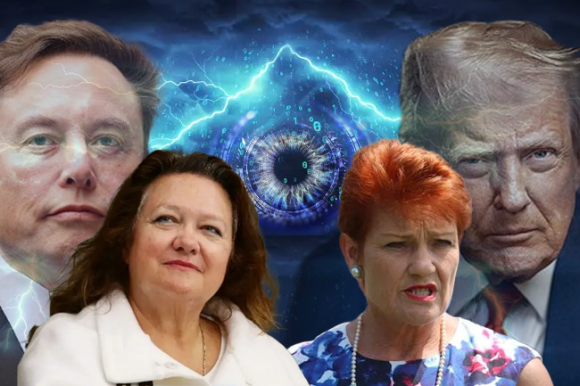
Her family history also entered the public conversation. Hanson's mother, Norah Seccombe, was recorded saying she had always been taught that "the yellow race will rule the world."
We cannot responsibly claim who taught Norah that belief. But Hanson's own 1996 remarks, later reproduced in Hansard, referred to what her mother had said for years about the "yellow race" and described the prospect as frightening. Norah's words belong to Norah. Pauline's words belong to Pauline.
Twenty years passed. Hanson returned to federal Parliament in 2016. The country had changed. The language sounded familiar.
This time Hanson said Australia was "in danger of being swamped by Muslims."
She called for stopping further Muslim immigration, banning the burqa, preventing more mosques and Islamic schools from being built during what she described as the present crisis, and monitoring existing ones. She argued that Islamic ideology was incompatible with Australian culture and security.
The 2016 speech also turned to welfare. Hanson said welfare was not a right except for people who were aged or sick.
She attacked welfare dependency and claimed some single mothers were having additional children to maintain welfare payments. She proposed taxpayer support for a first child without increasing payments for further children and told people to take responsibility for their actions. That does not mean Hanson has opposed every welfare increase – she has not – but the statement remains part of her record.
She also attacked aspects of Australia's family-law system. Hanson argued that children were being used as pawns in custody disputes, criticised what she regarded as frivolous claims and said mothers and fathers should have equal rights.
Some separated parents welcomed that message; critics objected to the generalisations. A complete history has to include both the constituency she was trying to speak for and the people who felt targeted by the language.
Then came education and disability. In 2017, Hanson argued that some children with autism and disability should be educated in special classrooms because teachers were under pressure and other children could be "held back".
Disability advocates reacted furiously and described the idea as segregation. Hanson later said she had been misrepresented and was not proposing that every autistic or disabled child be removed from mainstream education.
Again, the clarification matters — but so do the original words.
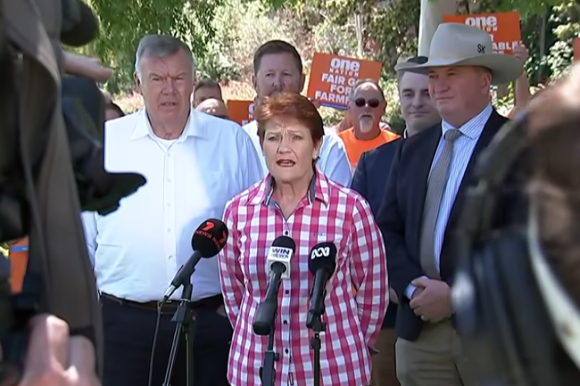
The same period brought the national fight over marriage equality. Hanson opposed changing marriage to include same-sex couples and suggested gay and lesbian couples could instead have civil ceremonies.
During the debate, she warned about consequences for traditional terms such as "mum and dad". Her later record is more complicated. She has rejected explicitly homophobic remarks by others and One Nation now includes openly gay figures.
Yet Hanson has continued to criticise Mardi Gras and has become an aggressive opponent of contemporary transgender and gender-identity policies.
The honest account is not that she simply hates every gay Australian. It is that she opposed marriage equality and has repeatedly entered political battles over LGBTQ+ rights, sexuality and gender.
Indigenous Australians have been part of Hanson's political story from the beginning.
Her 1996 speech attacked what she regarded as preferential treatment, "reverse racism" and Indigenous-specific institutions, including the Aboriginal and Torres Strait Islander Commission (ATSIC).
Three decades later, comments made on a 2025 podcast resurfaced in September 2026, in which Hanson described Indigenous Australians as "the most primitive race on Earth" and said they had "achieved nothing". The remarks were condemned across party lines, including by Indigenous political leaders.
A court judgment also appears in the record. Hanson told Greens Senator Mehreen Faruqi on social media to 'piss off back to Pakistan.'
The Federal Court found the post breached section 18C of the Racial Discrimination Act. Hanson contested the finding, but in July 2026 the Full Federal Court dismissed her appeal.
Whatever political view somebody takes of section 18C, that distinction matters: this was not merely one politician calling another racist. It became a legal finding.
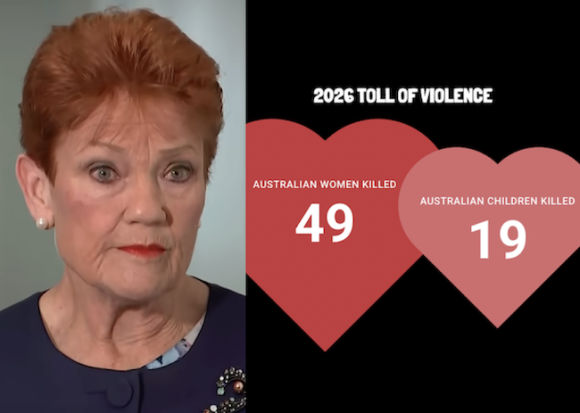
Domestic and family violence became another controversy in 2026 when Hanson described it as a "two-way street."
She also suggested women should not put up with abuse.
Australia's Sex Discrimination Commissioner and National Children's Commissioner rejected that framing, pointing to the complicated dangers and barriers that can prevent a victim-survivor from safely leaving.
Hanson has also described domestic violence as a scourge, so the fair criticism is about the way she framed responsibility — not a false claim that she supports violence.
Her record reaches into education and household economics too.
Parliamentary vote tracking records Hanson as generally opposing moves to make TAFE fee-free. She opposed the 2025 legislation cutting existing student debt by 20 per cent. One Nation has criticised such debt relief as a taxpayer-funded handout to people who agreed to repay their loans.
Hanson has also criticised expansions of paid parental leave, although in 2026 she clarified that she supports the current taxpayer-funded paid parental leave scheme.
Then there is housing. Hanson argues that Australians should have a better chance of buying homes, supports restrictions on foreign residential ownership and says lower immigration would reduce pressure on housing. She has also used the plight of Australians sleeping in cars and tents to argue that scarce housing should go to those most in need.
For that reason it would be inaccurate to call her "anti-homeless." Her criticism is directed at the system and at who she believes should receive priority.
The same caution applies to ageing. Older Australians and pensioners should be heard in any national debate, but there is not a sound basis for simply adding "pensioners" to a list of groups Hanson has attacked.
One Nation has at times advocated policies it says would benefit pensioners and veterans. Hanson has also backed controversial retirement and superannuation ideas that critics say could reduce long-term retirement balances. Those are policy arguments, not proof that she is against older people.
Accuracy matters because there are other claims that should not be repeated simply because they make a harder story. There is no sound basis for saying Hanson held multiple citizenships: the UK Home Office said she derived no claim to British citizenship through her grandparents.
We did not find strong evidence that she personally attacked birth parents involved with child protection. Nor did we find evidence for the broad claim that she wanted gay and lesbian people banned from having children. If the evidence is not there, it does not belong in the story.
There is another side that cannot honestly be ignored. One Nation promotes policies some Australians genuinely like: substantially lower immigration, stronger border controls, restrictions on foreign ownership of residential property, cheaper fuel and energy, greater Australian ownership, regional investment and policies framed around putting citizens first.
Hanson has also supported some welfare assistance and measures directed at pensioners and veterans. Those positions help explain why she continues to attract voters.
But a popular policy does not erase an old speech. A new promise does not delete a parliamentary vote. And a politician cannot reasonably ask to be judged only by today's campaign brochure after almost 30 years in public life.
That is why the bigger question is not whether every Hanson controversy is identical. It plainly is not. The question is what the accumulated record tells Australians.
Over those decades, Asian immigration has been a target of her warnings. Muslim immigration and Islam have been targets. Indigenous policy and Indigenous Australians have repeatedly been subjects of her strongest rhetoric.
Single mothers and welfare recipients have heard themselves discussed in terms of dependency. Families of children with autism and disability have heard arguments about separate classrooms. LGBTIQA+ Australians have lived through her opposition to marriage equality and her continuing campaigns over gender.
Students have seen her votes on TAFE and debt. Victim-survivors have heard the phrase "two-way street." And now the life of a disabled single mother in public housing has been placed under the political microscope.
Not all of those Australians think alike. Not all are disadvantaged. Not all will disagree with Hanson. Some will vote for her. That is democracy.
But Australia is not one race. It is not one religion. It is not one sexuality. It is not one age, one income bracket, one postcode, one family structure or one life story.
Australia is the pensioner counting the grocery money. It is the worker trying to pay the mortgage. It is the person sleeping in a car. It is the family waiting for social housing. It is the single mother. It is the father fighting to see his children. It is the child with autism sitting in a mainstream classroom.
It is the Indigenous family whose connection to this continent reaches back tens of thousands of years. It is the migrant who became a citizen and calls Australia home.
It is the Muslim Australian opening a business in the morning. It is the gay couple raising a family. It is the person with a disability who wants dignity rather than judgment.
Those Australians do not have to agree with one another. They do not have to agree with the prime minister. They do not have to agree with Pauline Hanson.
But they deserve to be listened to.
For almost 30 years, Pauline Hanson has asked Australia to listen to her. Perhaps it is time Pauline Hanson listened to Australia.
Not just the Australians who applaud her. All of them.
My personal reason for writing this
My reason for writing this goes much deeper than Pauline Hanson or one political argument. It comes from three generations of my family and one belief that has been passed down to me: Australia and its people deserve to be listened to.
My grandfather, Vince Townsend Senior, served in World War II. He came from a generation that believed in standing up for your country, working for what you had, helping your mates and not abandoning people when things became difficult.
One of the sayings that stayed with me from him was:
“Never leave a soldier behind.”
Then came my father, the late Vince Townsend Junior. Dad fought differently. He became politically involved because he believed strongly in Australia and wanted ordinary Australians to have a voice.
I saw that journey firsthand. I handed out pamphlets, helped with votes and watched my father put his time, energy and heart into what he believed could make Australia better.
Dad had been involved with Australians Against Further Immigration and wanted to continue that political fight through Pauline Hanson’s movement. From what I personally witnessed, he eventually walked away because he did not believe his opinions were being listened to.
He walked away from the party. He never walked away from Australia.
And then there is the third generation — me.
My fight looks completely different again. Through Finding U Beyond Trauma, I want to stand beside people dealing with trauma, family estrangement, disability, anxiety, depression, domestic and narcissistic abuse, loss of identity, and those times in life when somebody simply does not know which direction to turn.
I have spent much of my own life in survival mode, and for a long time I felt as though I did not have a voice.
Today, I choose to use that voice — not to tell Australians who they should vote for, but to encourage them to look at the record, ask questions, speak for themselves and decide what they want Australia to look like.
Your vote is your voice
You have the right to question the people asking to represent you. You have the right to look beyond slogans and promises.
And ultimately, you have the right to decide which leaders reflect the Australia you want for yourself, your children and the generations that come after you.
That is part of what three generations of my family have taught me: not to tell Australians what to think, but to remind Australians that their voices matter. I am not interested in doing everything for somebody.
I believe in helping people who are ready and willing to put in the effort to take their next step.
Sometimes people do not need somebody standing over them telling them what is wrong with them. They need somebody willing to walk beside them while they find their way forward.
That is why the principle passed down through my family became my own motto: No one gets left behind.
My grandfather fought for his country. My father fought for the Australia he believed in. And I am fighting for the people in it. Three generations. Three different battles.
Underneath them is the same belief: Australians deserve a voice, and Australians deserve to be heard.
That is my personal reason for writing this: Australia deserves to be listened to, and Australians deserve to decide for themselves what they want their country to become.
And it is why, after looking across nearly 30 years of Pauline Hanson’s political record, my final question is bigger than left versus right. It is about leadership.
I am left wondering whether the fight is really for Australians at all — or whether, after all these years, the ultimate fight has become the fight to put Pauline Hanson in the Prime Minister’s chair.
That is my opinion and my question; I cannot claim to know what is inside another person’s head. But I can look at the public record and ask what it tells us.
If you genuinely want to lead Australia, Pauline, you have to be prepared to listen to Australia — not merely the Australians who already agree with you.
Listen to the battler. The pensioner. The worker. The person sleeping in a car. The family in public housing. The single mother. The father fighting to stay connected to his children. The person with a disability. The child with autism. The Indigenous Australian. The migrant who proudly calls this country home. The Muslim Australian. The Christian Australian. The gay Australian. The straight Australian. The survivor trying to rebuild. The family torn apart by estrangement.
Because Australia is not Parliament House. Australia is not a political party. And Australia certainly is not the Prime Minister’s chair.
Australia is its people. All of its people.
You do not become Prime Minister of only the Australians who agree with you.
You become Prime Minister of all Australians.
My grandfather taught me not to leave people behind. My father taught me to stand up for the Australia I believe in. My own life taught me that sometimes fighting for people does not mean shouting louder. Sometimes it means listening harder.
So, Pauline, after almost 30 years of asking Australia to listen to you, perhaps it is finally your turn to listen to Australia.
Di Ridley is a Western Sydney-based advocate, writer and founder of Finding U Beyond Trauma. Qualified in Youth Work and Community Services, she writes from a combination of professional knowledge and lived experience, with particular interests in human rights, social policy, child protection and political accountability.
 This work is licensed under a Creative Commons Attribution-NonCommercial-NoDerivs 3.0 Australia License
Support independent journalism Subscribe to IA.


Related Articles
- One Nation's immigration plan: A dystopian future for Australia
- CARTOONS: Pauline's primitive penance
- Happy 30th Anniversary Pauline Hanson — thanks for nothing
- CARTOONS: Pauline pitches another not-so-super plan
- Libs haemorrhaging votes to One Nation as Overton window shifts