The skyrocketing global oil price in recent weeks has reignited the debate on cost of living pressures in Australia.
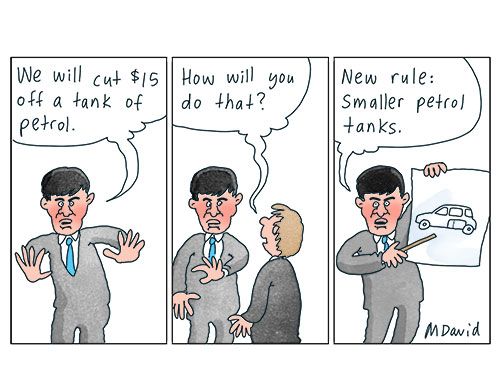
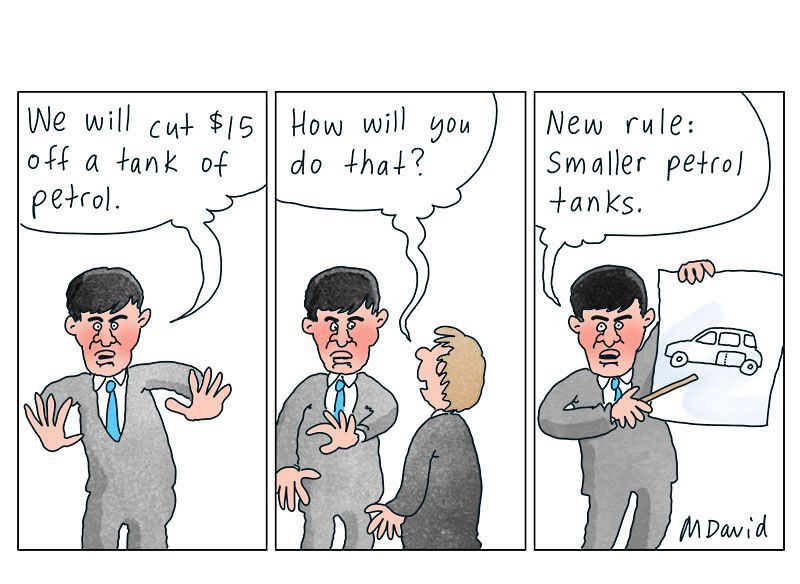
One reaction to the rising petrol prices has been from the Opposition Coalition. It is proposing cuts to fuel excise as a means of easing part of the cost of living concerns. Petrol prices would fall by around 27 cents a litre if this policy were ever to be delivered.
As is evident from prior efforts to cut excise taxes, it is a move that will boost, not cut, inflation pressures as the extra cash from the excise cut swirls through the economy. It also has the problem of adding many billions of dollars to the budget deficit despite the fanciful claims of the Coalition that the cut to tobacco excise will raise more revenue to offset the cost of the petrol excise cut (yes, it said this).
In simple terms, any move to cut fuel excise would add to the risks of yet higher interest rates and see higher government borrowing more money at higher interest rates as the yield on government bonds tests multi-decade highs.
In addition to exposing the policy folly, it is insightful to see understand the reasons why global oil prices are so very high.

It comes down to U.S. President Trump’s unhinged military attacks on Iran, which, inevitably, has seen it to retaliate with lower production and a mass disruption of global oil distribution throughout the world.
In February 2026, in the weeks prior to the start of the U.S. bombing of Iran, the price of benchmark Brent oil was hovering around US$67–69 a barrel. This is broadly $96 to $99 a barrel in Australian dollar terms.
The oil price is now generally US$102 to US$105 a barrel, which is AU$145 to AU$148 a barrel — a stunning 50% rise in just six months.
An excise cut in reaction to this, with all of the nasty side effects of higher inflation and a wider budget deficit, is limp.
The Albanese Government delivered a temporary cut in the fuel excise rate for four months, from April to July 2026.
To say this turned out to be a policy failure is an understatement. While a few motorists saved a few dollars on a tank of petrol for a couple of months, the cut was overwhelmed by the underlying pressures from the rampant global oil rise, which meant little or no change for cost of living issues. It cost the budget more than $3 billion, money that had to be borrowed given the fact that the budget is still in deficit.
Cost of living pressures will only ease when the overall inflation rate eases back to around 2.5%, the midpoint of the Reserve Bank target, in concert with wage growth sustaining annual increases of 3–3.5%.
Tinkering with excise rates is unhelpful and can be counterproductive as lower prices for fuel underpin inflationary spending elsewhere. It also damages the budget at a time when every effort needs to be made to lower the deficit or, in an ideal world, move to a budget surplus.
The harsh reality is that for oil, petrol and diesel prices in Australia, it will take a de-escalation of the conflict and ructions in the Middle East to see the oil price fall back towards pre-war levels, which will parlay into lower retail prices in Australia.
It is impossible to know when, or even if, this will happen any time soon.
Certainly, the rhetoric and actions of the Trump Administration point to a later rather than sooner resolution to the conflict.
All of which means the economy needs to adapt to elevated oil prices, things that include further embracing of renewable energy, more electric cars and commercial vehicles and strategies to further curtail demand for oil-related logistics and products.
In the meantime, cost of living pressures will remain acute, making plans to cut petrol excise a particularly lame and ineffectual populist approach to what remains a genuine economic issue.
Stephen Koukoulas is one of Australia’s most respected economists, a past chief economist of Citibank and senior economic advisor to an Australian Prime Minister. You can follow Stephen on Twitter/X @TheKouk and on Bluesky @thekouk.bsky.social.
 This work is licensed under a Creative Commons Attribution-NonCommercial-NoDerivs 3.0 Australia License
Support independent journalism Subscribe to IA.


Related Articles
- Nationals out, One Nation in: A new Liberal Coalition partner rises
- CARTOONS: Coalition fight club — keeping cartoonists in business
- The death of the Coalition and a requiem for the Old Order
- CARTOONS: Mark David has got things backwards
- EDITORIAL: The death of the Coalition and a requiem for the Old Order