The 2026 Census has become a lightning rod for conspiracy theories, but the real story is why so many Australians are ready to believe them, writes Wayne Hawkins.
CHRISTOPHER COLUMBUS knew perfectly well the Earth was round. So did every educated person in Europe in 1492 — the shape of the planet had been settled by Greek mathematics for over a thousand years by the time he set sail.
What Columbus was actually selling wasn't geography. Late in his life, he compiled a private manuscript, the Book of Prophecies, stitching together scripture and prediction to argue that his voyages were part of a divine sequence. He believed the gold he found could fund a crusade to retake Jerusalem, which he calculated was a necessary step before the end of the world arrived on schedule.
Columbus got funded. He got followers. He was wrong about almost everything that mattered and confident about all of it.
I open with Columbus, not with any patron saint of navigation, because he's a better mirror for this moment than the flat-Earth myth ever was. He wasn't a lone truth-teller up against a deluded establishment. He was the influencer — charismatic, well-funded, absolutely certain, running a theory about the shape of history that collapsed the moment anyone checked it against the facts.
The trouble is, almost nobody was positioned to check it. Columbus had the ships. He had the ear of a queen. Reach did the work that evidence should have done.
I raise this as an atheist, for what it's worth, and I'll raise one more scene from the same tradition before I get to the point. In the nativity story, Joseph and Mary travel to Bethlehem because of a census — a Roman head-count, ordered so the empire could tax and govern the people it ruled.
Whatever you believe about the rest of that story, the detail about the census isn't treated as sinister by the people who wrote it down. It's furniture. Nobody needed a decoder theory to explain what a government counting its own population was actually for. Empires have been doing this for thousands of years – Sumer, Han China, the Domesday Book – because knowing how many people you govern – and where – is one of the oldest and least mysterious functions a state performs.
Which brings us to now.
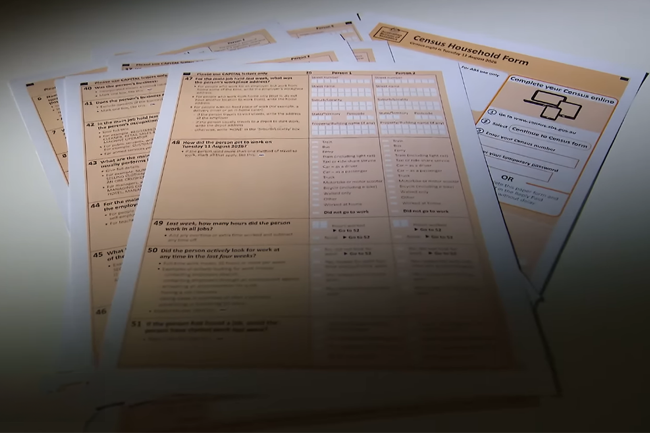
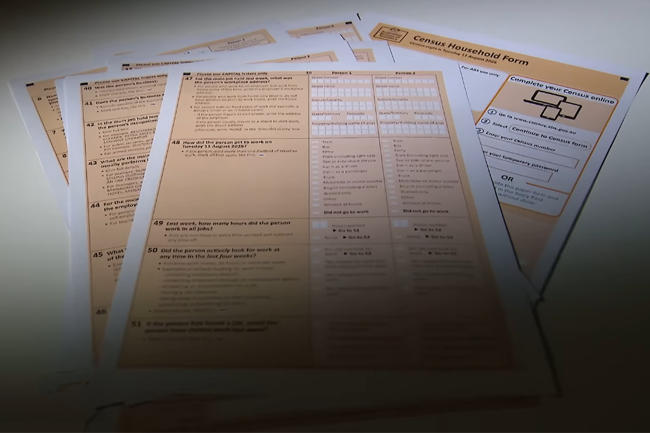
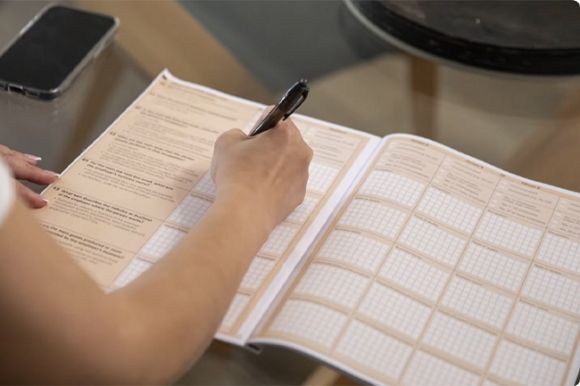
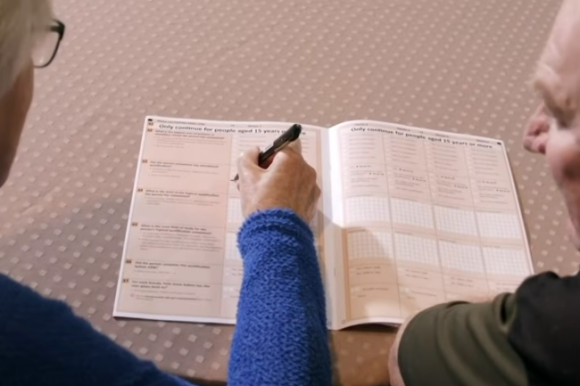
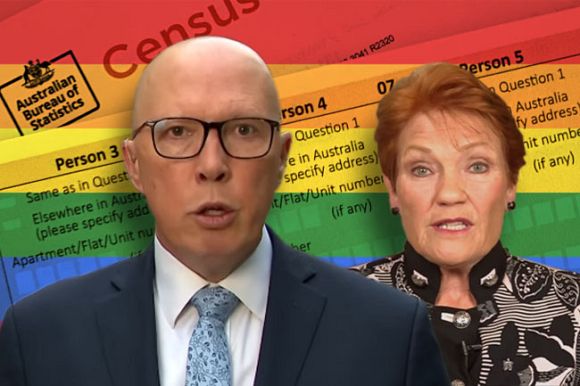
The 2026 Census landed the way every census has and within days my social media feeds were full of a different kind of prophecy. A widely shared video claimed the Census required 21 pages per household member, including guests who'd already left — false; only one page covers absent residents and the Australian Bureau of Statistics' (ABS) own form says so.
The same account followed up claiming New Zealand had scrapped its Census entirely, admitting on camera she had no evidence for it. Elsewhere, a rumour did the rounds that the Government intends to bill you, or worse, billet a stranger in your house, if you're caught with a spare bedroom. That one's more interesting, because it isn't pure invention — housing economists really have floated ideas about incentivising Australians to rent out underused rooms, and a senator really did call a version of it “radical” in Parliament.
A genuine, narrow policy conversation got stripped of its caveats, welded to an unrelated data-collection night and handed back to people as a threat. And running underneath both: a push to get people ticking “Christian” on the religion question regardless of what they actually believe, on the logic that celebrating Christmas counts. It doesn't. Japan runs a full, cheerful, thoroughly commercial Christmas season and is over 98 per cent non-Christian.
Cultural habit and religious identity are different questions and the Census, unlike the campaign around it, actually knows the difference.
None of these three theories is the same species of wrong. One is fabricated outright. One is a real idea, mutated. One isn't about data at all — it's an anxiety about belonging, wearing a data question as a costume. But they share a diagnosis and I don't think it's stupidity. I think it's grief with nowhere else to go.
Something measurably broke in this country's relationship with its own institutions and it broke on a specific, dateable timeline. Australian National University (ANU) research tracked it directly: Australians' trust in institutions to safeguard their private data fell through 2020 and 2021, the exact stretch when checking in via QR code became a condition of leaving the house.
That wasn't paranoia arriving from nowhere — it was a measured response to a real, unprecedented expansion of what government asked to know about where you were and who you were near.
What's happened since is the part worth sitting with: trust in each other, and satisfaction with how our democracy operates, have kept sliding since the emergency ended, past its pre-COVID baseline, to the lowest point recorded this decade. The wound didn't heal when the lockdowns did. It just stopped being urgent enough to talk about, so it went quiet and stayed open.
And here's the part that should complicate anyone's politics, not flatter them: the government most people are angry at now is very often not the one that made the decisions they're angry about. The party in the Lodge changed. The felt experience of being watched, counted and managed did not.
Trust attaches to the office more than the officeholder, especially for anyone who wasn't following the handover closely — so the debt gets inherited by whoever's holding the job next, unpaid and unacknowledged, because nobody ever sat down and separated what was genuinely mishandled from what was simply the cost of an unprecedented emergency. Grievances that never get a proper accounting don't fade. They wait for a new government to attach themselves to and a new night to detonate on.
The other half of this is media and it's the part the Columbus story was really about. For most of human history, “knowing” something meant passing it through people who had actually done the work — checked the shadows and the geometry, cross-referenced the ledgers, put their name and their credibility on the line. That system had real gatekeeping problems and it excluded people it shouldn't have.
But it also meant a claim generally had to survive contact with someone whose job was to check it before it reached you. Now the fastest, most confident, most shareable version of an idea reaches you first and the correction – accurate, caveated, boring – arrives after the algorithm has already moved on. A fact-checker with citations is competing against a stranger with a phone and total certainty and certainty wins the feed every time — the same way it won Columbus a fleet.
I don't think the answer is telling people to trust institutions more. Trust isn't a switch you can flip by asking nicely and pretending otherwise is its own kind of condescension. The research on this is fairly blunt: the widest gap isn't between people who like government and people who don't — it's between people who feel they have a say in what happens to them and people who don't, and that gap is enormous.
Nobody who feels unheard is going to be argued out of believing the stranger on their phone by being told the ABS is trustworthy. They'll believe it's trustworthy again when it starts acting like it's listening.
The Census doesn't care who's in government. It's the same head-count Australia has been running since Federation, in a tradition older than most of the world's religions, and it will keep happening long after this news cycle is forgotten, the way it happened in Bethlehem 2,000 years ago without anyone deciding the counting itself was the villain of the story.
The anger aimed at it was never really about the 21 pages, or the spare bedroom, or the tick-box. It's about something that broke five years ago and never got fixed, looking for the nearest thing shaped like the state to land on.
Wayne Hawkins is a small business owner in Hobart, Tasmania, and an independent candidate for the federal seat of Clark at the 2028 Election.
 This work is licensed under a Creative Commons Attribution-NonCommercial-NoDerivs 3.0 Australia License
Support independent journalism Subscribe to IA.