Australians should be free to record their own beliefs, identity and conscience without someone else answering the Census on their behalf, writes Johanna S Browne.
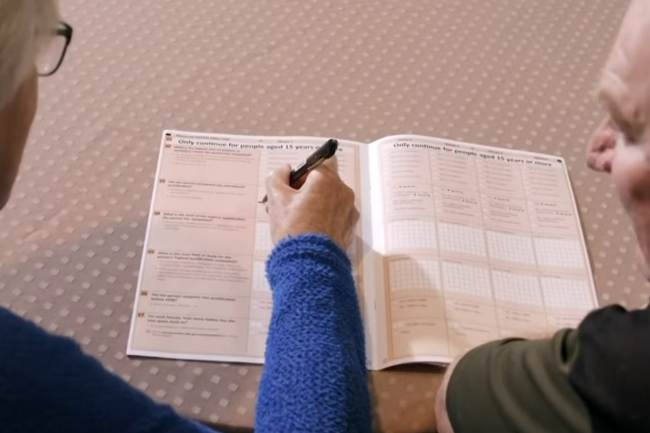
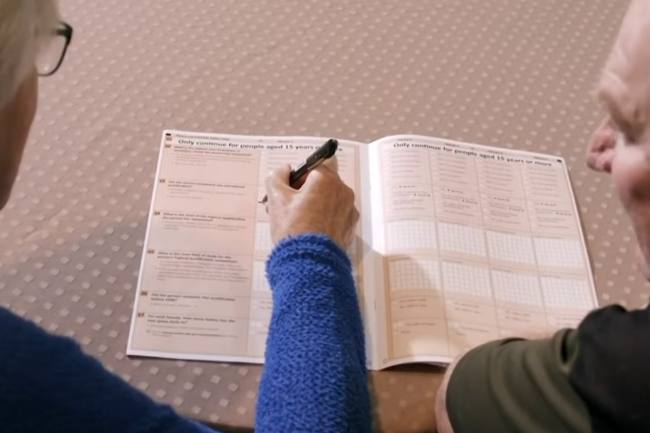
EVERY FIVE YEARS, Australians are told the Census is simple, harmless and routine. Just a form. Just data. Just tick a box.
But the Census assumes something most Australians rarely question. It assumes the person filling out the household form can speak for everyone in it. It assumes belief, identity and conscience are neat, shared and uncontested at home.
They are not.
If you have lived in a household where religion is enforced rather than chosen, you already know this. If you have stopped believing but stayed quiet to keep the peace, you know it, too.
In a high-control religious home, the idea that answering honestly is “safe” can be laughable.
The problem is not just undercounting. It is consent.
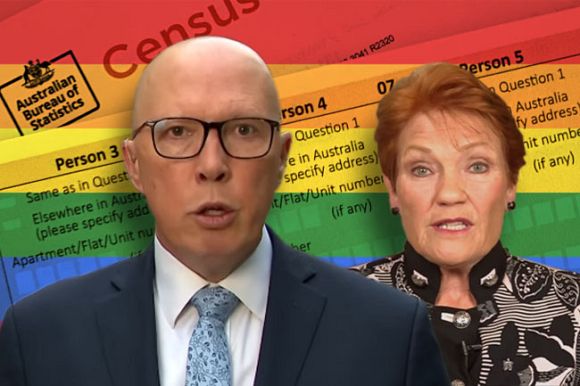
By default, the Census is completed as a household form. One person will often answer for everyone else. That works well enough for age, postcode and education. It breaks down when the question is belief.
Religion is not like eye colour. It changes. It is personal. In many families, it is also political.
Parents answer for adult children. Partners answer for partners. Religious identity can be carried forward through habit or pressure, rather than genuine belief. Saying “No religion” may not simply be awkward. It may trigger conflict, punishment or worse.
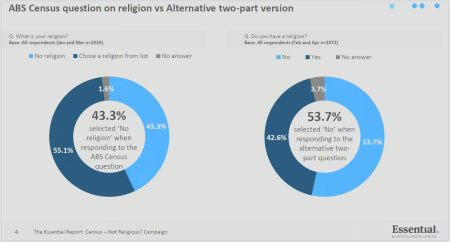
Recent polling commissioned by the Census: Not Religious? campaign suggests the wording of the religion question can distort the result. But even the clearest question cannot produce an honest answer when someone else speaks for a person who is not free to answer.
The Census is not a trivial exercise. Governments use it to understand who lives in Australia, how we live and what services are needed.
Its data informs policy, funding, infrastructure, education, healthcare, housing, social services and community support. It shapes where money goes and whose needs are prioritised. Accuracy matters.
Religion data is often used as a proxy for social need, community representation and cultural identity. It is cited when planning faith-based services, chaplaincy programs, religious services in hospitals and prisons and consultation with religious organisations.
It is also used to argue that religion remains central to Australian life and that religious institutions speak for large sections of the population.
If the data is wrong, those conclusions are wrong too.
My organisation, Recovering from Religion Australia, supports people recovering from life in religion and harms experienced in religious settings.
Ahead of the 11 August Census, we are among several non-religious and pro-secular organisations supporting the Census: Not Religious? campaign. It encourages Australians to record their current affiliation accurately and mark “No religion” if they are no longer religious.
We are also raising awareness that people who need privacy can complete the Census separately from their household.
A person’s religion, like their sex and gender, is a fundamental and deeply personal part of identity.
Article 18 of the United Nations’ Universal Declaration of Human Rights protects freedom of thought, conscience and religion. That includes the freedom to change religion or belief.
The Australian Bureau of Statistics says anyone who wants to complete the Census separately should call the Census Contact Centre on 1800 181 227. It can provide a Census number for an online form or send a paper form.
That means a parent, partner, housemate or household head does not have to answer for someone else.
But a separate answer does not automatically override the household form. If more than one form is submitted for the same person, the ABS keeps the one with the most complete information.
The ABS asks people using a separate form to answer as many questions as possible. Where possible, they should use the same name, date of birth and sex recorded at birth that appear on the household form. They can then answer the remaining questions in the way that best reflects them.

For vulnerable people, this creates a real barrier.
Someone in a high-control or coercive household may not know how another person has recorded them. They may have no safe way to check. The process can leave the person seeking privacy trying to match information supplied by the very household member they need privacy from.
The separate form is important, but its existence is not enough. A safeguard only works when vulnerable people can use it safely.
It is easy to assume this affects only a tiny group. But testimony to the Victorian Parliament’s Inquiry into cults and fringe groups shows that many Australians are born into and raised in high-control environments.
It matters for people who have left cults or high-control religions and are still navigating safety, housing or family ties. It matters for teenagers and young adults who no longer share their parents’ beliefs. It matters for people whose religious identity is assumed or enforced by a partner. It matters for anyone who has learned that honesty comes with a cost.
It also matters because the Census now asks more personal questions about sexuality and gender. Not everyone is safe being open about who they are at home.
A teenager in a conservative family, a young adult living with religious parents, a trans person in a hostile home, or someone experiencing coercive control may all have good reason to keep those answers from the person completing the household form.
This is not only about religion. Separate forms also matter in share houses, family violence situations, controlling relationships and any home where one person assumes the right to answer for everyone else.
The separate form gives people a way to answer for themselves, rather than being defined by someone else in the household.
When Census participation depends on how safe you feel in your own home, the data stops being neutral.
Every Australian should be able to answer according to their own life, identity and conscience. Not according to someone else’s version of them.
Johanna S Browne is a board director of Recovering from Religion Australia, where she is responsible for governance, advocacy and fundraising.
 This work is licensed under a Creative Commons Attribution-NonCommercial-NoDerivs 3.0 Australia License
Support independent journalism Subscribe to IA.