Around the world, there is growing consternation about the state of U.S. democracy. The angst is most intense in Washington, DC, writes Dr Jeff McMullen.
IT IS MORE than half a century since I reported on the great national drama of Watergate. President Richard Nixon’s “dirty tricks” broke the rules for free elections and put U.S. democracy to a critical test.
After more than a month back in Washington, DC, it is clear to me that the United States today is in a far more dangerous state.
Trust in the Presidency, Congress and Supreme Court has sunk to historic lows, for obvious reasons.
President Donald J Trump’s leadership of the United States has radically undermined the system of lawful policymaking and effective government.
The abandonment of many international norms, scorn for alliances and the blunt cudgel of tariffs have challenged the mythical and misguided belief by many Americans in their God-given exceptionalism.
Three hot wars and disruption of stable energy flow create crisis zones in a world already beset by the increasing impacts of climate change plus the sudden panic over rogue artificial intelligence agents.
Trump is the wrong man for this season of uncertainty, which he has brought upon the world. His most senior advisers all display a sickening sycophancy.
The White House, decorated for distraction in Trump’s favoured gold or gilt shine, is no more than a stage for a chaotic show of confused, impulsive decision-making.
The Republican Party-controlled House and Senate have fearfully and cowardly surrendered their constitutional role and responsibility to restrain Trump’s conduct of a disastrous war of choice in Iran.
If journalists challenge Trump’s bewildering ricochet between claiming a peace settlement is nigh and then threatening to annihilate Iranian civilisation, the White House propaganda machine merely ratchets up the bold-faced denials or “floods the zone” with torrents of crazed memes depicting Trump as a gladiator or even a saviour.
I clearly recall Richard Nixon’s numerous lies about the conduct of the Vietnam War and his blatant breaches of American law at home.
But Donald Trump’s record of saying whatever he likes and denying responsibility for his words and actions is nothing less than astonishing, viewed up close or from afar.
This is such a different world to the era when the White House Press Corps regularly and responsibly challenged Nixon, Ford, Carter and Reagan.
Any conscientious White House correspondent pressing Trump on his disastrous own goal by joining Israel in declaring war on Iran risks being marched out through the steel gates and banned from re-entry.
At the Pentagon, the Department of War similarly impedes the legitimate work of those reporters trying to keep a sceptical public informed about the Iran War, enemy strikes on foreign bases and the staggering costs of all three current major conflicts in terms of lives lost and money wasted.
There are signs, too, that November’s crucial midterm elections will test the ability of the American military to restrain Trump from heeding calls by his MAGA base to declare some kind of national emergency in a brazenly unlawful bid to hold onto control of Congress.
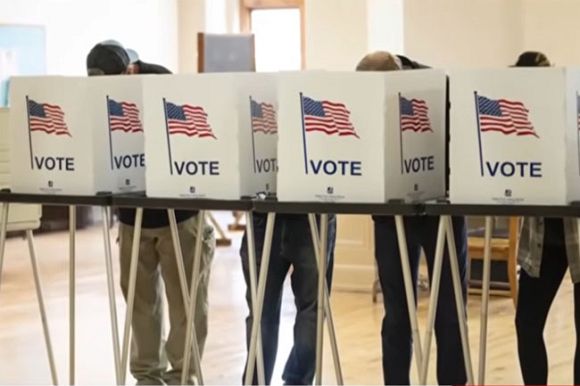
MAGA agitator and former Trump adviser Steve Bannon has urged the President to send what he described as an ‘up-armoured I.C.E. presence’ to polling booths to intimidate entirely fictional hordes of illegal, foreign-born voters.
In Washington, DC, the number of National Guardsmen strolling harmlessly around street corners has dwindled from 5,148 around the 4 July celebrations for America’s 250th birthday to 2,921. It is a typical Trump show of presidential power, but it has had very little impact on the turf controlled by violent criminals, including Washington’s street gangs. Police sirens scream through the stifling hot and humid nights.
The random threat and calculated terror lurking in American shadows has not magically disappeared because of tough-guy Trump, with his appetite for UFC fighting or threats to bomb Iranians back to the Stone Age.
Trump himself has worried aloud about Iranian threats to avenge the killing of Ayatollah Ali Khamenei and family members on 29 February this year.
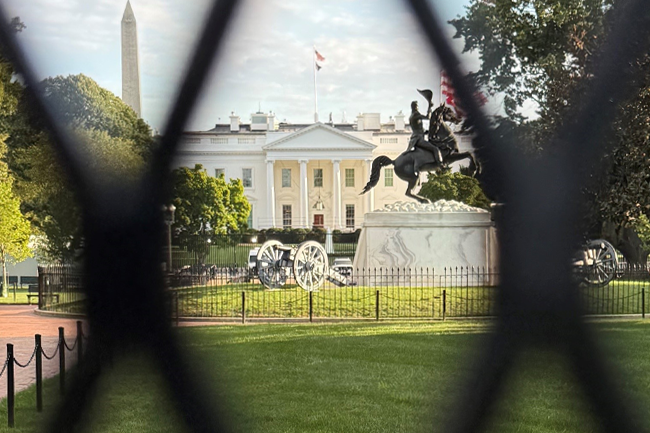
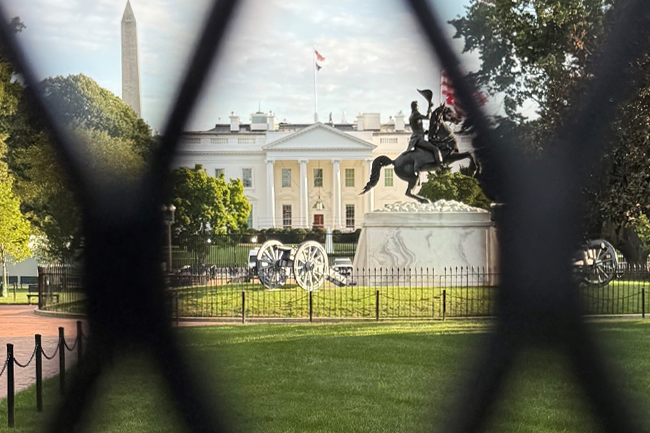
Approach the White House precinct now after a stroll down Pennsylvania Avenue and menacing high steel mesh fences allow barely a glimpse of the people’s house.
Despite these barriers, a couple of young National Guardsmen were shot dead by a lone gunman who tried to penetrate the cordon of protection shielding the White House and its surrounding grounds.
The Secret Service, criticised for allowing several shooters to get dangerously close to President Trump, has proposed a plan to erect a permanent protective steel fence around adjoining Lafayette Square.
This is the area where Trump in his first term took a stroll after a provocative speech in which he threatened to deploy troops to quell civil unrest. Peaceful protesters in the square, including clergy, were driven out of the area by law enforcement using tear gas, pepper spray and rubber bullets.
Military officials have repeatedly denied that, come November, American troops are going to seize ballots or electronic voting machines, which Trump previously alleged were part of a “rigged election effort” that denied him victory in the 2020 Presidential Election.
In a carefully worded letter to the U.S. Senate last month, General Dan “Razin” Caine, Chairman of the Joint Chiefs of Staff, said:
‘I have neither received nor anticipate receiving any unlawful order concerning the role of the Joint Force in the upcoming November 2026 midterm elections.’
The Homeland Security Secretary, Markwayne Mullin, was equally careful, saying that Immigration and Customs Enforcement (I.C.E.) agents would only be going to polling places to serve a warrant on illegal citizens or to respond to a threat.
President Trump himself triggered most of this concern by issuing an executive order in March this year for the Department of Homeland Security to prepare lists of citizens for the States to check against their voter rolls in the hunt for ineligible foreign voters.
Such claims about hordes of illegal voters swaying American elections have been debunked many times by State officials and independent assessments, including that of the non-partisan Voting Rights Lab.
Trump’s other outlandish play has been to try to impose drastic restrictions on postal voting, the safe and convenient method used by about one third of American voters in the 2024 elections.
On 14 September, the U.S. Supreme Court barred the Trump Administration from denying millions of voters this legal right to avoid the long and exposed lines on Election Day.
This was a mighty blow to Trump’s ego as the Supreme Court, stacked with conservative picks, had seen to his wishes on most crucial fronts, especially granting him an extraordinary level of presidential immunity.
Trump may soon need all the legal protection he can summon.
The latest opinion polls indicate that Democrats should regain control of the House and have surprisingly improved their prospects of winning a Senate majority.
The cost of living, especially food, rents and petrol prices, almost always determines the outcome of U.S. midterm elections.
Trump’s tariff impacts (on us all) and the new uncertainties created by the war of choice in Iran demonstrate the many disastrous outcomes when presidential power is not restrained by Congress or layers of experienced and persuasive senior advisers.
Trump is rapidly shedding voters who supported him in 2024.
A surprising new addition to America’s political powder keg is the President’s rush to give favoured U.S. tech companies the clearance to surge ahead in competition with China for so-called AI supremacy.
It would be ironic if Trump himself has created the legendary “October surprise” that frequently precedes crucial U.S. elections.
While Americans have a super low trust in Trump, they have an even greater mistrust in AI corporations.
Most of the world’s political leaders understandably are focused on developing urgent guardrails for AI and rogue agents.
But where are the guardrails for this President who openly courts the tech oligarchy and stands before them as a new champion of “super intelligence”?
Would any chatbot explain truthfully how Trump plans to enrich himself further by overriding some AI leaders and researchers who warn us that regulation is desperately required?
Only the power of the people, the genuine role of democratic elections, might now impose effective restraints on the AI decision-makers, including the President.
If Trump’s persistent agenda of retribution against business rivals or political foes continues after the midterms, the Democrats will be more likely to go after him with new investigations of his alleged abuses of power, especially his family profiting from White House dealings.
After being impeached twice in his first term, Trump is believed to have explored with House Minority Leader Congressman Hakeem Jeffries the possibility that he might be spared further investigation in return for allowing a re-invigorated Democrat Party and a very different Congress to pursue the difficult road to recovery on many fronts.
Trump is bound to blame pitiful Republican politicians and not take any blame himself for expected setbacks in the midterms. Although his power might be curtailed to some degree, he could still use presidential emergency powers to create more uncertainty.
A very unlikely strong Republican comeback in the remaining weeks before the midterms would shape quite an opposite scenario. We might see a still more emboldened and dangerous Trump, hounding his enemies at home and abroad. He also would carry enormous political influence under those circumstances into the 2028 Presidential Election.
Washington insiders I respect think Trump’s obsessive focus for his final two years as then the oldest President in American history will be on his “legacy”, meaning public works fashioned in his own name and style.
Donald J Trump is sui generis, some old Washington hands think.
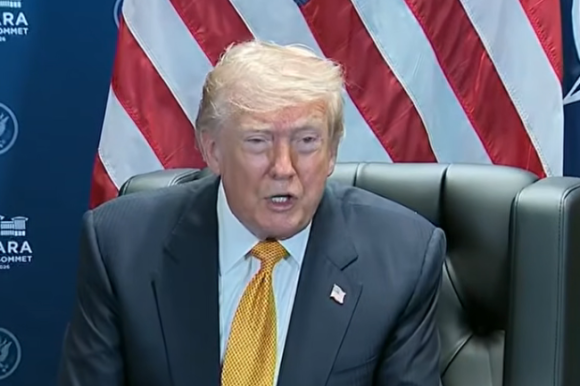
I had to agree, watching the President lead his audience at the first Republican Party midterm convention in an adoring pledge to the “greatest president in the history of the United States”.
The final act is being written by the man himself.
I gaze at his Marine One chopper lifting off from the new concrete helipad and soaring over his handiwork:
- a grand ballroom with underground shelter from attack alongside the simple but stately White House;
- an Oval Office decorated with gold and gilt; a connecting walkway to the West Wing complete with some portraits mocking Presidents Obama and Biden;
- the planned great arch with positions for snipers and drone launching capability according to the President, a vanity project that will block the symbolic line of sight between the Lincoln Memorial and Arlington National Cemetery holding some of America’s hundreds of thousands of war dead dating back to the Civil War;
- a new park created with statues to the President’s heroes;
- a new U.S. passport for 2028 embossed with gold and complete with a digital eagle to flutter through the pages;
- a continuing battle over adding his name to the Kennedy Centre or threatened demolition; and
- more plaques with Trump’s image or name and more institutions honouring him as a most unlikely American peacemaker.
In brutalist fashion, Donald J Trump will leave his mark.
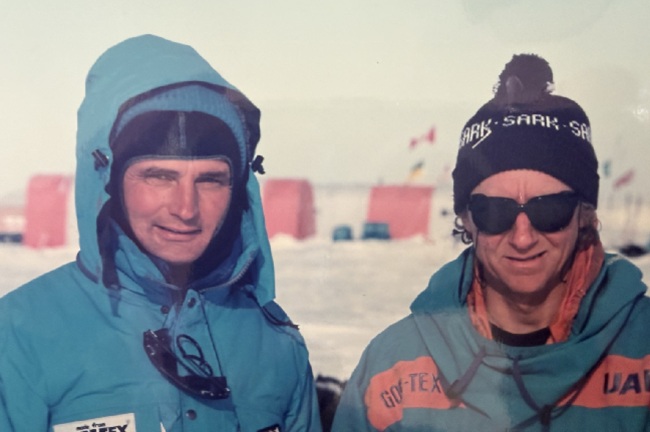
Dr Jeff McMullen AM was an ABC foreign correspondent in the U.S.A. from 1972 until 1984; he is the recipient of the United Nations Media Peace Prize.
 This work is licensed under a Creative Commons Attribution-NonCommercial-NoDerivs 3.0 Australia License
Support independent journalism Subscribe to IA.


Related Articles
- Trump’s lies should be the headline
- Trump accelerates AI race as industry leaders urge caution
- Trump-Xi talks unlikely to meet a world in crisis
- CHRIS HEDGES: Trump’s assault on the midterms threatens American democracy
- CARTOONS: Trump's name-changing bender takes another turn