As crucial elections unfold in Israel and the United States, voters face a choice between billionaire power, ethnic nationalism and democracy’s promise to tackle injustice, writes Dr Lee Duffield.
PEOPLE’S CHOICE came to the fore in Brazil, where the defending left-wing President Luiz Inácio Lula da Silva (Lula) was trailing after a first round of voting, but then won on 25 October after large numbers of people who had not voted the first time came out to support him.
Hard-won victory in Brazil
Getting to the polls is hard in that country, especially for the many who are poor. It took a community effort in different parts of the country, after waking up to what was at stake.
The defeated candidate, Flávio Bolsonaro, was the son of the former extreme-right President and client of U.S. President Donald Trump, Jair Bolsonaro, who is in gaol for attempting to stage a coup d’etat.
Lula wanted statutory wage increases to cushion high inflation; Bolsonaro wanted to get his father out of prison and “curtail government spending”. He has a majority in parliament and so can continue to obstruct the President and push a reactionary agenda.

Youth movement ousts “nationalist” regime in Serbia
In voting in Serbia the same day, it came down to young people, who tend to see things in stark terms, to get up a movement that rolled out a long-standing right-wing “populist” regime.
Where the old regime traded off the ethnic hatreds that flared into the Yugoslav civil war in the 1990s, the new leadership are talking about tackling corruption and modernisation of the economy through reviving Serbia’s flagging bid to get into the European Union.
So you might expect no more leaning towards Russia, which saw Serbia refuse to join sanctions over the invasion of Ukraine.
Bulgaria — still some comfort for Putin in Russia?
Elections in Bulgaria on 26 October were affected by the country’s cultural affinities and historical close relations with Russia, whose war against Ukraine overshadowed the polling, with warfare involving the sinking of ships in the adjacent Black Sea.
The left-of-centre government there is sympathetic to the Russian side, under President Vladimir Putin, and its candidate for president led the field in the October voting with a two-candidate run-off scheduled for 1 November against the conservative, pro-Europe Opposition.
The nationalist radical Right wing in Bulgaria is third-placed, not contenders for government, where the country has many “real” problems beyond hailing the Fatherland and keeping out migrants. It is a problem child for the European Union as a member state with one of the worst records for official corruption and organised crime.
Israel — threat to security, or to democracy?
The Israeli elections on 27 October produced a vote for change, with an alliance of opposition parties under the name “Change”, taking parliamentary seats off the far-right Prime Minister, Benjamin Netanyahu. His own party, Likud, took seats away from its allies, which include religious fringe groups, but still came out with fewer than it started with.
“Change” got more votes and seats than Netanyahu’s coalition and started talking about a ‘new chapter in Israel’s history’. The results are taken from authoritative exit polls, as actual votes are registered in a proportional system that takes a long time to sort through. Observers think late returns from the army and officials overseas might give some help to Netanyahu, but otherwise he is under pressure to go.
The Israeli President has to speak to each of several party leaders about which leader they would back for PM, even though, on one hand, Netanyahu’s party still has the most seats of any single party and on the other hand, the “Change” coalition has more seats than his coalition.
The balance of power in the Knesset, the parliament, is to be held by 17 or 18 members of Arab-Israeli parties, which joined the ranks of electors worldwide, who have decided to focus on organising themselves to defeat extremist nationalism. They put aside theatre and internal fights to get out a very strong vote – over 90% of Palestinian citizens of Israel turned up at the polls.

Almost all the other parties in Israel refuse to go into coalition with the “Arab” parties, but the Constitution allows a minority government to rule, where a group outside of the government (with no Ministers) would support budgets and confidence motions to keep it in office. The question would be what it would want in return; maybe an end to armed “settler” gangs attacking Palestinian homes in the West Bank? Netanyahu has predictably attacked the idea of depending on Palestinian support as a threat to security.
The Election was fought over the man’s solution for Israel’s survival, which was continuing war, and his railroading of opposition, even the courts and media within Israel itself. The opposition, gathering around a popular former soldier, Gadi Eisenkot, is mainly composed of centrist or other right-of-centre parties, still disavowing ideas of negotiations over a Palestinian state. They have attacked Netanyahu over his refusal to investigate claims of failing to protect the 1,200 killed and 250 hostages taken in the Hamas massacre on 7 October 2023.
That outrage, conversely, galvanised hatred and fear of the “Arabs” among the electorate, making “change” a difficult order to fill. A long and perceptive article by the BBC journalist Lucy Williamson concluded the fight was between Netanyahu’s idea of facing a threat to security, and the opposition calling him a threat to democracy.
Outside observers have been hoping that with Netanyahu gone, Israel might re-open to reasoned contact, especially with Europe, and that the country might begin a retreat from the belligerence and cruelties of his policies, whether in Gaza, the West Bank, or elsewhere across the Middle East. Such policies were enabled to reach the present point because of support from the Trump Administration in the United States.
Main battlefront — United States
American voters, collectively, put Donald Trump into office twice, and it is now up to them to decide the next chapter, both for the United States and for the population of the World.
While Trump is not on the ballot, the mid-term elections on 3 November, for Congress and state governors, will determine whether some brakes might be applied to extreme, erratic and broadly destructive policies being imposed by his Administration: against health, education and welfare support, against fair shares of wealth and power, or the environment, international economic relations, American influence abroad, international peace and security.
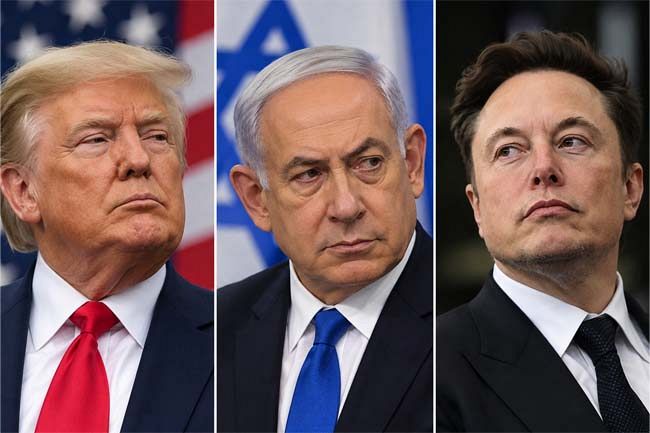
The voters are well entertained and certainly in many instances gravely misled by the deluge of campaigning in the USA. If being charitable, you might say they have some excuse for not being sensible. The billionaire Elon Musk is believed to have donated US$300 million (AU$425.5 million), no denials, to shore up a Trump-MAGA-Republican candidate against a grassroots challenge by the Democrats in Texas.
A key issue has to be the absurd inequalities of wealth in America gnawing away at the chances of a government coming to the relief of its population. Yet will it be seen that way? The levels of disinformation and misinformation through all media are uncontrolled; the entertainment factor in these political contests is rich and bad humour is still being encouraged by some of the Administration’s key offerings, especially around racial prejudice: the Iran war is against Muslims; the Government is carrying out a public, violent rounding up and expulsion of migrants; something that many aggrieved citizens, justified or not, long hoped to see.
How will the electioneering play out? The failures of the Iran war and its economic impacts have handed a biting issue-of-the-day to the Democrat opposition. A population used to readily accessible credit and being able to pay the grocery bills is being confronted with serious inflation; the blown-out cost of diesel fuel is having its chain reaction of extra costs.
Information on voting behaviour is ready to hand; the United States system is well serviced with information on habits and intentions. Polling aggregators such as Nate Silver’s Real Clear Polling deliver reliable information up to polling day — though never guaranteed for polling day itself.
What we can say we knew one week out for the elections on 3 October is that the voting is crucially about Trump and his Administration; his popularity is low and vulnerable across all policy factors, at 33%, with the plus-minus imbalance “under water” in the range of -20%; the Democrats have been holding on to a lead in House of Representatives seats, in the order of 7-9% nationally, indicating very large swings their way, even 20% in certain districts; virtually all commentators expect they will achieve a comfortable majority in the House; but they have faced a bigger catch-up challenge in the United States Senate, where the current seat numbers are 53-47 against them — and under U.S. constitutional arrangements controlling the Upper House gives crucial power.
The online betting services are giving these elections to the Democrats, which includes offering fairly short odds on them controlling the Senate. While such information will represent some reckless judgment on the part of “investors” who do not really understand politics, many of those feeding into it will be extremely shrewd.
Fighting for the U.S. Senate
Forensic treatments freely available and open to checking have ruled that the Democrats have good chances of making the net gain of four seats needed to get a Senate majority. For the record, out of those with close-enough margins to change, they have to defend four that they already hold: Michigan, Minnesota, New Hampshire and Georgia and they may capture Alaska, Iowa, Kansas, Maine, North Carolina, Ohio or Texas.
Monitoring the aggregated polls over a month has shown that the margins in most of these seats are maddeningly close, and that while preponderantly they are favouring Democratic candidates, many are stuck within the usual “margin of error”, and they have not shifted much at all.
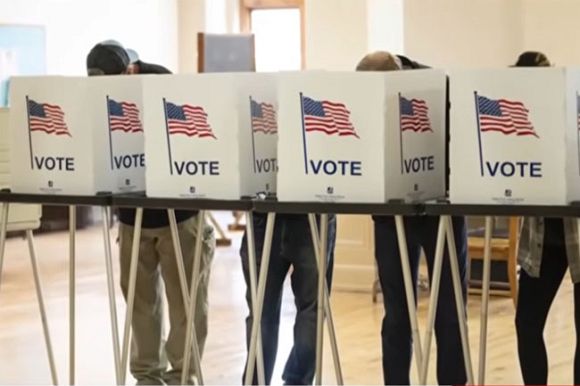
There are some universalistic understandings about voting behaviour. Anywhere in the world, if a government is running as badly as the Trump Administration has been going, with fumbled policymaking and recurrent policy failures, plus bad impacts on daily life, then a consensus will develop, even just a feeling or mood that the government of the day has to go.
Less likely, a government may get the benefit of circumstances, to give it such consensual backing and a big win — often in time of war. The trend will sweep cross-country, producing a wave of unexpected results. It happened historically with the obliteration of the Progressive Conservative Party government in Canada in the 1990s, which was left with very few seats, and with certain Australian state governments, from both sides, most recently the West Australian Liberals.
The re-election of the Albanese Government in 2025 had the makings of such a nameless momentum. In this line of thinking and experience, the Republicans in America should be decimated.
Catching a wave?
There is, in fact, talk about a “blue wave” of Democrat victories. But such a wave is a psychological phenomenon which cannot be observed, let alone measured, as it swells up.
The circumstances are there so it might happen. And against that, you have the fact that Trump won twice against the odds, itself a psychological phenomenon, not a wholly rational event. Democratic candidates are having to overcome some big margins he built up in many states when elected just two years ago.
There is the structural advantage given to Republicans, with the same number of senators allocated to each state, including very small states where they are strong; and also, with the race issue so strong in America, they have an entrenched block of support in the South, still showing up strongly for them in the current polls in places like Arkansas.
That has imposed strict caution on the hopes for, let alone expectations of, a “blue wave”, and even on prospects of a Senate majority, the dreamt-of platform for reining in the regime of Donald Trump.
Amongst Dr Lee Duffield’s vast journalistic experience, he has served as ABC's European correspondent. He is also an esteemed academic and member of the editorial advisory board of Pacific Journalism Review, and an elected member of the University of Queensland Senate.
 This work is licensed under a Creative Commons Attribution-NonCommercial-NoDerivs 3.0 Australia License
Support independent journalism Subscribe to IA.