Rolling out the red carpet to quick-thinking developers, fast-tracking decisions away from public scrutiny, boxing in elected representatives, or emasculating them, Townsville's Mayor is vowing to make the region an economic powerhouse, writes Dr Lee Duffield.
A NEO-LIBERAL PUSH in North Queensland, vowing to make the Townsville region the “economic powerhouse of Northern Australia”, is raising concerns about public consultation being pushed aside.
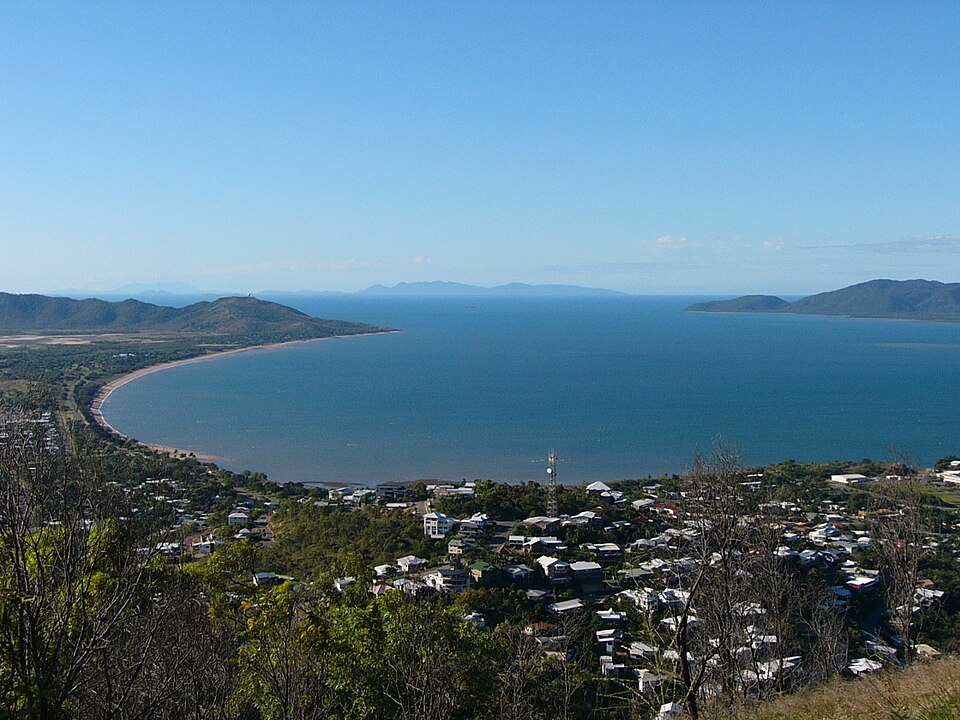
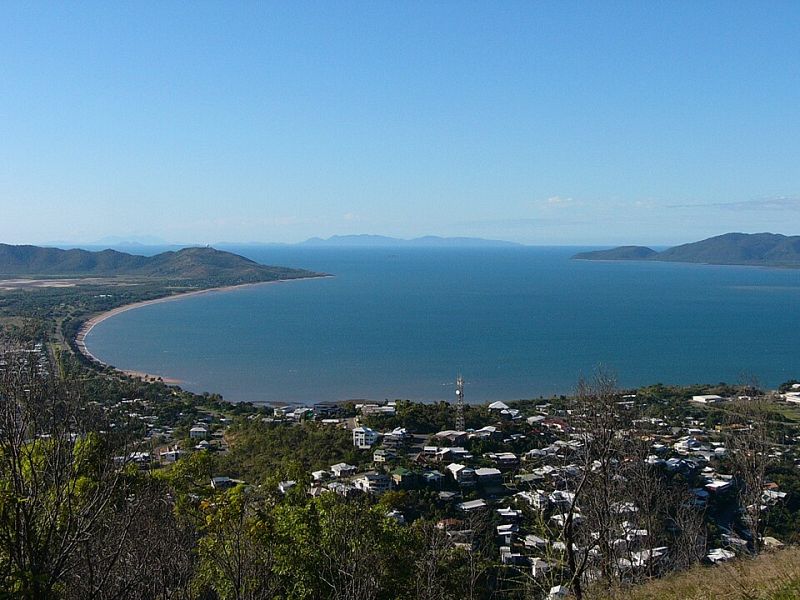
Lee Duffield attended a community meeting on the environmentally sensitive Magnetic Island, Yunbenun, included in the city boundaries, and followed up information on moves for “streamlining” land use and development projects.
Opportunity knocked for some, with a power vacuum created by the censure of the freshman Townsville Mayor Troy Thompson, amid national publicity over his exaggerated military record and educational credentials. It was a double vacuum. He had just defeated the long-time Independent Labor Mayor, Jenny Hill, known for keeping an iron grip on the levers of power.

Backstory from the North
After Thompson’s election on 16 March 2024, the City Council unanimously censured him on 5 June that year, but he refused to resign, leaving things somewhat in limbo up to November last year, when a by-election was held to clear the air. Enter two players with strong intentions as to what might be done:
Nick Dametto, the State MP in the neighbouring town of Ingham, Deputy Leader of the small rural conservative Katter’s Australian Party, was called upon to enter the Mayoral contest, which he won on 15 November 2025.
Anti-immigration, he’d judged the climate right for moving his campaign to Townsville, co-organising a big rally in the lead-up to the vote. He resigned his Party membership and, as will be seen, was keen to start revving things up, to create that powerhouse economy.
Joe McCabe got the job of CEO of the Townsville Council, after several years as Deputy CEO in Mayor Tom Tate’s oft-criticised, derring-do Council on the Gold Coast.
Likewise, out to waste no time, this very prepared senior manager of large local government enterprises presented as just the man to help out a group of floundering and leaderless elected Councillors, struggling in a power vacuum — a guiding hand to get things done.
He was appointed not long before the censure motion against Thompson on 8 May 2024 (acting, confirmed that October).
“Red carpet” for developers
“Big-ticket developments could soon receive the proverbial red carpet treatment in Townsville,” said Nick Dametto, announcing a “City Activation and Housing Incentive Policy”, approved by the Council on 18 June this year.
The scheme is to work on giveaways from ratepayers, the public sector financing private business ventures: infrastructure charge waivers of $50-$100 000, rate concessions and even cash contributions to developer schemes.
Just to rub in a tinge of in-your-face triumphalism, backing private money-making over public enterprise, he said eligible projects worth more than $ 5 million would be “developer led, instead of being undertaken by a State or Commonwealth agency.” But they should get a move on, needing to be under construction by mid-2029.
Housing gets featured because the shortage of houses and rental flats nationwide is being picked up as a chance to cut out “red tape”, maybe also green tape if, as can happen with development drives, bits of nature get in the way.
In the mechanics of it, providing land for housing projects goes either through new Lot creation or infill, which means developing housing on vacant or underutilised land in existing residential areas. There has to be approval for the land use. The concern is that governments and local governments might like to start lifting legal constraints, turn the “investors” loose – push on with getting things built fast as it’s "a crisis".
“Can-do” Council planning scheme
In the Townsville story, ahead of the “Klondike” announcement for the economic powerhouse, the local authority had already got some new “can do” machinery for handling development approvals. The elected Council voted to delegate, i.e. hand over regular decision-making powers, to the CEO, Joseph McCabe, setting up a Register of Delegations dated 21 August 2025.
The list of powers runs to 543 pages, a mind-boggling array for ordinary Councillors who may not be speed readers, nor that interested in boring detail. Maybe better to “let Joe do it”, professionally-like, and catch up where there might be statutory referrals, for the elected members to give a final tick.
“Powers” given to the CEO as delegate, and those to whom he delegates, run the long gambit of responsibilities, through Aboriginal heritage, building fire safety, environmental protection, housing regulation, mining and quarrying, industrial relations and workers’ compensation, plumbing and drains, and onward.
All the better for efficiency in a large-enough corporation, though there must be questions to answer about oversight and accountability at least for the medium-to-long term, if not right now.
A qualified exception was made in the highly sensitive area of Development Applications. Most will be called 'Code Assessable', where definitions are needed, but probably covered by conventions in the planning area, where no adverse impacts are discerned.
'Impact Assessable' applications are those where plans might have adverse impacts of different kinds, and have to be made public, with the elected Council then to decide. Those were not delegated to the CEO and his officers — but wait!
Power taken away from the elected Councillors?
There, an Annexure to the delegation documents (Annexure A – Planning Act 2016 at page 314) sets out some constricting procedures for the Councillors to follow — cutting down on their capacity to decide. They will be invited to a fortnightly briefing on proposals, including for change of use of land, reconfiguring of Lots, or priority development areas — and then will have two days to pick out the ones they want to work on.
After that, 'if two or more Councillors has (sic) a different view to officers regarding whether an impact assessable application should be brought to the Council for decision, they may make a request to the CEO that the application not be decided under delegation.'
They would have to set out their reasons and demonstrate no conflict of interest, whereupon the CEO may overrule them, giving his reasons. Who is running the show, voters who put in the Council, or their employees? If citizens in that populous Northern place, 220-thousand people, want to indulge in pursuing their Councillors over roads, rates and rubbish, maybe there will be no point.
One such citizen, a local campaigner who has been probing and objecting, Dr Clare Leabeater, calls the delegations Register and Annexure A:
“a document entirely redefining the assessment of development applications for the whole of Townsville; it can open the way to sophisticated deceit, and putting Townsville on sale.”
Going through the documents
A retired medico whose research interrupts an otherwise Shangri-La existence on Magnetic Island, she worries about the operation of the Council development plan. Dr Leabeater points to the weak position of elected Council members for doing anything about Impact Assessable applications, and the mysteries of applications “deemed” Code Assessable — where rogue submissions might go through without public scrutiny.
She has identified several study cases, such as land for a housing project, as shown in maps, evidently excised from a tract of parkland; and a proposal that was approved this year for conversion of a large area of land from Rural to Residential. In such cases, land valuations can multiply, requiring fully transparent, not “expedient” handling.
Maybe worse, she says, is the removal of numbered Development Applications from the public register of such applications. With a lack of better information being available, she surmises that separate applications are being processed off-the-record by one or more Council officers and at a high rate. Can it involve a zoning change for them as well? Compounding the job of keeping track, Development Applications keep being deleted without explanation — 23 per cent of Development Application files missing from the public record so far in 2026.
Dr Leabeater adds that with the fast pace and ambition for change in Council circles, somebody has evidently failed to have the current Townsville City Council planning scheme officially gazetted, after its approval by the State government at the end of 2025. It raises a question about the legality of all of the recent decisions that have been made.
Shrugging off an island habitat?
Close to home for herself, one large approval that went through without formal public exposure was for redevelopment of the Picnic Bay Hotel on Magnetic Island. Once the welcoming point for the island, first drinks on arrival by ferry, the hotel became a backwater after the ferry port shifted to another bay in 2003.
A major redevelopment planned for that time, to create a family resort on the tranquil bay, did not eventuate, maybe hit by the Global Financial Crisis (GFC). Local observers prepared to say “good luck” to the latest scheme, say also, they would have had questions about any clearing of large trees on the foreshores, impacts on general sewerage for the area, and the siting of a proposed bar on the public beach reserve.
Public consultation on points like that can actually help with the quality and success of a project, if you care — if you trust the people.
Magnetic Island, home to nearly 2500 full-time residents, presents special needs within the wider city envelope because of the separation from the mainland, and environmental concerns with 78 per cent of its area covered by National Park and conservation reserves.
The President of the island’s Residents and Ratepayers Association, Cameron Turnbull, says there is widespread frustration over trying to get information out of the local government, or even answers to questions.
A recent battle had been preventing the dumping of waste, from dredging out a yacht marina, onto some land designated for “Community Facilities”, with houses nearby, in the back streets of one of the island settlements. The November 2026 meeting of his organisation decried the privatisation of the island waste transfer and recycling station, the dump, without consultation, with a lot of inquiries deflected by saying the deal was “commercial in confidence.”
“We the people”, being ignored
“As with everything else we approach the Council about, you get a shrug of the shoulders and a look sideways”, said Turnbull, a solicitor with offices in the city. “It was not possible to talk to anyone”, he said, “or you would just be given some language suitable for two-year-olds. ‘We the people’ are being ignored.”
Several speakers complained about a common “response” to their correspondence or messages, which has been no reply. It includes ones sent to the local representative, Councillor Ann-Maree Greaney, whose Ward is mostly on the Townsville mainland where she lives, and who has a reputation for not replying to mail.
“Game of Mates”?
Rolling out the red carpet to quick-thinking developers, fast-tracking decisions away from public scrutiny, boxing in elected representatives, or emasculating them, depending on their attitude to the job, and telling community leaders and their organisations to go jump, is not so much a tale of back-country buccaneering from the exotic and far-away North.
It is an example to think about wherever in the country pursuit of power and chances of some quick-time money-making, “economic powerhouse” operations, come up.
The situation developing in the North has one other aspect: that it has the makings of a “Game of Mates”, with as a central thread the current Premier of Queensland, David Crisafulli — so it will be watched closely.
“Games of Mates” start when the mates can act with some impunity, not as criminal gangs, just as like-minded characters helping one another out, or helping mates’ mates, mostly a matter of networking and getting power.
The Premier in question had to know Dametto for some years, sharing the same background, in and around the sugar industry in Ingham; Crisafulli knows the set-up in Townsville, where he was Deputy Mayor before entering parliament. Seeing Dametto moving to Townsville might assist in holding on to three State electorates clustered there, out of six the government needs to retain, to keep its parliamentary majority.
The Council CEO, McCabe, was a long-time in the service of Tate on the Gold Coast, where Crisafulli these days has his parliamentary seat.
Quick-draw development schemes, especially with some obfuscation and not telling about them, can get sensitive among the public in local politics; the mates will need to tread carefully, maybe do something about their accountability.
This has been the second in a series by Lee Duffield from North Queensland, where he worked early in a long journalistic career. He discloses that he is a Townsville ratepayer.
DISCLOSURE: The writer is a ratepayer on Magnetic Island.
Amongst Dr Lee Duffield’s vast journalistic experience, he has served as ABC's European correspondent. He is also an esteemed academic and member of the editorial advisory board of Pacific Journalism Review, and an elected member of the University of Queensland Senate.
 This work is licensed under a Creative Commons Attribution-NonCommercial-NoDerivs 3.0 Australia License
Support independent journalism Subscribe to IA.


Related Articles