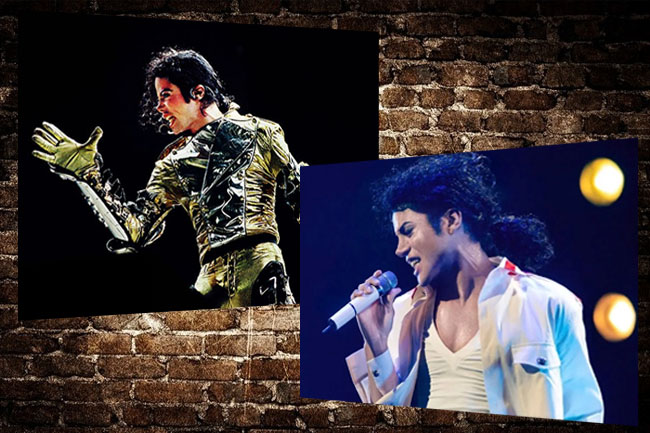
Jaafar Jackson delivers an astonishing performance in a biopic that captures the King of Pop's magic, but only half of his story. Digital editor Dan Jensen shares his thoughts on the new Michael Jackson biopic, which you can now watch at home.
THERE WAS NEVER ANY DOUBT that a film about Michael Jackson would be one of the most anticipated music biopics ever made.
The challenge facing director Antoine Fuqua was equally obvious. How do you compress the life of arguably the most famous entertainer in modern history into a feature film while satisfying both devoted fans and casual moviegoers?
The answer, it turns out, is to focus on the rise.
Michael, the first instalment of a planned two-part biopic, charts Jackson's journey from a talented child growing up under the iron fist of his father, Joe Jackson, to becoming the world's biggest pop star. It is slick, entertaining and often visually spectacular. Yet for a film about one of the most fascinating and complex cultural figures of the 20th Century, it ultimately feels surprisingly lightweight.
The film's greatest strength is undoubtedly Jaafar Jackson, astoundingly in his first movie role.
Portraying a figure as instantly recognisable as Michael Jackson was always going to be a daunting task, but Jackson delivers a remarkable performance. The physical resemblance is uncanny, and his mastery of Jackson's voice, mannerisms and stage presence borders on eerie. The first time he speaks, there are moments when it genuinely feels as though Michael himself has stepped back into the room.
By the film's conclusion, audiences may find themselves forgetting they are watching an actor at all.
It's an extraordinary achievement and one that anchors the entire production.
Colman Domingo is equally impressive as Joe Jackson. His portrayal captures the intimidating, controlling presence that loomed over Michael's childhood without descending into caricature. Domingo brings a simmering menace to the role, helping to establish the emotional conflict that drives much of the film's narrative.
The supporting cast is uniformly strong and Fuqua's direction keeps the story moving at a brisk pace. Musical performances are recreated with energy and precision, while the production design successfully transports audiences through different eras of Jackson's career.
Where Michael begins to stumble is in its reluctance to dig beneath the surface.
The film presents the broad strokes of Jackson's life competently enough, but it rarely pauses to explore what made him such a singular artistic force. We see him creating music and developing performances, yet the audience gains little insight into how he conceived his songs, developed his lyrics or transformed ideas into cultural phenomena.
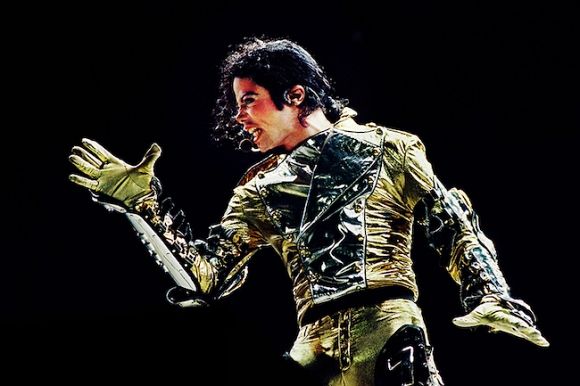
For an artist whose creativity reshaped popular music, this feels like a significant omission.
The result is a film that often celebrates Jackson's achievements without fully examining the creative mind behind them.
The film's biggest problem, however, arrives in its final act.
Reports surrounding the production have revealed that the original third act was set to address the 1993 child abuse allegations that would fundamentally alter Jackson's public image. However, legal complications reportedly forced extensive rewrites and reshoots, costing millions of dollars.
Whether viewers are aware of that behind-the-scenes history or not, the consequences are visible on screen.
Michael simply does not feel as though it has a complete third act.
The narrative builds momentum before arriving at an abrupt ending that leaves the audience with the unmistakable sense that a substantial portion of the story is missing. Major events are teased but not explored. Threads are introduced without meaningful resolution. Even the infamous 1984 Pepsi commercial accident, which left Jackson with severe burns and later contributed to his dependence on pain medication, is included largely as an isolated incident without examining its longer-term impact.
The film concludes in 1988 on a triumphant note, effectively presenting Jackson's escape from his abusive father and his rise to solo superstardom. It is a neat ending.
Perhaps too neat.
Given Jackson's immense cultural significance and the complexities of his life, Michael often feels sanitised. It avoids many of the difficult questions that defined public perceptions of the singer for decades. While that may satisfy some fans, it also prevents the film from achieving the depth that its subject arguably deserves.
That said, this is only half the story.
A sequel is already on the way and it is entirely possible that Michael will be viewed differently once both films can be assessed as a complete work. The missing pieces that make this first instalment feel incomplete may ultimately be supplied by the second chapter.
For now, Michael remains an entertaining but frustrating experience. It boasts an astonishing central performance, strong direction and enough musical spectacle to keep audiences engaged throughout.
Yet for a film about the King of Pop, it rarely ventures beyond the greatest hits.
Fans will undoubtedly lap it up. Others may finish it wishing that a life as extraordinary as Michael Jackson's had been explored with a little more curiosity, complexity and courage.

Michael is now available to buy or rent on Amazon Prime Video, also still showing in cinemas across the country.
You can follow digital editor Dan Jensen on Bluesky @danjensen.bsky.social or check out his podcast, Dan and Frankie Go To Hollywood. Follow Independent Australia on Bluesky @independentaus.bsky.social and on Facebook HERE.
 This work is licensed under a Creative Commons Attribution-NonCommercial-NoDerivs 3.0 Australia License
Support independent journalism Subscribe to IA.


Related Articles
- 'Melania': A documentary in search of a subject
- 'Inside the Rage Machine' exposes social media’s dangerous grip on democracy
- 'Spinal Tap II' proves lightning can strike twice
- Terrifier 3 slashes its way into cinematic history
- Longlegs reinvents the crime genre with pure nightmare fuel