The Grattan Institute is proposing to raise the GST, a move that will certainly cause a great deal of political pain for very little gain, writes Dr Bronwyn Kelly.
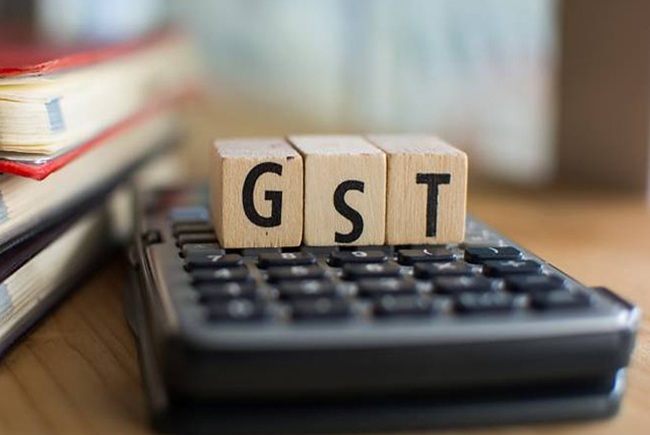
THE GRATTAN INSTITUTE has recently proposed raising the goods and services tax (GST) from 10% to 15% and broadening it to cover all food.
Their argument is that state government budgets are in trouble and need more funding to meet demand for services essential to our health, education, and wellbeing. The Institute also argues that federal and state governments both need more revenue from taxation for debt repayment.
To the Grattan Institute, increasing consumption taxes like the GST is the most “efficient” way of establishing reliable revenues for governments.
Consumption taxes are “efficient”, so they claim, because:
'...they change the incentives around work or investment less than many other taxes, and they tax people’s spending regardless of whether it is financed from wages, retirement savings or accumulated wealth.'
From this we are presumably meant to infer that all consumption taxes are economically efficient, and perhaps that they are all equally handy in assisting the Reserve Bank (RBA) to dampen demand (and therefore inflation).
Following this logic, the “efficiency” of a consumption tax like a broad-based GST would appear to inhere in its capacity to slow the economy by forcing us to purchase less.
If that is true, then in the case of the Grattan proposal, it would appear that the desired “efficiency” is to be achieved by ensuring people can purchase less food. Oh dear! And in a cost-of-living crisis too!
Of course, the Institute proposes to offset its preferred diminution of our spending power by introducing personal income tax cuts for some lower-income earners and a few small increases in welfare payments.
Their argument in support of reducing personal income tax is that:
'...taxes on income can discourage work, savings and investment. But a broad consumption tax distorts these decisions much less.'

We need not spend much time remarking on the oddity (indeed, the real world ignorance) of the suggestion that people who need an income from work may be discouraged from working because they will have to pay tax.
But there is no leaving aside the observation that the Grattan Institute clearly has not considered the disadvantage of its proposal to those for whom paid work is not an option or is unavailable.
For people on low incomes, whether in retirement or because of unemployment, underemployment, sickness, or disability, the Grattan proposals confront them with higher prices for staples and next to no compensating offset.
The Institute has stated that under their proposal:
'...the poorest 40 per cent of households would on average be better off.'
But that is not at all evident in the finer detail they have provided.
If we look at their report, the claim made (on page 5) is that in 2027/28 their proposals would result in:
- the federal government being net $6 billion better off; and
- state governments combined being net $12 billion better off.
But on page 52 it appears that in 2027/28 on average:
- households in the bottom 20% of incomes would be about $6 a week net better off;
- the 20% in the second lowest income bracket would barely break even; and
- the remaining 60% of households would be net worse off.
So it is a big stretch to claim that 40% of households will be better off.
But even if we allow the claim, the fact of being somewhere between $1 and $6 a week net better off is not a great deal of use to that bottom 40% of households, the majority of whose incomes are currently at or below the poverty line.
They’d be lucky if the increase bought one member of each of those households one extra coffee or loaf of bread per week. It’s patently insulting.
Nor will the 60% of earners who will go backwards by at least double the weekly amount gained by the poorest 20% under the package be warm to the proposal.
The only real winners are the federal and state governments, and even they don’t get much. The package gives them an efficient form of taxation, inasmuch as it’s unavoidable and therefore less costly to collect; but there the efficiency ends.
Certainly, no efficiency accrues to the economy as a whole insofar as the higher and wider GST does absolutely nothing to discourage the sort of consumption that good taxes should discourage, such as consumption of the remaining safe budget of carbon that Australia is emitting to the atmosphere.
The Institute has simply proved that while some consumption taxes might be efficient, others are not — and a broad-based GST is not.
Australia’s GST doesn’t do what good consumption taxes should; it doesn’t suppress the most harmful consumption. Instead, it’s just an unfair distribution of the tax burden — a regressive tax.
And applying it to all food will do nothing to establish sustainable consumption. It will just make food more expensive.
This is likely to suit the funders of the Grattan Institute; but it is unlikely to suit a federal government that comes out only $6 billion ahead and the state governments who, as a bunch, come out only $12 billion ahead, averaging about $2 billion each.
The federal government is likely to perceive it as a lot of political pain for a very small gain (less than 1% of its revenue in 2025). That’s a reform that is much more pain than it’s worth.
Furthermore, even if the revenue for states is boosted by net $12 billion, this is likely to have little or no impact on essential service availability for Australians since, in the Grattan Institute’s view, the extra revenue should go mainly to paying down debt or servicing interest.
Altogether, the proposal provides little net benefit to governments and those on the lowest incomes, and either no net benefit or a net loss to everyone else.
Indeed, it is so short on benefit that we might wonder where it comes from. Generally, it appears to arise from a desire by a neoliberal think tank steeped in neoclassical economics to solve a perceived problem of fiscal sustainability.
If that is the real motivation, then it would appear that the proposal is not only a probable failure in its own terms but also a failure in the sense that it is trying to solve a problem that doesn’t exist.
Fiat currency issuing governments like Australia’s can easily pay their debts and can create the funds for any public good program for which they can assemble the necessary human and natural resources.
They don’t need to raise taxes of any type to do that, although they may need to adjust taxation so as to fairly manage inflation.
This is not an economic viewpoint that the Grattan Institute would hold. But they could create a more economically efficient set of tax policies if they stopped worrying about the government’s budget and started worrying about ours.
Were the Institute’s researchers to look a little harder for fair solutions to the cost-of-living crisis, they would spare the government the political pain that will come from trying to sell a tax reform that is obviously unfair and even unwarranted, and they would spare ordinary Australians from an increase in penury.
With fairness as a starting point, the Institute will find that an expanded GST doesn’t measure up.
In fact, the last thing that seekers of fair tax reforms should ever recommend is an increased tax on essentials like food, health and education. If we want fairness, there may well be more arguments in favour of abolishing the GST than for expanding it.
But if the Institute is of a mind to seek out the fairest tax reforms, it could do no better than get out of its elitist huddle and into the Australian community and talk with people about the full range of tax reforms we can choose from, not just pump for their favourite.
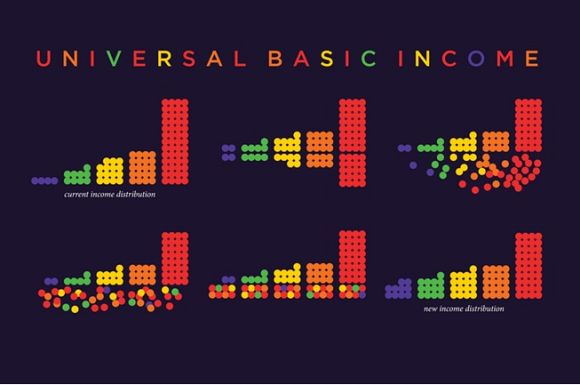
One of the most efficient ways to have such a conversation is to invite Australians to collaborate on the design of a universal basic income (UBI).
If a full UBI at or above the poverty level is on offer to everyone, this will give Australians the financial space in their own budgets to select tax reforms that are both fair and likely to leave everyone better off.
A UBI is probably not the Grattan Institute’s thing, but they can find out how it will open the door to better tax reforms here.
Dr Bronwyn Kelly is the Founder of Australian Community Futures Planning (ACFP). She specialises in long-term integrated planning for Australia’s society, environment, economy and democracy, and in systems of governance for nation-states.
 This work is licensed under a Creative Commons Attribution-NonCommercial-NoDerivs 3.0 Australia License
Support independent journalism Subscribe to IA.