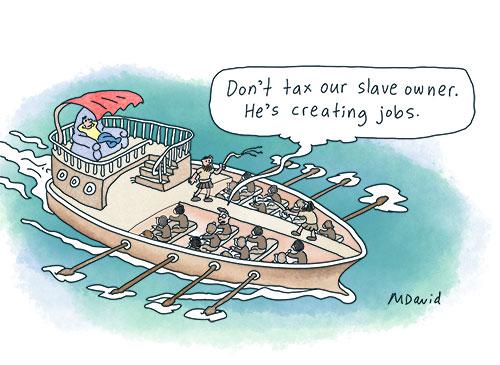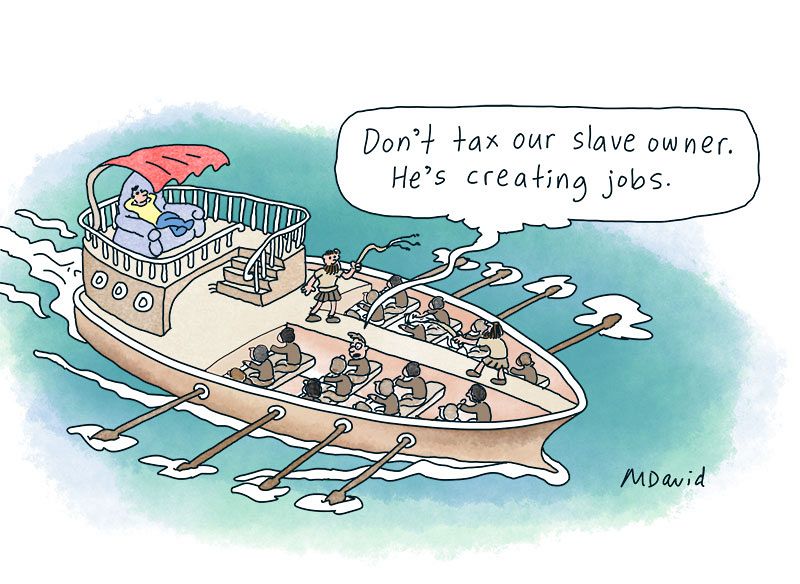
The levels of inequality we experience today are not natural; they have been shaped by political choices about wages, housing, taxation, social security and the distribution of economic resources, writes Professor Carl Rhodes.
IN A BID TO PROTECT start-ups from the government’s planned capital gains tax changes, Independent MP Allegra Spender proposed last month that investors in active businesses receive a generous capital gains tax concession.
Her argument is that lower taxes will reward risk-taking and encourage productive investment.
Defending her proposal, Spender argued:
“We need broad tax reform in this country — a system that helps people start and grow businesses, attracts investment, and gives young people a real shot at financial security.”
The logic is attractive, but by talking about giving people a "real shot", Spender echoes the long-standing political ideal of the ‘fair go’, while also pointing to a particular understanding of that ideal.
We live at a time of spiralling cost of living pressures and deepening wealth inequality, when only one in ten start-up founders comes from a low socioeconomic background.
This raises the more fundamental question of whether financial security should depend on succeeding in an economic contest that not everyone enters on equal terms, or whether it should be something every Australian can count on.
Hunger in a rich country
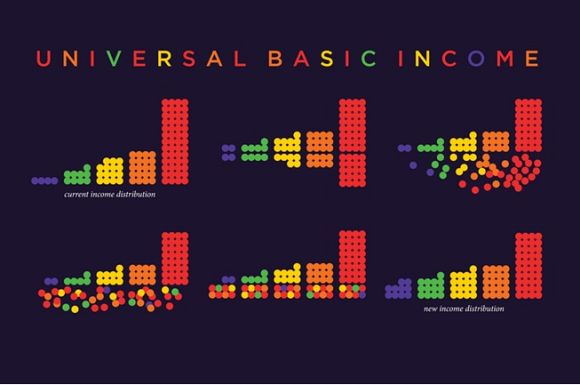
The language of people having a "shot" at financial security sits especially uneasily alongside a very different picture of Australia’s economic realities revealed just days earlier in the Foodbank Hunger Report 2026.
The findings were stark. Over the past year, one in three Australian households experienced food insecurity, with younger Australians among the worst affected. This is not solely a problem for those facing severe disadvantage.
Foodbank reports that many of these households include working people raising children. The situation is worse for those in insecure employment. Some 42 per cent of those households experienced food insecurity.
What kind of fair go is it, when, at its most severe, people cannot afford to buy enough food for themselves and their children and go entire days without eating?
This is not because the country is poor. Australia is one of the richest countries in the world, with GDP per capita of around USD$65,000, well above the global average.
When the children of working people in a prosperous country go hungry, we have a problem, and the solution cannot simply be better tax incentives for investment and start-up businesses.
Business growth and investment are critical. So is the fair distribution of the prosperity they generate. To talk about the former without considering the latter is, at best, to address only half the problem. At worst, it risks making inequality worse.
When the market decides what’s fair
The idea of the fair go has long been used as a marker of Australia as an egalitarian country where hard work offers everyone the prospect of a good life.
The Australian Government even goes so far as to formally list 'a ‘fair go’ for all' on its official statement of Australian values, describing it as part of the bedrock of 'our peaceful and stable society'.
While it may sound thoroughly egalitarian, the fair go has proved to be relatively flexible, shifting between different conceptions of what fairness means. In today’s Australia, there is a fundamental dividing line.
On one side is the view that financial security is a market outcome to be won in a survival-of-the-fittest competition.
On the other is the view that financial security is a basic expectation of citizenship and belonging, and a foundation for both a decent life and participation in society.
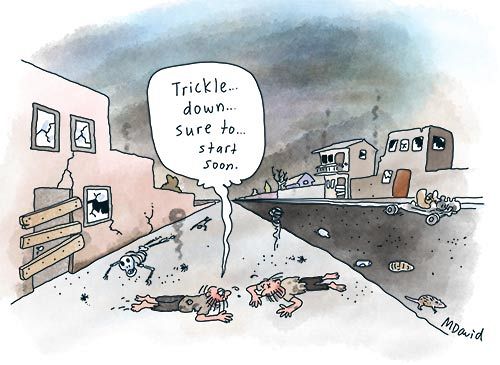
That working people are going hungry is a clear sign that, as far as practical outcomes are concerned, we have pushed the market society to a disturbing extreme, unevenly rewarding the fortunate few whose ‘shot’ at security hits the bullseye.
Surely market society has gone completely feral when human wellbeing is left at the mercy of cut-throat competition between citizens. Whether everyone gets a shot or not, the outcomes for many are dire.
Beyond the market society
The realities of economic inequality that characterise today’s Australia demand that we tackle the question of economic justice head-on. Do we really want Australia to become a nation of winners and losers, where food and financial security are prizes in life's economic contest?
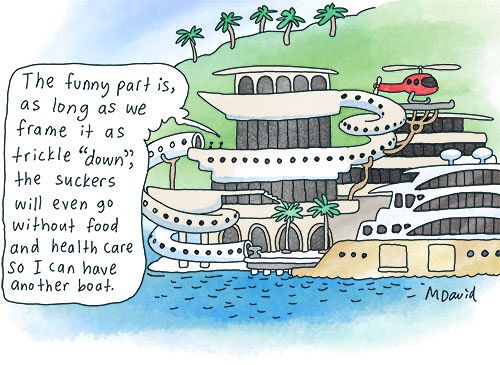
Insecurity and injustice are not natural or inevitable outcomes of a just and immutable market order, as though life were a sporting competition in which it is fair for some teams to win and for others to lose, so long as everyone plays by the same rules.
The levels of inequality we experience today are not natural; they have been shaped by political choices about wages, housing, taxation, social security and the distribution of economic resources.
If the fair go is to mean anything today, it needs to begin with the expectation that every Australian deserves a basic level of financial security, not just a chance to achieve it.
In practical terms, that means being able to afford food, housing and the other necessities of a decent life.
Financial security should not be the prize for the few who win an economic competition. It should be the foundation that gives everyone a genuine chance to participate in society and in the economy in the first place.
What Australia should aspire to is not just a shot at financial security, but the security from which a genuinely fair go becomes possible.
Carl Rhodes is Professor of Business and Society at the University of Technology Sydney. He has written several books on the relationship between liberal democracy and contemporary capitalism. You can follow him on X/Twitter @ProfCarlRhodes.
 This work is licensed under a Creative Commons Attribution-NonCommercial-NoDerivs 3.0 Australia License
Support independent journalism Subscribe to IA.