Dutch researchers have used Australia's social media ban as a case study for their own policy decision-making, which is how good digital policy should develop, writes Paul Budde.
WHILE VISITING THE NETHERLANDS, I was struck by the release of a University of Amsterdam report on minimum age limits for social media. Of particular interest was that Australia’s under-16 social media ban featured prominently in the report.
The Dutch researchers did not treat Australia’s policy as a model to be copied. Rather, they used it as a case study for their own policy decision-making process. Their approach is more cautious, more legalistic and more focused on platform responsibility.
Australia was the first country to introduce such a nationwide ban and it is therefore not surprising that other countries are watching closely. The Dutch report acknowledges the reasons behind Australia’s approach: growing concerns about addictive algorithms, harmful content, online bullying, privacy risks and the mental health of young people.
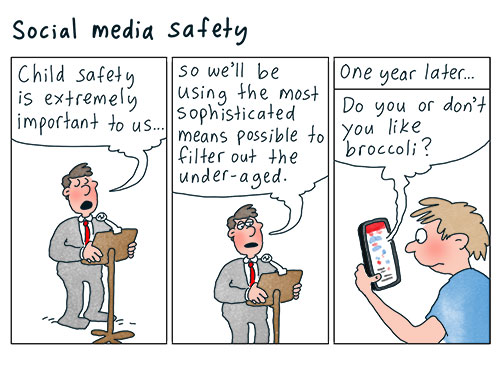
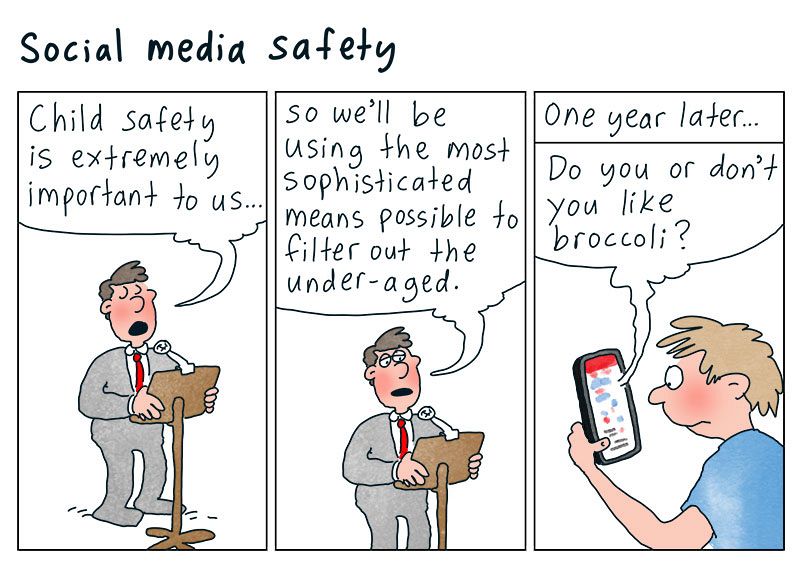
However, it also points to the limits of a straight age-ban approach. Early indications from Australia suggest that a majority of 14 and 15-year-olds remain active on social media. This should surprise nobody. Teenagers are resourceful and many will find ways around restrictions, whether through false declarations, VPNs or help from older friends and family members.
But this does not mean the Australian policy has failed.

Readers may recall my earlier Independent Australia article, “'Adolescence' exposes the danger of digital dysfunction”, in which I argued that the real challenge lies not simply in access to social media but in the design of the platforms themselves. What struck me about the Dutch report was how closely it echoed that view.
While recognising the value of age restrictions, the researchers ultimately focus on the risks created by algorithms, addictive design features and weak platform safeguards. In that sense, the Australian and Dutch debates may be converging on the same destination, even if they have started from different points.
One of the more interesting observations in the Dutch report is that many account closures appear to have happened voluntarily, through decisions made by parents and young people themselves. That suggests the real value of the ban may lie not only in enforcement, but in changing social norms.
The ban gives parents a stronger tool to say no. It helps schools and communities reinforce the message that unrestricted social media use is not inevitable for young children. Over time, that may be more important than short-term compliance statistics.
The Dutch researchers, however, take a different policy direction. Their central question is not simply how to keep children away from social media, but how to make digital platforms safer for children.
This leads them toward a risk-based approach under the European Union’s Digital Services Act. Rather than treating all social media services as equally harmful, they argue for stronger regulation of specific high-risk areas: addictive design, harmful recommendation systems, weak content moderation, privacy risks and unsafe default settings.

They are also cautious about universal age verification. Requiring all users to prove their age creates privacy risks, implementation costs and possible exclusion of legitimate users, while still leaving room for circumvention.
This is where the Dutch debate becomes useful for Australia as well. Our ban is an important first step, but it cannot be the final answer. The platforms themselves must be held responsible for the design choices that create harm, especially where those harms are known and measurable.
I broadly agree with the Dutch conclusions. Ultimately, the main focus should be on the platforms, based on specific risk areas. Australia is learning from its current approach, just as the Netherlands is learning from the Australian experiment. We should look with interest at the Dutch analysis and take it into account in our own future decisions.
This is how good digital policy should develop: not by one country claiming to have found the perfect answer, but by learning from each other as we confront the same global problem.
Paul Budde is an IA columnist and managing director of independent telecommunications research and consultancy, Paul Budde Consulting. You can follow Paul on Twitter @PaulBudde.
 This work is licensed under a Creative Commons Attribution-NonCommercial-NoDerivs 3.0 Australia License
Support independent journalism Subscribe to IA.


Related Articles
- Democratic promise to algorithmic power: How social media reshaped truth
- Condescending and harmful: An update on Australia’s social media ban
- Social media ban: A chance for childhood to breathe again
- Swipe, scroll, forget: The decline of deep reading
- eSafety Commissioner pushes ahead with unprecedented online restrictions