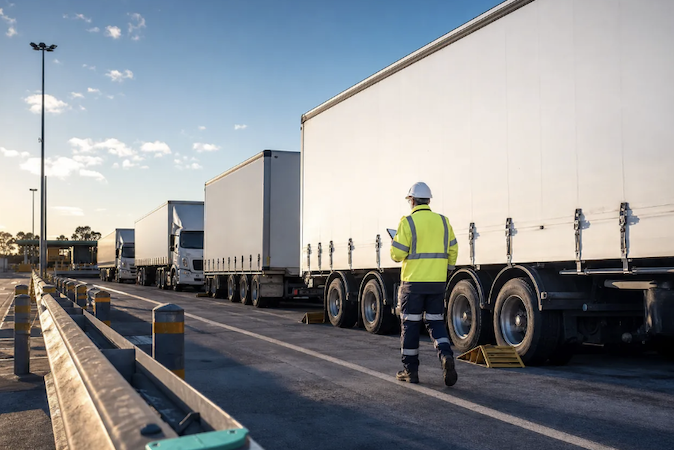
Anyone who has watched fuel prices at the bowser over the past two years knows the ache. But for the businesses that run Australia's trucks, vans and delivery fleets, that pain is compounded daily, multiplied across dozens or hundreds of vehicles, and layered on top of a regulatory environment that just shifted again.
On 1 August, a fresh round of reforms to the Heavy Vehicle National Law came into effect, introducing a new heavy vehicle accreditation scheme, updated fatigue rules, simplified work diary record-keeping and new powers for the National Heavy Vehicle Regulator to issue codes of practice. It's the latest step in a broader push to modernise Chain of Responsibility law, under which every party in the logistics chain – not just the driver – can be held legally responsible for breaches around fatigue, speed, mass and loading. Paper logbooks and a manager's memory are not much of a defence anymore.
The freight task in Australia keeps growing regardless. Population growth and the ongoing shift to e-commerce mean more vehicles doing more kilometres, which means more exposure — to fuel costs, to compliance risk, and increasingly, to carbon accounting.
That last part is new. The New Vehicle Efficiency Standard began applying to new passenger vehicles from 1 January 2025, with CO2 emissions targets extending to light commercial vehicles – utes and vans up to 4.5 tonnes – from 1 July 2025. Fleet operators are suddenly having to think seriously about emissions performance in a way they never had to before. It's not just servicing schedules and rego renewals anymore. Operators now need to understand how their vehicle mix stacks up against national efficiency targets, because the standard is designed to shape what's available and affordable to buy in the years ahead.
This is the backdrop against which "fleet management" has quietly stopped being a nice-to- have and become close to a legal and financial necessity. A decade ago, plenty of small and mid-sized Australian operators ran their vehicles on spreadsheets, service reminders scrawled on whiteboards, and drivers self-reporting hours. That approach is increasingly untenable when regulators expect auditable records, insurers want telematics data before they'll quote competitively, and every litre of diesel is a line item that matters to the bottom line.
What's replaced it, for a growing number of operators, is software that tracks a vehicle's whole life – location, fuel burn, driver behaviour, maintenance intervals, compliance documentation – in one place. A properly implemented fleet management system gives operators the kind of real-time visibility that used to require a small army of admin staff and a lot of guesswork. It's less about surveillance and more about removing the blind spots that cause real financial and legal exposure: the driver taking a longer route than necessary, the vehicle overdue for a service that fails on the highway, the missing documentation that turns a routine roadside inspection into a compliance headache.
There's an environmental angle too, and it's not just PR spin. Idling time, harsh braking, inefficient routing — these all show up in fuel consumption, and fuel consumption is now something operators are being asked to account for, not just budget for. For smaller operators, who don't have a compliance department to absorb the new reporting expectations, better data is fast becoming the only realistic way to meet the requirements without simply absorbing higher costs or cutting corners.
None of this is a magic fix. Technology doesn't replace good management, and no dashboard will substitute for a business valuing safety and compliance rather than treating them as box-ticking exercises. There have been plenty of examples across other industries of digital tools bought with great enthusiasm and then left half-configured, generating data nobody reads. The operators getting genuine value out of fleet technology tend to be the ones who've paired it with a real change in how they manage people and vehicles day to day — using the data to have better conversations with drivers, not just to catch them out.
But the direction of travel is clear. Between rising fuel and insurance costs, tightening emissions standards, and a legal framework that now holds the whole supply chain accountable, Australian fleet operators – from interstate transport companies to local trades businesses running a handful of utes – are being pushed toward the same conclusion: you can't manage what you can't see, and increasingly, regulators and insurers are demanding that businesses can prove they were watching.
For an industry that has often run on tight margins and even tighter deadlines, that's not a small ask. But it's one that's arriving whether operators are ready or not.