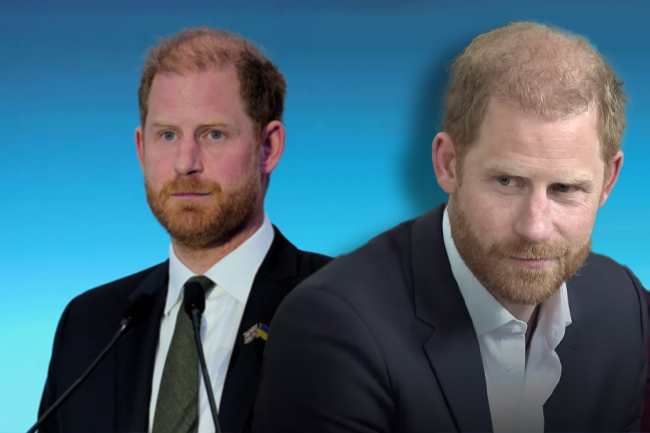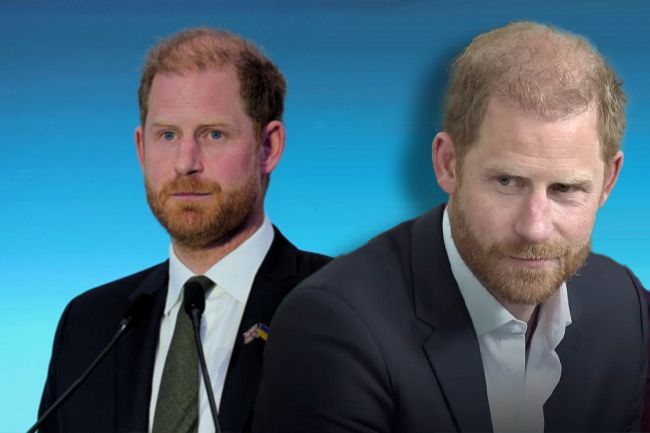
Prince Harry’s starkly different appearances in Kyiv and Australia exposed the widening gulf between authentic public service and the machinery of celebrity royal branding, writes Professor Vince Hooper.
ON THE MORNING of Thursday 23 April, Prince Harry stepped off an overnight train from Poland into Kyiv’s central station.
No advance press release. No bicoastal publicist coordinating the optics. No outfit tagged for resale on a fashion platform. He walked into the Kyiv Security Forum and told Russian President Vladimir Putin, directly, that the war must stop. He echoed his mother’s words from Angola in 1997: he was not there as a politician, but as a soldier who understands service and a humanitarian who has seen the cost of conflict.
It was the most effective piece of public communication Harry has produced in years — and not a single PR professional appears to have been involved.
One week earlier, a different Harry had been in Australia. That Harry was a managed product. Over four days in Melbourne, Canberra, and Sydney, Harry and Meghan visited the Royal Children’s Hospital, met survivors of the Bondi Beach terror attack, sailed Sydney Harbour with Invictus veterans, and appeared on MasterChef.

Some of it was genuinely moving. Some of it was commerce dressed as charity. The outfit Meghan wore to meet Bondi terror survivors was immediately available for purchase on a platform in which the Duchess is an investor, reportedly earning between 10 and 25% per sale. As The Australian’s Claire Harvey put it: if this is a commercial trip by a couple with bills to pay, why go to a children’s hospital at all?
Australians saw through it. A Roy Morgan poll of 1,767 respondents found that 81% said the visit did not improve their opinion of the couple. Eighty-seven per cent said the trip would do nothing to repair Harry’s relationship with King Charles. Only one in four saw a more positive side of Meghan. An insider close to the results said the tour “reinforced existing views rather than changing them”. In financial terms, the Sussexes spent four days expending reputational capital and received a negative return.
The contrast between these two visits – separated by barely a week – is the strongest argument yet that Harry should fire his spin merchants. In Kyiv, nobody was selling anything. There was no fashion platform, no MasterChef cameo, no ambiguity about whether this was a royal tour or a commercial venture.
Harry did what he does best: showed up for people in extremis, spoke with the moral authority of a combat veteran and connected a cause he believes in to his mother’s legacy. When he told the forum that Ukraine’s fight is about values, not territory, the audience heard a man who meant it. That’s worth more than a thousand press releases.
Yet the professional apparatus keeps growing, even as its returns collapse. In January, the Sussexes returned to Sunshine Sachs Morgan & Lylis, the Hollywood heavyweight they had parted ways with in 2022. The reunion followed the departure of chief communications officer Meredith Maines (nine months in the role), global press secretary Ashley Hansen and at least four other senior comms staff in the past two years.
The charitable foundation underpinning the whole enterprise tells its own story: Archewell’s donations fell from $5.3 million in 2023 to $2.1 million in 2024, while expenses ballooned to $5.1 million, producing a deficit of roughly $2.5 million and prompting the layoff of 60% of staff. The spin merchants are expensive. They are also, on the evidence, not working.

The counterargument deserves honest engagement. Harry occupies one of the most hostile media environments on Earth. The British tabloid ecosystem is adversarial by design, and since Megxit, every utterance is dissected by outlets from the Daily Mail to Sky News Australia. Without professional guidance, a mishandled moment can dominate a news cycle for weeks. The case for Sunshine Sachs is essentially an insurance premium: expensive, but cheaper than an unmanaged crisis.
But this argument collapses under its own evidence. The most damaging Sussex crises – the Netflix documentary’s contradictions, the memoir that torched family relations, the Australia tour’s commercial optics – were not unmanaged disasters. They were managed disasters. Each was shaped by professional communicators. Each generated short-term revenue while destroying long-term reputational capital. In finance, we call this maximising yield while liquidating the underlying asset. Any first-year student could spot the error.
For Australians, this matters beyond the tabloid circus. The monarchy’s relevance to this country – always contested, increasingly brittle – depends on whether the institution can produce figures who embody service without ostentation. The 2018 Australian tour, centred on the Invictus Games in Sydney, was arguably the high-water mark of Harry’s public life. The warmth was real because the purpose was real.
Last week’s return demonstrated what happens when purpose gets entangled with commerce: the same beaches, the same harbour, but an 81% wall of indifference. Australians who already wonder whether a hereditary monarchy headquartered in London has anything useful to say about their democracy will not have been reassured by watching a duchess hawk outfits at a terror survivors’ memorial.
The deeper issue is one no PR firm can resolve. The Sussexes occupy an impossible position in the attention economy: too royal for Hollywood, too Hollywood for the Palace. As one commentator observed of the Australian tour, the “half-in, half-out” approach – part royal visit, part commercial venture – creates an ambiguity that audiences find impossible to trust. Sunshine Sachs can manage the contradiction; it cannot eliminate it. Only Harry can do that by choosing which version of himself he wants to be.
The evidence from this extraordinary week is unambiguous. The Harry who stepped off a train in Kyiv – unscripted, unmanaged, armed with nothing but moral conviction and his mother’s example – moved a security conference and made front pages from Washington to Sydney. The Harry who toured Australia inside a cocoon of professional representation, with every engagement calibrated and every outfit monetised, left 81% of the country unmoved.
The market, as we say in finance, has priced in the spin. It is time to offer the genuine article. The question for Australians is whether any version of a hereditary prince – managed or otherwise – can offer that in 2026. Thursday in Kyiv suggested that, stripped of the apparatus, Harry still might. Whether the institution he was born into can say the same is a question this country will eventually have to answer for itself.
Professor Vince Hooper is a proud Australian-British citizen and professor of finance and discipline head at SP Jain School of Global Management with campuses in London, Dubai, Mumbai, Singapore and Sydney.
 This work is licensed under a Creative Commons Attribution-NonCommercial-NoDerivs 3.0 Australia License
Support independent journalism Subscribe to IA.