If Trump bombs Iran's civilian infrastructure, Britain and Australia must respond — not out of partisanship, but because the laws that protect Tehran today protect London and Sydney, writes Dr Vince Hooper.
A DIALYSIS MACHINE needs roughly the same things a human body does: clean water, steady power and someone awake to mind it. Take away the grid and the pumping stations, and you have not struck a military target. You have killed, slowly, every patient in the ward.
This is what "destroying civilian infrastructure" looks like once the press conference ends and the ordnance arrives — not a clean strike on a turbine hall but a quiet, clinical asphyxiation of the people the turbines were keeping alive.
Norms that only bind our enemies are not norms at all — they are slogans with better stationery.
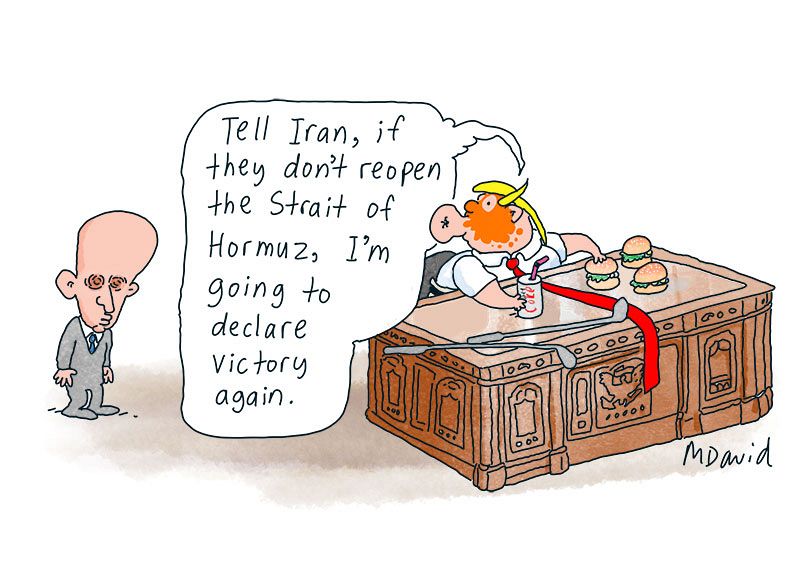
President Trump has now threatened to do exactly that. In a profanity-laced Truth Social post on 5 April, he announced that 'Tuesday will be Power Plant Day, and Bridge Day' in Iran unless Tehran reopens the Strait of Hormuz by 8 pm Eastern time the following day.
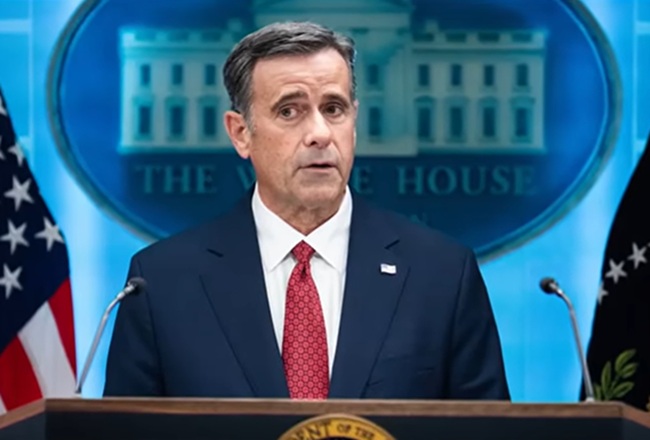
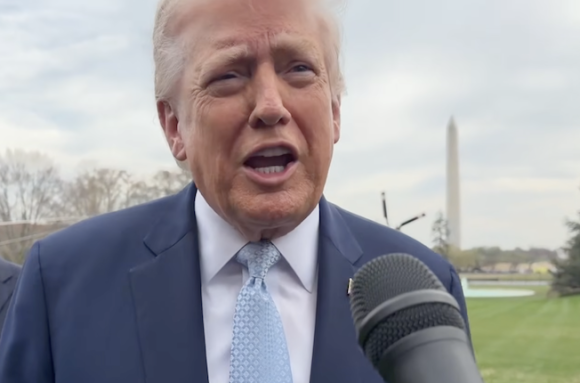
At a White House press conference on 6 April, he expanded the threat to every power plant and every bridge in the country, promising complete demolition within four hours of the deadline expiring. Asked whether such strikes on civilian infrastructure would amount to a war crime under international law, the President replied that he was not worried.
He ought to be. More than a hundred international-law scholars, in an open letter dated 2 April, the International Committee of the Red Cross, the European Council and senior UN officials have all said what any first-year law student could tell him: collective punishment of a civilian population is prohibited by Article 33 of the Fourth Geneva Convention, reinforced by customary international humanitarian law binding on every state whether they signed or not, and criminalised in British and Australian domestic law.
Deliberately destroying the water, power and transport infrastructure a civilian population needs to survive is not a negotiating tactic. It is, in plain English, a war crime announced in advance — with a deadline attached.
The sensible response to a publicly announced crime is a publicly announced consequence, communicated before the bombs drop, so that the threat itself becomes costlier than the act. This is not Left or Right. It is the question of whether the rules that exist to protect us still mean anything when an ally is the one threatening to break them.
The reciprocity point
Every international legal protection is, at bottom, a bet on reciprocity. We do not prohibit the shelling of hospitals because hospitals are sacred; we prohibit it because the day may come when the hospital is ours. Norms that only bind our enemies are not norms at all — they are slogans with better stationery.
Imagine, briefly, that Britain or Australia were on the receiving end. No fuel. No water. No power. No internet. Dialysis clinics dark by Tuesday. Sewage in the streets by Friday. Neonatal units running down their generator diesel while the Americans, or the Chinese, or whoever had decided we were next, explained on cable television that this was regrettable but necessary. At that moment, the only thing standing between a British or Australian civilian and a slow death by infrastructure collapse is a body of law that our governments either enforced last time it mattered, or did not.
Britain grasped the principle in 1991. The War Crimes Act was a policy begun under Margaret Thatcher and forced through by John Major after the House of Lords rejected it twice, obliging the British Government to invoke the Parliament Acts 1911 and 1949 — the only time in history a Conservative Government has done so.
The Act was narrowly drafted, confined to grave breaches committed in German-held territory during the Second World War and in three decades it has produced exactly one conviction: Anthony Sawoniuk, sentenced to life in 1999 for murders committed as a collaborationist policeman in Belarus, who died in prison in 2005. One conviction is not a failure. It is the point. The law exists to say that Britain will reach across decades and borders when the crime is grave enough, and that the passage of time is no defence.
The principle was broadened decisively a decade later by the International Criminal Court Act 2001, which folded the Rome Statute's definitions of war crimes directly into UK law. Australia did the same through the International Criminal Court (Consequential Amendments) Act 2002. Both countries, on their own statute books, already possess the machinery. The only question is whether they are willing to switch it on.
An ally who cannot be told "no" on a publicly threatened war crime is not an ally; it is a liability underwritten by our own statute books.
A graded response, not a single menu
The honest answer is that the four obvious responses vary enormously in how hard they are and lumping them together weakens the strong ones.
1. Cancel the state visit
This is the easy case and the place to start. A state visit is entirely a gift of the host government; there is ample precedent for withholding or postponing one as a political signal and it requires no legal innovation whatsoever. If the King is scheduled to host a man who has announced an intention to drown a civilian population in its own sewage, the visit should not proceed. Any Australian equivalent – ceremonial fixture, joint press availability, Lodge dinner – is on the same footing.
2. Review the sporting ties
The 2026 World Cup is co-hosted by the United States; the 2028 Olympics are in Los Angeles. Sporting boycotts are blunt instruments and historically punish athletes more than leaders – 1980 Moscow remains the cautionary tale – but the apartheid-era precedent shows they can shift the needle when the underlying conduct is grave enough. This belongs in the conversation, not at the front of it.
3. Freeze the assets
Harder. Designating a sitting allied head of state under the UK's Sanctions and Anti-Money Laundering Act 2018, or Australia's Autonomous Sanctions Act 2011, is legally possible and politically seismic. The honest version of the proposal is that the architecture exists and should be held in reserve, not brandished as a first move.
4. Prosecute
Hardest of all, and here the argument meets the wall of head-of-state immunity. The International Court of Justice confirmed in the Arrest Warrant case (DRC v Belgium, 2002) that sitting heads of state enjoy personal immunity from foreign criminal jurisdiction under customary international law. The ICC can, in principle, pierce that, but the United States is not a party to the Rome Statute, and no British or Australian government is going to arrest a sitting American president on its soil.
The honest framing is therefore after he leaves office — at which point personal immunity lapses, the evidence remains and the statute of limitations on grave breaches does not. Advertising that clock, now, is itself a form of deterrence.

Why say any of this out loud
Deterrence works only if the threat is credible and communicated. A quiet internal review inside the Foreign Office or DFAT deters nothing and protects no one. The point of laying out a graded response before the bombs drop is to make the diplomatic cost visible to the one man whose decision matters.
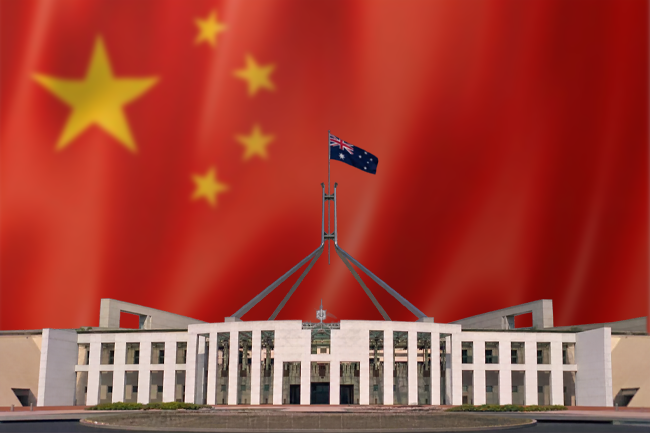
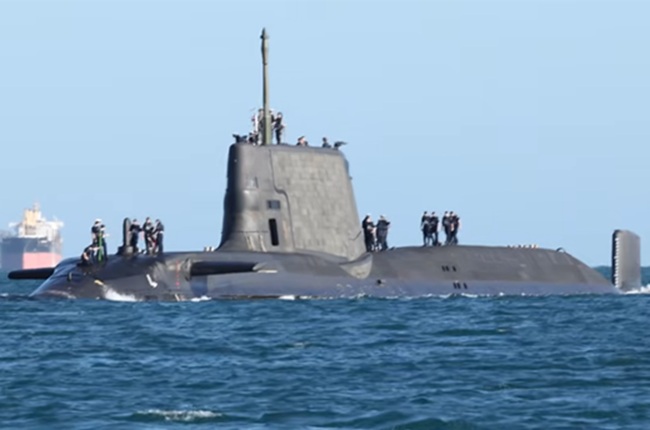
The alliance architecture makes this more urgent, not less. Britain sits inside NATO; Australia sits inside ANZUS and AUKUS. Those frameworks exist to pool risk among states that trust one another to stay within the laws of war — not to bind their members silently to whatever the largest partner announces on a podium. An ally who cannot be told "no" on a publicly threatened war crime is not an ally; it is a liability underwritten by our own statute books.
None of this is anti-American. The Americans wrote much of the post-1945 legal architecture under discussion. They prosecuted the Nuremberg cases. They insisted on Geneva. A president threatening to drag his country across those lines is not the voice of America; he is the voice of one man testing whether the rest of us still believe in what the Americans built.
The rules of war were not written to protect strangers. They were written by countries that had just watched their own cities burn, for countries that might one day watch their own cities burn again. When Britain and Australia look away from a publicly announced war crime because the man announcing it is an ally, they are not being loyal. They are cancelling their own insurance policy — and then complaining, the day the fire comes, that no one will pay out.
Somewhere in Tehran tonight, there is a dialysis ward where the machines are still running. Somewhere in London and Sydney, there is one too. The law that keeps the first ward alive is the same law that keeps the second. Defend it for them, and it will be there for us. Abandon it for them, and there will be nothing to invoke the day the fire comes for us — only the memory of how quickly we agreed it didn't matter.
Professor Vince Hooper is a proud Australian-British citizen and professor of finance and discipline head at SP Jain School of Global Management with campuses in London, Dubai, Mumbai, Singapore and Sydney.
 This work is licensed under a Creative Commons Attribution-NonCommercial-NoDerivs 3.0 Australia License
Support independent journalism Subscribe to IA.


Related Articles
- An American fairytale: Donald J, the man who thought he could work miracles
- Trump is the most dangerous man in the world
- CARTOONS: Mark David is filling up with gas
- The rules are gone: Trump’s Iran strike reshapes global power
- Commander in cheat: Why Trump’s lies are the foundation of his power