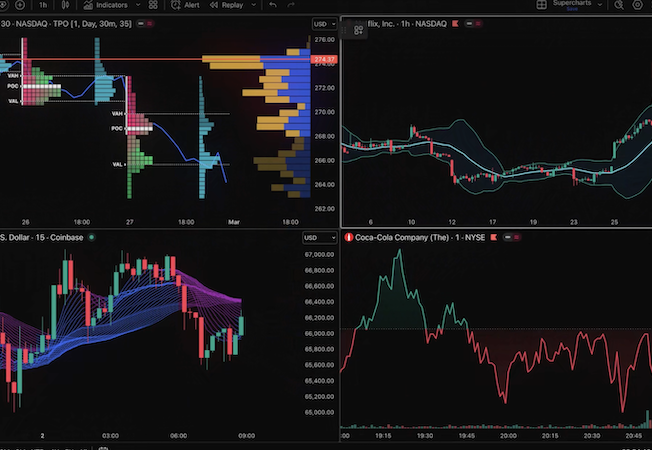
Market intelligence systems in the AI space are becoming essential tools for understanding how advanced technologies evolve and gain adoption across industries.
Instead of relying solely on traditional financial summaries, analysts now focus on real-time signals, ecosystem expansion and enterprise usage patterns to assess long-term potential. These insights help shape expectations around Anthropic stock, especially as AI capabilities continue to improve rapidly and influence both business workflows and developer ecosystems.
How AI market intelligence systems actually work
AI market intelligence systems are structured platforms designed to collect, process and interpret large-scale data from multiple digital sources. These systems do not rely on surface-level indicators but instead focus on deeper behavioural and technical signals that reflect how AI technologies are performing in real environments. The goal is to convert raw data into actionable insights that help understand growth, adoption, and scalability trends.
Core components of intelligence systems
-
Data aggregation layer
The data aggregation layer collects information from multiple sources, such as API usage, developer activity, enterprise integrations and research updates. This layer ensures that analysts receive a broad and balanced dataset representing both technical performance and market behaviour. By combining structured and unstructured inputs, it creates a strong foundation for deeper evaluation and reduces dependency on isolated metrics. -
Signal processing engine
The signal processing engine filters large volumes of raw data to identify meaningful patterns. It removes noise, highlights relevant changes, and organises signals such as adoption spikes, performance improvements and usage shifts. This allows analysts to focus only on impactful movements instead of irrelevant fluctuations. -
Behavioural analysis module
The behavioural analysis module studies how users, developers and enterprises interact with AI systems over time. It evaluates engagement frequency, usage consistency and integration depth. These insights help determine whether adoption is stable, growing, or temporary. -
Predictive modelling framework
The predictive modelling framework uses historical and real-time data to simulate future outcomes. It estimates adoption speed, ecosystem growth and scalability under different scenarios. These models are continuously refined as new data flows into the system.
Role of real-time signals in AI evaluation
Real-time signals are crucial for understanding how AI systems evolve in fast-moving environments. These signals capture immediate changes in usage, performance and ecosystem activity, allowing analysts to detect early shifts in momentum. In discussions around anthropic stock, real-time indicators provide valuable insights into adoption behaviour before broader trends become visible.
Key real-time indicators used by analysts
-
API usage fluctuations
Changes in API usage reflect shifts in demand and highlight how different industries are interacting with AI systems at scale. -
Model update frequency
Frequent updates indicate continuous innovation and strong research momentum within the organisation. -
Developer engagement levels
High engagement suggests a growing ecosystem where developers actively build and expand applications. -
Enterprise integration updates
The expansion of AI use across business departments signals deeper operational dependence and trust. -
Latency and performance changes
Improvements in speed and accuracy often lead to higher adoption in mission-critical applications.
Each of these indicators helps analysts form a dynamic view of AI performance beyond traditional evaluation models.
Analyst interpretation of AI ecosystem expansion
AI ecosystem expansion reflects the growth of tools, applications and integrations built around a core AI system. A strong ecosystem indicates that the technology is becoming foundational infrastructure rather than a standalone solution. Analysts evaluate ecosystem size, diversity and integration depth to understand long-term sustainability.
Factors that define ecosystem strength
-
Developer tooling availability
Strong developer tools make it easier for third-party creators to build applications, leading to faster ecosystem growth and innovation. -
Third-party application growth
A rising number of external applications built on top of AI systems indicates widespread adoption and increased platform value. -
Cross-platform integration
Seamless integration with cloud systems and enterprise tools enhances usability and accelerates adoption across industries. -
Community contribution levels
Active communities support innovation, troubleshooting and collaboration, strengthening overall ecosystem resilience.
Behavioural models used in the AI market interpretation
Behavioural models help analysts understand how users and enterprises interact with AI systems over time. These models provide a human-centred perspective that complements technical analysis and helps explain adoption patterns more clearly.
Key behavioural interpretation models
-
Adoption curve analysis
Tracks how quickly users and organisations adopt AI systems and whether growth is accelerating or stabilising. -
Retention behaviour study
Measures how consistently users continue using AI systems after initial adoption, indicating long-term value. -
Engagement depth measurement
Evaluates how deeply AI tools are integrated into daily workflows rather than being used occasionally. -
Usage diversity mapping
Examines the range of applications across industries, from coding to customer support and analytics.
These models help build a more complete understanding of AI adoption beyond surface-level statistics.
Strategic interpretation of AI market intelligence
Strategic interpretation combines technical, behavioural and ecosystem data into a unified analytical framework. This approach helps analysts understand competitive positioning, innovation strength and scalability potential in a structured way.
Key strategic evaluation dimensions
-
Innovation velocity tracking
Measures how quickly new features and improvements are released within AI systems. -
Competitive landscape mapping
Compares AI systems based on capability, efficiency and adoption strength across the industry. -
Scalability assessment models
Evaluates whether systems can handle increasing demand without performance decline. -
Risk exposure analysis
Identifies challenges such as infrastructure cost, regulatory shifts and competitive pressure.
These dimensions help form a balanced understanding of long-term market behaviour.
Long-term perspective on AI intelligence systems
Long-term evaluation of AI systems depends on how effectively innovation translates into real-world adoption. As data becomes more structured and ecosystem activity expands, analysts gain clearer insights into growth patterns and sustainability. The ongoing attention around anthropic stock reflects how intelligence systems are increasingly used to interpret early signals rather than relying on traditional evaluation approaches.
Sustained success in the AI sector depends on maintaining a balance between innovation, reliability and ecosystem expansion. Companies that achieve this balance are more likely to secure strong positioning as AI continues to reshape industries and workflows globally.
Conclusion
AI market intelligence systems provide a structured approach to understanding complex signals from technology performance, user behaviour and ecosystem growth. These systems help analysts move beyond surface-level interpretation and uncover deeper patterns that shape long-term potential.
The narrative around Anthropic stock highlights how early intelligence signals are becoming central to modern market understanding. As AI ecosystems continue to expand, these systems will play an increasingly important role in interpreting how innovation translates into lasting technological value.