Australians are stressed. That’s not news. But what is new is the mounting evidence for a remedy most of us overlook. The World Health Organization (WHO) now recommends integrating creative activities into mental health policy.
A 2026 Bupa survey found that 88% of Australians agree that creative hobbies improve wellbeing. Yet nearly half spend zero time on them. Meanwhile, we spend an average of six hours a day on screens. That gap between knowing and doing is worth a closer look.
Why creative hobbies matter for mental health
For anyone who wants to start but feels unsure, that gap is the hardest part to cross. Facing a blank canvas with no direction can feel paralysing, especially if you haven’t painted since school. The research shows that structured creative formats solve this problem. They provide clear steps while still delivering the psychological benefits of making art.
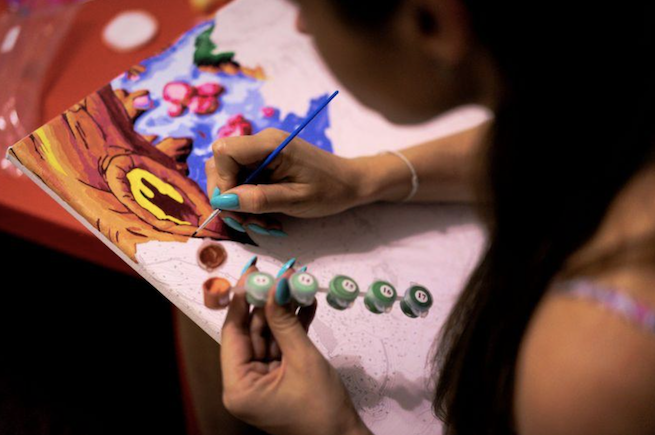
A custom paint-by-numbers kit turns a potentially overwhelming task into a series of small, achievable actions. Match the number to the colour. Fill the section. Repeat. Each completed section provides a micro-dose of accomplishment and that builds momentum.
The global health community is paying attention. The WHO’s 2025 'Guidance on Mental Health and the Culture, Arts, and Sport Sector' formally recommended that governments integrate arts and cultural activities into public mental health strategies. This was not a niche report. It was a policy directive from the world’s leading health authority.
A low-barrier path to better mental health
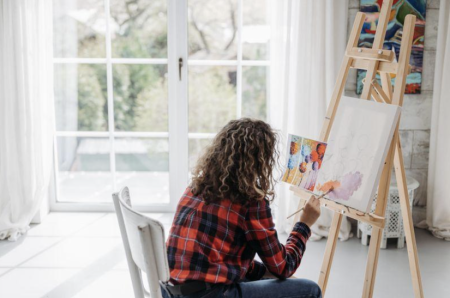
The beauty of paint-by-numbers is that it removes nearly every barrier. No artistic training needed. No expensive equipment. No studio required. A kit, a cup of tea and 20 minutes is all it takes. It also works as a genuine break from screens. Unlike scrolling social media or watching television, painting requires hands-on focus. It forces your eyes away from a backlit display and into real-world colour mixing.
And once the structured format becomes familiar, many people want to explore more freely. Moving from guided painting to original work is a natural progression. For those looking for inspiration, collections of abstract bright colour paintings show what’s possible when you let go of the numbers and trust your own eye.
The science behind the brush
Why does structured creativity work at a biological level? The 2016 study by Kaimal, Ray and Muniz remains the foundational answer. They found that 45 minutes of art-making reduced cortisol levels in 75% of participants. Cortisol is the primary stress hormone. Lower cortisol means lower anxiety, better sleep and improved immune function.
Paint-by-numbers adds an extra layer. The repetitive motion of brush to canvas, matching numbers to colours, creates what psychologists call a flow state, the same absorbed mental state that athletes and musicians describe. The task is challenging enough to hold attention but not so difficult that it causes frustration.
The WHO’s 'Guidance on Mental Health and the Culture, Arts, and Sport Sector' frames creative activities as a core component of public health infrastructure. The document directs health systems to fund and expand arts-based programmes as part of routine mental health care. That is a significant shift in how we think about treatment options.
For Australian readers, this connection between creativity and identity is not new. As Anne Summers wrote in her piece exploring the link between art and Australian identity, creative expression has been central to how Australians understand themselves, from Indigenous rock art to the Heidelberg School to contemporary public murals.
Australians know creativity works, so why aren’t we doing it?
The Bupa “Express Your Health” survey of 1,000 Australians, released in May 2026, reveals a striking contradiction. 88% of respondents recognised that creative hobbies positively impact health and wellbeing. 79% said creative outlets help them process emotions. 64% said they feel relaxed and calm when doing creative activities.
Yet 47% spend no time on creative hobbies at all.
The top barriers are telling: tiredness (28%), lack of inspiration (26%) and lack of time (24%). These aren’t technical problems. They’re motivation problems. And they point to the same conclusion: Australians know creativity works, but most of us treat it as optional rather than essential.
Globally, the momentum is building. A June 2026 study published in Frontiers in Public Health found that arts-based social prescriptions led to significant improvements in the WHO-5 Well-Being Index, with 76% adherence versus 33% for traditional antidepressants. The implication is clear. Creative activities are not a soft option. They are a clinically effective intervention.
The Bupa campaign frames this as a public health conversation. AFL star Cody Weightman, who features in the campaign, argues that creative outlets are as important as physical exercise for mental health. Hard to disagree with the logic.
Clinical psychologist Dr Julia Nicholls, writing for Independent Australia, has explored how creative practices support mental health recovery. Her work highlights that structured creative activities offer non-verbal pathways to emotional processing, making them valuable for people who struggle to articulate what they’re feeling.
Of course, structured creativity is not a replacement for professional mental health care. For people managing diagnosed conditions, paint-by-numbers works best alongside clinical treatment, not instead of it. But for the majority of Australians who report feeling stressed and disconnected, it offers something genuine.
The takeaway
Creative expression is not a luxury. It’s a legitimate mental health tool backed by the WHO, Australian research data and a growing global movement. The evidence is clear. The main barrier facing most Australians isn’t a lack of skill, funds, or time. It’s the reluctance to pick up the brush.