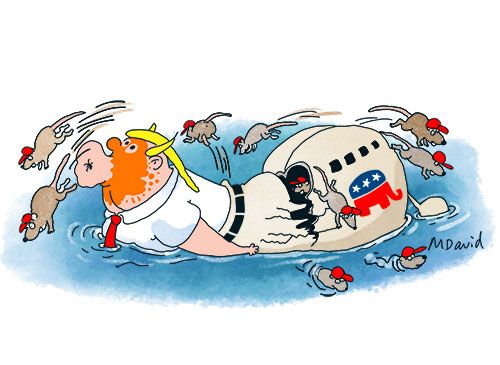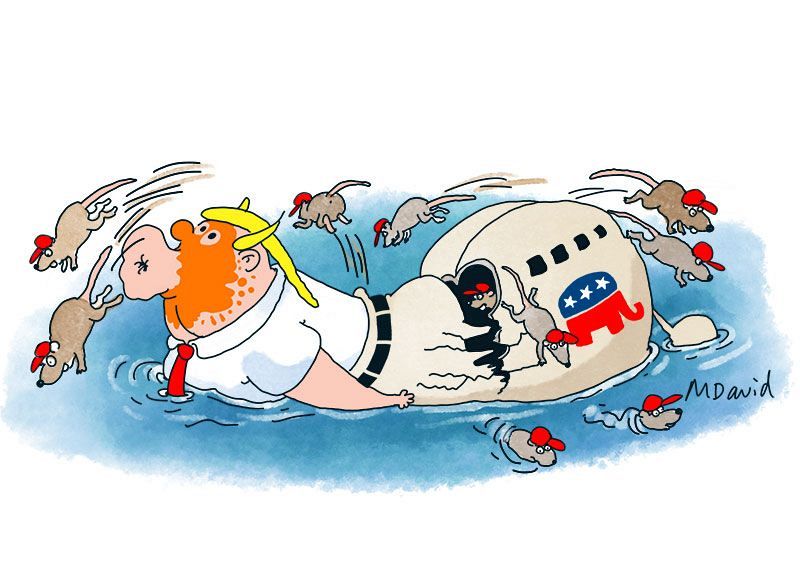
Trump's electoral defeat may weaken his grip on power, but the grievances fuelling America's authoritarian right threaten to outlast his presidency, writes Andrew Long.
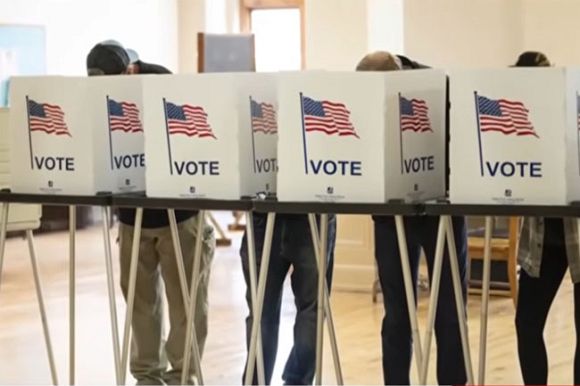
DONALD TRUMP'S loss of the House and Senate will encourage the hope that America can now return to something resembling normal government.
I expect the next two years to disappoint that hope. Trump will respond to his diminished authority by escalating the conflicts through which he has always asserted it, while the grievances that brought him to power remain available to a more capable successor.
Trump's statement accepting the result offers no credible reassurance. After losing in 2020, he spread false claims of electoral fraud and pressured Georgia's secretary of state to find enough votes to reverse his defeat. He pressed former Vice President Mike Pence to obstruct certification. To treat his latest words as evidence of democratic restraint requires overlooking what he did when voters denied him power.
Trump has several ways to retaliate. Officials can be accused of betrayal; the electoral system can be blamed for producing the wrong answer. A confrontation abroad would allow him to demonstrate that he still commands American power. His tendency to treat opposition as a personal injury makes all these responses plausible, however different their consequences for everyone else.
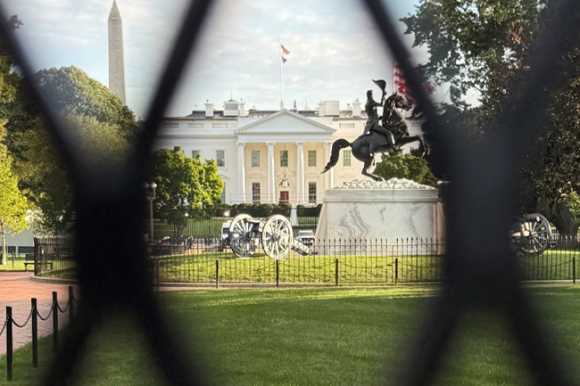
But further escalation will also make Trump's position less secure. Officials and Republican politicians have careers to protect beyond his presidency. Donors expect something in return for their support. As the costs of loyalty rise, those around him will have stronger reasons to protect themselves at his expense.
Trump's incompetence has offered America some protection against his authoritarian ambitions. He belongs to an early, chaotic generation of populists who subordinate truth to personal loyalty. He can demand obedience and punish dissent, but he has struggled to turn that submission into a governing organisation capable of surviving him.
Trump's second administration was designed to give him greater freedom from internal resistance. Yet he lacks the organisational discipline through which Vladimir Putin and Viktor Orbán have made influential people dependent on their continued rule. He has weakened the Republican Party's independence without giving it much purpose beyond accommodating him.
This dependence on Trump's personality is a source of the movement's fragility. Congressional investigations will put individual officials under pressure just as ambitious Republicans begin competing for his voters. People who once found it convenient to defend him will have to calculate how much of their own future they are prepared to sacrifice.
I believe Trump's personal political movement is already showing signs of fragmentation and may eventually collapse under these pressures. Its dependence on one man's demands makes a durable succession difficult, but the appetite for the politics he promised will survive him.
There can be no lasting restoration of Reagan or Bush Republicanism. The economic conditions and social loyalties that sustained it have changed. Communities are more fragmented, while the internet has altered how people encounter politics, organise their grievances and decide whom to believe. Choosing a more courteous candidate cannot recreate the society in which the old Republican programme commanded support.
An old-fashioned Republican might win an election through favourable circumstances. Governing on the assumption that the old settlement could then be restored would invite another backlash. The dissatisfaction that brought Trump to power would remain unanswered and voters would have further reason to conclude that conventional politics had nothing to offer them.
Many still want what Trump promised: a reduced American role abroad and an end to foreign wars, greater economic security and a government willing to protect their interests against global economic competition. Concerns about immigration have also become entangled with wider anxieties about employment, housing and declining living standards. Trump's failure to address these underlying grievances creates an opportunity for someone who can, including those willing to exploit them for authoritarian ends.
Calling the result “Trumpism 2.0” would underestimate the difference. A successor could build a more disciplined organisation, appoint reliable officials and choose confrontations with greater care, while retaining the same willingness to subordinate facts and democratic restraints to political advantage. Vice President JD Vance may attempt this, though he may prove incapable of it. Others will have the opportunity. I expect the authoritarian right of the 2030s to be harder to confront because it will have learned from Trump's failures.
Democrats face their own version of the same problem. A conventional centrist could win in 2028 against a sufficiently inept Republican, then deepen the crisis of legitimacy by governing as though competent administration were enough. People who feel they have little control over their lives need reasons to believe that government can change their circumstances. Another promise of normality followed by another term of disappointment would make them still more receptive to an authoritarian alternative.
Democrats need a national programme combining progressive economic reform with a serious retreat from unnecessary foreign wars and an immigration policy that is both credible and humane. Public concerns about border security cannot simply be dismissed, but neither should they become justification for punitive measures that disregard human rights. Addressing the economic insecurity and social dislocation that fuel resentment would offer a more durable response than adopting the authoritarian right's prescriptions. Democrats cannot recover public authority solely by declaring themselves responsible and their opponents dangerous.
Nor will their congressional majorities protect the rest of the world from Trump's response to defeat. When the new Congress takes office in January, Democrats will be able to block legislation and investigate the Administration; control of the Senate will also give them power over confirmations. Investigations can consume officials' time and set their interests against one another. The President will nevertheless retain considerable freedom to act abroad.
Iran offers an obvious opportunity for escalation. I expect Trump to want a more dramatic demonstration of force, potentially involving wider attacks on military targets, civilian infrastructure or further targeted killings. Whether he authorises any particular operation will depend partly on the resistance he expects. He can retreat when confronted with costs he cannot control. Iran's capacity to frustrate him could therefore restrain his response even as it gives him another reason to lash out.
Cuba could become another target for confrontation. In Ukraine, I expect more of his frustration to fall on President Volodymyr Zelenskyy as resistance to an imposed settlement obstructs his desire to claim a deal. Trump's history of mixing personal interests with political power also raises legitimate questions about the motivations and transparency of any negotiations with Putin.
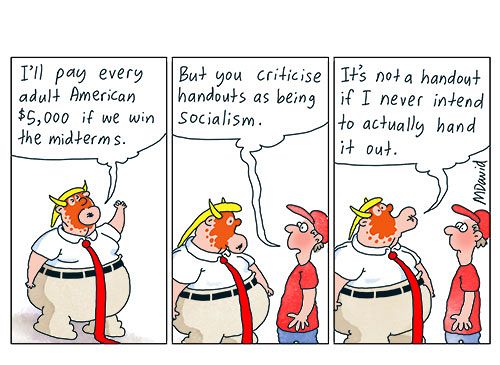
The concern about private advantage has a basis beyond speculation about any particular agreement. Reuters has documented extensive foreign investment in Trump-family cryptocurrency ventures and the conflicts between those commercial interests and presidential power. Foreign governments have reason to consider how financial opportunities might influence the people making American policy.
This corrupts diplomacy by exposing it to private financial interests and to the President's need for personal vindication. Judgments about national security become entangled with what will enrich his circle or satisfy his desire to announce a victory. The people who bear the consequences have little say in either calculation.
Such conduct worsens a loss of trust that predates Trump and will outlast him. Gallup's September 2026 findings put several measures of confidence in the Federal Government at their lowest recorded levels. A Democratic election victory offers little reason to assume that decline has ended.
A further cause of this deterioration is “hyper-neoliberalism”: a mutation of market ideology into the belief that wealth and power should determine whose interests prevail. The defence of markets as a means of spreading prosperity gives way to the conviction that winners are entitled to impose their will. Public obligations become obstacles to getting what they want.
People encounter this outlook when money buys access and the powerful escape restraints that apply to everyone else. They resent the abuses, but also the apparent belief that their vulnerability is acceptable. A government that seems comfortable with such arrangements can hardly expect those exposed to them to trust it.
Dismissing this as the way elites have always behaved misses how much worse it can become. There is a consequential difference between powerful people accepting some public obligations and treating those obligations as illegitimate restraints on their freedom. Equating conventional liberal government with Trump's politics obscures that deterioration and makes it harder to explain what needs to change.
I expect trust to fall further into 2028 and the following decade unless a substantial political programme changes people's experience of government. Temporary improvements in polling can coexist with a continuing loss of confidence that democratic institutions will represent ordinary citizens.
Democrats now have the opportunity to pursue that programme while restraining Trump. If they spend the next two years enjoying his decline and promising to restore the world that preceded him, they will leave his successors with an electorate still looking for someone willing to overturn it.
Andrew Long is a writer with a Master's degree in Politics and Policy.
 This work is licensed under a Creative Commons Attribution-NonCommercial-NoDerivs 3.0 Australia License
Support independent journalism Subscribe to IA.


Related Articles
- CARTOONS: Trust and politics — the art of talking 'number twos'
- Trump's tiger diplomacy leaves Australia dangerously exposed
- JEFF MCMULLEN: American angst
- Trump’s lies should be the headline
- Trump accelerates AI race as industry leaders urge caution