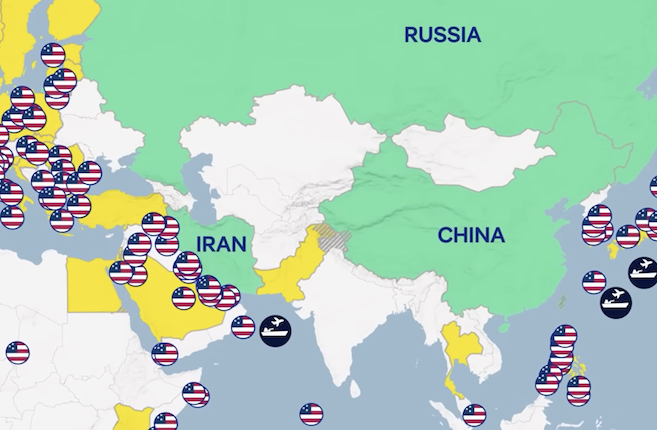
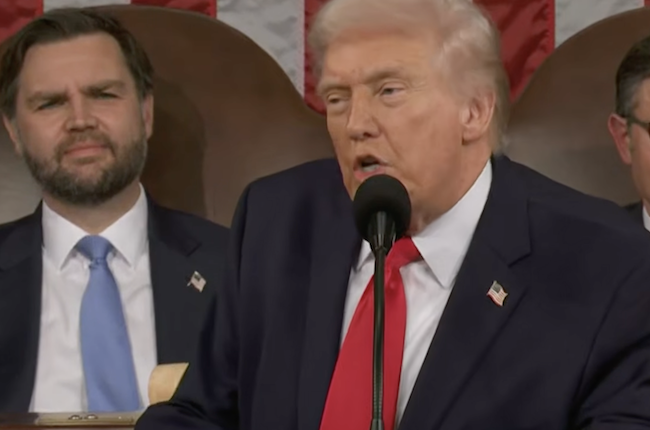
Donald Trump’s appeal for nuclear negotiations with Iran exposes the contradictions at the heart of his administration’s foreign policy, writes Imran Khalid.
FOR OBVIOUS REASONS, in the ever-turbulent saga of U.S.-Iran relations, President Donald Trump’s letter to Iran’s Supreme Leader, Ayatollah Ali Khamenei, became the latest twist in a long-running drama.
The letter, which Trump described as an appeal for negotiations on Iran’s nuclear program, was initially met with scepticism, derision and outright denial by Iranian officials. It has since been confirmed that the letter was actually sent, the episode underscoring the deep mistrust and dysfunction that characterise the relationship between Washington and Tehran.
Trump’s announcement, made during a Fox Business interview, was characteristically brash. “I wrote them a letter saying, I hope you are going to negotiate,” he said, adding that Iran could either “handle” the U.S. militarily or “make a deal”. The President’s remarks were accompanied by his trademark mix of threats and vague promises, leaving observers to wonder whether this was a genuine diplomatic overture or merely another piece of political theatre.

The Iranian response was swift and blunt. Foreign Minister Abbas Araghchi stated that Tehran had not received any such letter, though he acknowledged hearing rumours that one was “on its way”. Meanwhile, Ayatollah Khamenei, who has long been sceptical of U.S. intentions, reiterated his stance that negotiating with Washington would be “unwise, unintelligent, and dishonourable”. This sentiment is widely shared among Iran’s political elite, who view Trump’s Administration as inherently untrustworthy, particularly after the U.S. withdrawal from the 2015 nuclear deal, known as the Joint Comprehensive Plan of Action (JCPOA).
On the surface, Trump’s letter could be seen as a rare attempt to de-escalate tensions between the two nations. Since taking office, Trump has pursued a policy of “maximum pressure” against Iran, reimposing crippling sanctions and ratcheting up military threats. The letter, while genuine, might signal a willingness to explore a diplomatic solution, even if it is couched in Trump’s typical blend of bluster and ambiguity.
For Iran, which has faced severe economic hardship due to U.S. sanctions, the prospect of renewed negotiations could offer a path to relief. The country’s economy has been battered by inflation, unemployment, and a collapsing currency, exacerbated by the COVID-19 pandemic. A return to the negotiating table, particularly if it leads to the lifting of sanctions, could provide a much-needed reprieve.
Moreover, Trump’s letter could serve as a symbolic gesture, demonstrating to the international community that the U.S. is open to dialogue. This could help rebuild some of the diplomatic capital lost when Trump unilaterally withdrew from the JCPOA in 2018, a move that alienated even America’s closest allies. By signalling a willingness to engage, Trump might be attempting to position himself as a peacemaker.
However, the potential positives of Trump’s letter are overshadowed by its glaring flaws and the broader context of U.S. policy toward Iran. For starters, the letter’s credibility is undermined by Trump’s own track record. His administration’s abandonment of the JCPOA, which was widely regarded as a landmark diplomatic achievement, has left Iran deeply sceptical of U.S. intentions. Ayatollah Khamenei’s refusal to engage with Trump is rooted in this mistrust, which has only deepened as the U.S. has continued to impose harsh sanctions and issue military threats.

Trump’s approach also suffers from a fundamental contradiction. On the same day he claimed to have sent the letter, his Treasury Secretary, Scott Bessent, vowed to intensify sanctions against Iran, targeting its oil sector and drone manufacturing capabilities. This juxtaposition of carrot and stick is unlikely to persuade Tehran to come to the table. As Iranian officials have repeatedly stated, they will not negotiate under pressure.
Furthermore, Trump’s public announcement of the letter before it was even delivered suggests that the move was less about diplomacy and more about domestic and international posturing. By framing the letter as a magnanimous gesture, Trump may be seeking to bolster his image as a dealmaker while putting the onus on Iran to respond. This tactic, however, is unlikely to resonate with Iranian leaders, who view such public displays as insincere and manipulative.
The timing of Trump’s letter is also significant. It comes at a moment of heightened tension in the Middle East, with Iran’s nuclear program advancing rapidly and the threat of military confrontation looming large. The International Atomic Energy Agency (IAEA) has reported that Iran is now enriching uranium to near-weapons-grade levels, a clear violation of the JCPOA’s limits. This escalation is a direct response to the U.S. withdrawal from the deal and the reimposition of sanctions, which have left Iran with little incentive to comply.
At the same time, Iran’s domestic politics are in flux. The conservative-dominated parliament has clashed with Iranian President Masoud Pezeshkian, a reformist who has advocated for engagement with the West. Ayatollah Khamenei’s rejection of negotiations with the U.S. reflects the broader conservative stance that any deal with Washington would be a capitulation to American hegemony. This internal power struggle complicates Iran’s ability to respond to Trump’s overtures, even if it were inclined to do so.
In the final analysis, Trump’s letter to Iran appears to be less a sincere attempt at diplomacy and more a calculated move to shape the narrative around U.S.-Iran relations. While it offers a glimmer of hope for dialogue, the letter is undermined by the Administration’s continued reliance on sanctions and threats, as well as Iran’s deep-seated distrust of U.S. intentions.
For any meaningful progress to occur, both sides would need to demonstrate a genuine commitment to de-escalation and compromise. This would require the U.S. to ease its maximum pressure campaign and Iran to show flexibility on its nuclear program and regional activities. Given the current political dynamics in both countries, however, such a breakthrough seems unlikely.
As the world watches this latest chapter in the U.S.-Iran saga unfold, one thing is clear: without a fundamental shift in approach, the cycle of confrontation and mistrust will continue, with potentially catastrophic consequences for the region and beyond. Trump’s letter is unlikely to change that.
Imran Khalid is a geostrategic analyst and columnist on international affairs. His work has been widely published by prestigious international news organisations.
 This work is licensed under a Creative Commons Attribution-NonCommercial-NoDerivs 3.0 Australia License
Support independent journalism Subscribe to IA.


Related Articles
- The emperor is naked: Trump’s reckoning over the Epstein scandal
- Trump’s $15 billion distraction fails to bury Epstein bombshell
- CARTOONS: It's a good thing Mark David is using his 'stable genius' brain
- America needs a big healthy dose of cynicism to get over Trump
- Dealing with the madman in the White House unites the world