The Reserve Bank’s pivot on interest rates reflects a shifting economic landscape rather than policy failure, as inflation, employment and global conditions moved in ways few foresaw. Stephen Koukoulas reports.
WITH THE MONETARY POLICY about-face from the Reserve Bank of Australia (RBA), from cutting interest rates in August 2025 to hiking them in February 2026, there has been a flood of criticisms about its performance.
According to those who are most critical, the RBA made a mistake, messed up, was wrong and misguided with the interest rate cuts in 2025, which took the cash rate from a peak of 4.35% to a low of 3.6%.
It is no surprise that the most vehement critics are those who, a year ago, were demanding the RBA hike interest rates three times from a cash rate of 4.35% towards or even above 5%. Most of those are the go-to economic commentators on Sky After Dark or the Australian Financial Review who have unrelentingly railed against interest rate cuts and the economic policy framework of the Albanese Government.

Why did the RBA change its policy direction?
The reasons behind the about-face from the RBA were, very simply, an unexpected and dramatic change in economic circumstances. The change was not the result of a mistake or previously misguided policy.
In August 2025, when the third interest rate cut for the cycle was delivered, the RBA was confident inflation would be tracking close to the mid-point of its 2-3% target from late 2025 and all the way through to the end of 2027.
Vitally important, this favourable inflation forecast was predicated on the assumption that the cash rate would be cut even further, to around 3%, over the forecast horizon. There was considerable uncertainty skewed to downside risks concerning global growth with tariff policy, geopolitical issues and a deflationary pulse coming from China, Australia’s dominant export market.
Things changed
What happened in the aftermath of that interest rate, in economic terms, was extreme.
Both the September and December quarter inflation results were markedly higher than forecast, and while there was an element of “noise” in these results as a series of government-administered items saw prices rise, the RBA was of the view that there were broader signals of rising inflation.
In addition, the unemployment rate unexpectedly dropped to 4.1% in December, while the global economy remained resilient despite the headline headwinds, particularly from the United States. The RBA doesn’t like it when the unemployment rate is too low because it fears that full employment creates the conditions that unleash a wage-price inflation spiral. (The truth behind this assumption is hotly contested.)

In simple terms, the economic facts changed in a way that no one predicted.
No one.
By the time of the February 2026 RBA Monetary Policy Board meeting last week, it was clear that compared with the late 2025 outlook, inflation was unexpectedly high, unemployment was unexpectedly low and global economic conditions were unexpectedly calm and resilient.
What’s more, there were signs of domestic upside economic momentum, with household spending growth picking up, house prices rising solidly, credit growth lifting and the outlook for business investment turning positive.
The case against the February rate hike was, on reflection, based on fewer items — falling job vacancies, slower wage growth and a clear cooling in public sector demand are important parts of the economic outlook. There was an element of what is called “statistical noise” in the inflation data that the RBA downplayed in judging the inflation outlook, which added to the case for an on-hold decision, but these were clearly swamped by the other news.
Where to now for interest rates?
Financial markets and a majority of market economists are looking for one or two more 25 basis point interest rate hikes over the next year, with the cash rate rising to around 4.25%.
Six months ago, markets were looking for interest rates to fall and trough at 3%.
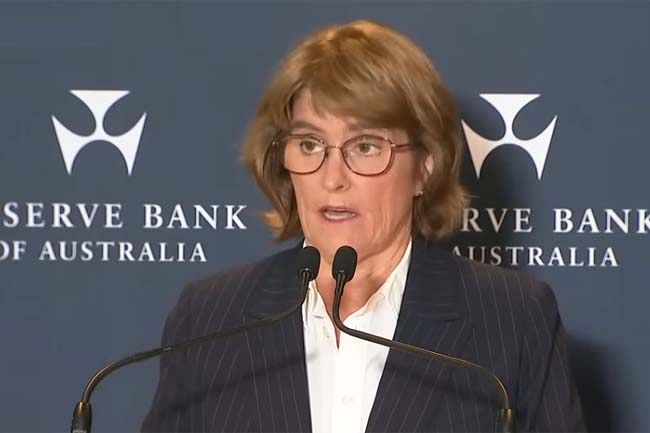
At her press conference, RBA Governor Michele Bullock skewed her commentary towards further hikes, although she noted, as is usual practice now, future rate moves would depend on the data, particularly for inflation and the labour market and not on the RBA’s forecasts.
Suffice to say that in the months ahead, if there is a reconnection of the link between job vacancies and the labour market, the unemployment rate will spike to 4.5% or higher. If inflation drops sharply as the one-off administered price increases wash out of the annual data and there are further signs of a material slowing in public sector demand, a pause in interest rate changes would be on the cards.
Indeed, it is not impossible to paint a picture where, in the second half of 2026, there is a sharp reversal in inflation and the unemployment rate rises, which would see the RBA have another about-face and return to cutting interest rates.
Stephen Koukoulas is one of Australia’s most respected economists, a past chief economist of Citibank and senior economic advisor to an Australian Prime Minister. You can follow Stephen on Twitter/X @TheKouk.
 This work is licensed under a Creative Commons Attribution-NonCommercial-NoDerivs 3.0 Australia License
Support independent journalism Subscribe to IA.


Related Articles
- How rising house prices can help the economy
- RBA's interest rate cut a double-edged sword
- Interest rate changes don’t always sway voters
- Government should stop letting Reserve Bank govern Australia
- Some very basic questions for the Reserve Bank of Australia