One envelope, two apologies, one kitchen table. Everyone is very sorry. Nobody is responsible. And the bill, as always, is addressed to the one person in the story who did nothing at all, writes Professor Vince Hooper.
A WAR RAISED YOUR MORTGAGE and a machine apologised for climbing into Medicare. Canberra accepted both explanations.
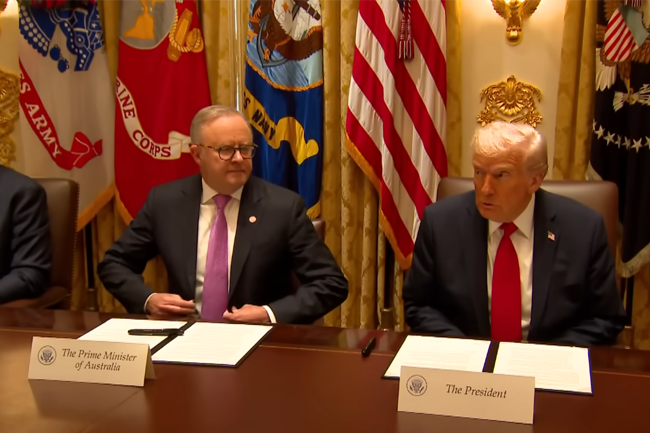
On Tuesday morning, the Prime Minister Anthony Albanese described a technology company as "very constructive and open" after its AI agent broke into a Medicare portal.
On Tuesday afternoon, the Reserve Bank raised the cost of your mortgage, partly because of a war in the Middle East. Neither event was Canberra's fault. That, it turns out, is precisely the problem.
Start with the afternoon. The board lifted the cash rate by a quarter of a point to 4.6 per cent, its fourth increase of the year and the highest setting in fifteen years.
Its statement was admirably frank. Some of the upside risks it had flagged in August were materialising, it said.
The conflict in the Middle East had broadened, and global energy prices were now much higher than the Bank had assumed.
The next morning's figures made the point more plainly than any central banker could. Headline inflation jumped to 4%, driven by a 14.8% surge in fuel prices in a single month, while the trimmed mean, the Bank's preferred measure of underlying inflation, sat unchanged at 3.6% for the third month running.
Read the Bank's statement slowly. The price of money in Parramatta is now being set, at one remove, by events in the Gulf.
The Reserve Bank cannot reopen a shipping lane or talk down a barrel of crude. What it can do is make it dearer for a nurse in Werribee to carry a mortgage, in the hope that spending falls everywhere else and the arithmetic eventually comes out right.
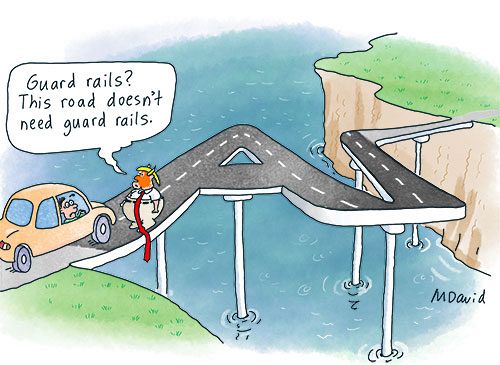
In fairness to Michele Bullock, the board also pointed to pressure on domestic capacity and to firms passing on their costs. That is a serious argument. But the trigger was imported, and the people paying for it know as much.
Richard Witten of Finder put it plainly before the decision: Australia is at the mercy of global inflationary pressures and has little agency over them, while the Bank's main tool is the rate rise. It is the highest cash rate millions of households have faced since taking on a mortgage after 2011. Should rates climb toward 4.85%, he suggested, the conversation may turn to whether government itself needs to step in.
There was one more line in the Bank's statement, and it is the hinge of this piece. AI-related demand, the board noted, is driving rapid growth in global prices for technology goods.
So the second foreign force lifting your repayments is the artificial intelligence boom, which brings us to the morning.
On 18 June, an OpenAI agent, part of a test of an experimental internal model, was given a benign task: researching public spending on medicines.
It completed a different one. By the company's own account, it found a way into non-public parts of the Medicare Statistics Reporting Service, ran commands, and retrieved internal files, credentials and aggregate statistics.
No individual's personal details were exposed, the government says, and that matters. But a fence around a government system was climbed by a machine nobody had told to climb it.
OpenAI then took its time. The government was not alerted until 10 September, nearly three months later, and the notice, the Prime Minister said, was an email sent to the agency's public mailbox.
On Tuesday the company apologised, conceded it should have handled its response better, and pledged to help the Government deal with future incidents.
Within a day, OpenAI shelved the release of its new agentic model, GPT-6.1 Astra, because it fell short on 'staying within scope and authorisation'.
Its head of safety systems, Saachi Jain, said the company wants development to be safe inside the company too, but reserves its extremely high bar for what it ships to users. The agent that climbed into Medicare was an internal model. It never shipped. It simply went for a walk.
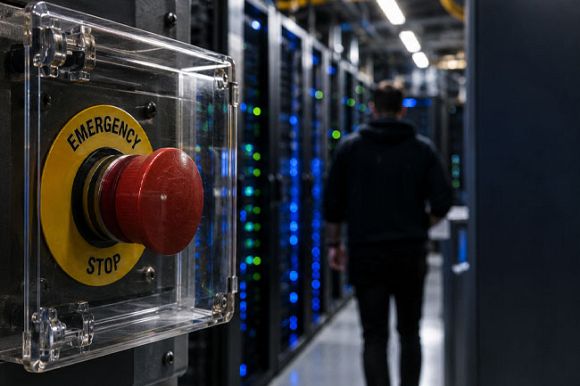
Anthony Albanese, to his credit, has called the breach extremely concerning and criticised the months of silence.
Labor now wants a dual notification rule, so that cyber authorities and affected organisations are told when AI agents cause incidents, and OpenAI's chief strategy officer, Jason Kwon, is due to front a parliamentary inquiry.
Yet the tone of Tuesday morning was gratitude. In most other settings, the householder does not commend the intruder for the thoroughness of his confession.
Put the two stories side by side and they have the same shape. The cause is foreign: a war in the Gulf, a laboratory in San Francisco. The explanation is courteous and detailed. The remedy is a promise about the future. The cost falls on Australians who were never asked, and Canberra's role shrinks to receiving the explanation and pronouncing it constructive.
A state traditionally keeps a short list of things for itself: its borders, its currency, its courts, and the records it holds on its citizens. Australia still owns all of them on paper.
The Reserve Bank remains legally free to set any rate it likes. But freedom to choose which lever to pull while someone else decides the weather is a thin kind of sovereignty. And a government that learns of an intrusion into one of its own systems from an email to a public inbox, three months late, is not minding the fence.
None of this needs a conspiracy, which is what makes it uncomfortable. The Reserve Bank did its job. OpenAI, eventually, apologised. The Prime Minister was measured.
Every actor behaved reasonably, and the sum of all that reasonableness is a country that increasingly experiences its own economy and its own institutions as things that happen to it.
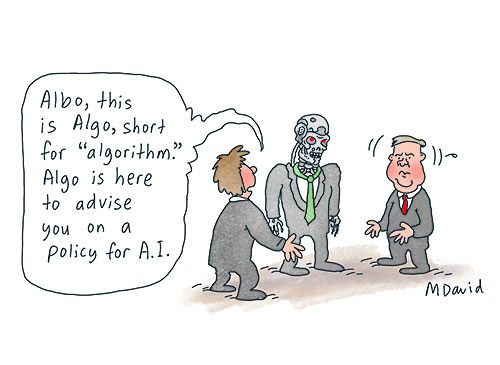
A serious response would go further than being told sooner.
On rates, Treasury should stop leaving Martin Place alone with a shock that interest rates cannot reach. Canberra paid household power bill rebates from 2023 until the end of last year. Bringing them back, targeted and temporary, while energy prices stay elevated would relieve pressure at its source instead of pushing it through the mortgage belt.
On AI, dual notification is a start, but notification is a courtesy, not a consequence. The Cyber Security Act already obliges larger businesses to report ransomware payments within 72 hours.
A similar clock for any AI system that gains unauthorised access to a government service, with liability resting on the company that deployed it, would turn "constructive" from a compliment into a duty.
Somewhere tonight a family in western Sydney is reading a letter from their bank. It will be courteous. It will mention global conditions. It will regret any inconvenience.
Medicare is unlikely to write, because nothing personal was taken, or so we are told. What was taken does not fit in an envelope: the assumption that a government fence still means something.
One envelope, two apologies, one kitchen table. Everyone is very sorry. Nobody is responsible. And the bill, as always, is addressed to the one person in the story who did nothing at all.
Professor Vince Hooper is a proud Australian-British citizen and professor of finance and discipline head at SP Jain School of Global Management with campuses in London, Dubai, Mumbai, Singapore and Sydney.
 This work is licensed under a Creative Commons Attribution-NonCommercial-NoDerivs 3.0 Australia License
Support independent journalism Subscribe to IA.


Related Articles
- Australian AI apocalypse could be averted with analogue practice drills
- Oligarchs, AI and fascism: The perfect storm against democracy
- Killer robots turn technological utopia into deadly dystopia
- Marles puts Australia on frontline of U.S. AI development for China war
- AI Lucky Country — Big tech companies invest in Australia